A Musty Smell With No Leak
Inside The Building
Rooms smell damp, and the ceiling feels cool in one area, with no drip to find.
On The Roof
Insulation under the membrane is wet and holding water against the deck.
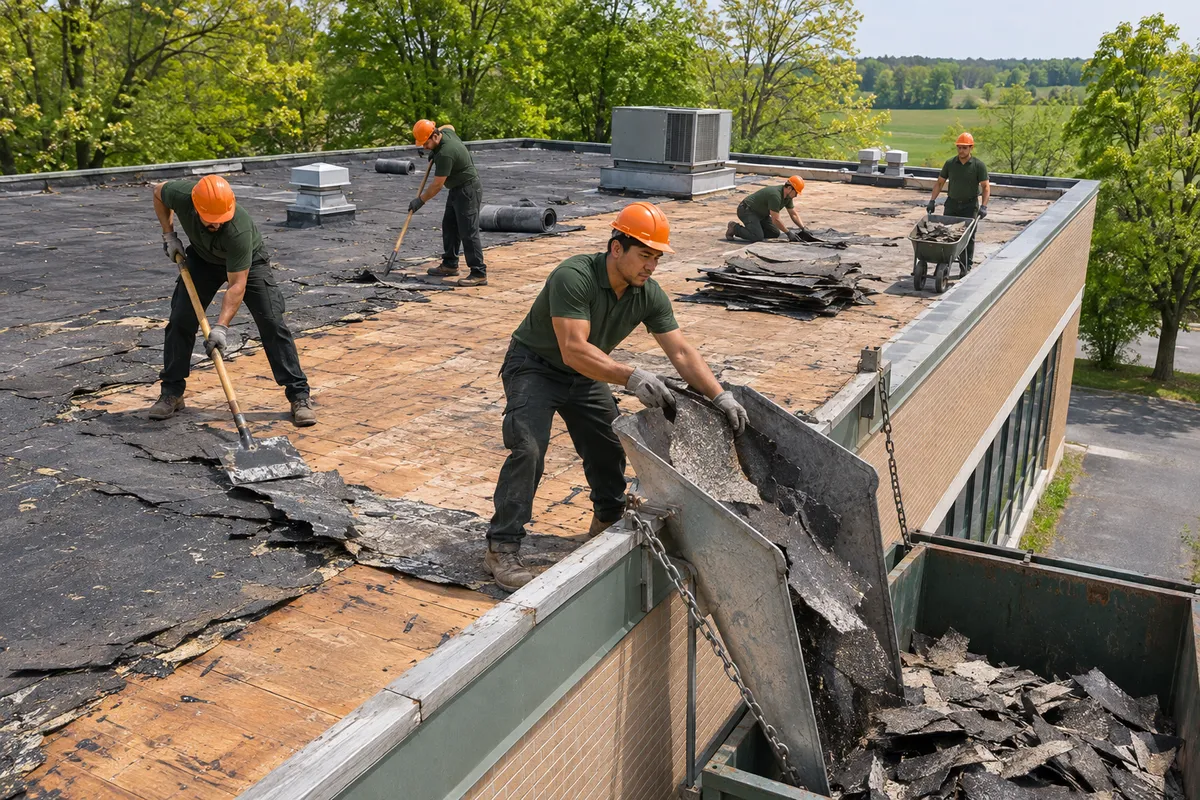
As a Broad Brook commercial roofing contractor, we take core cuts on older flat roofs in this East Windsor village and replace or recover them with TPO and EPDM.
Broad Brook commercial roofing decisions on older buildings hinge on what is under the membrane. A roof can look tired on top and still have dry insulation, or look fine and hide soaked boards.
Core cuts answer that. We cut small samples down to the deck, count the layers, and check the insulation for moisture. Those samples decide whether a recover is possible or the roof has to come off.
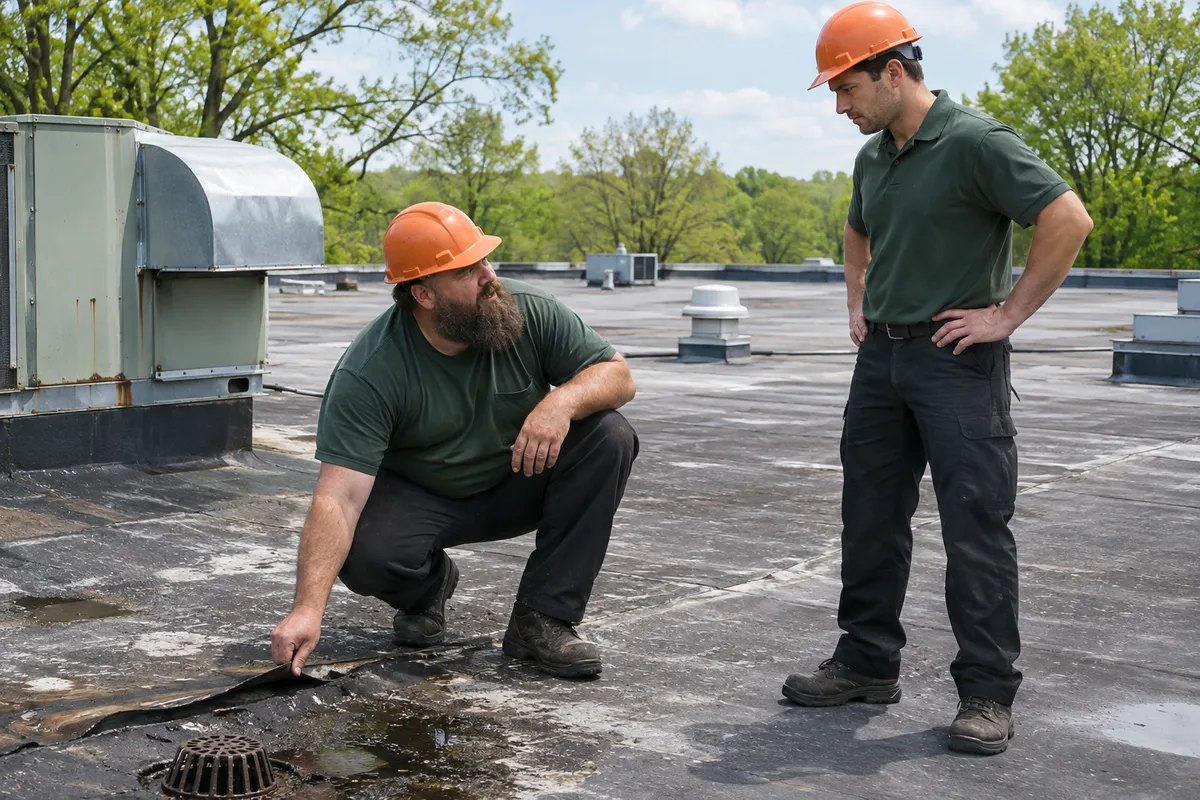
Older flat roofs give clues inside the building. These pairs show what they mean.
Rooms smell damp, and the ceiling feels cool in one area, with no drip to find.
Insulation under the membrane is wet and holding water against the deck.
Maintenance staff notice the roof gives a little in spots when they walk it.
Wet or crushed insulation, or a second roof that was laid over a wet first one.
Stains that were painted over return after heavy rain.
The leak was patched on top, but water is still trapped in the layers below.
Staff on the roof see blisters that grow on warm days.
Moisture trapped between layers turns to vapor in the heat and lifts the top membrane.
Making the recover or tear-off call from real samples saves money either way.
Core cuts show the layers and moisture, so the plan rests on what is in the roof instead of guesses.
A dry, attached roof can take a cover board and new membrane, which skips tear-off debris and cost.
When samples find wet insulation, it all comes off, so moisture is not sealed under a new roof.
You keep the roof core results and layer counts, which help with future repairs and resale.
Recover and replacement roofs here use one of these systems.
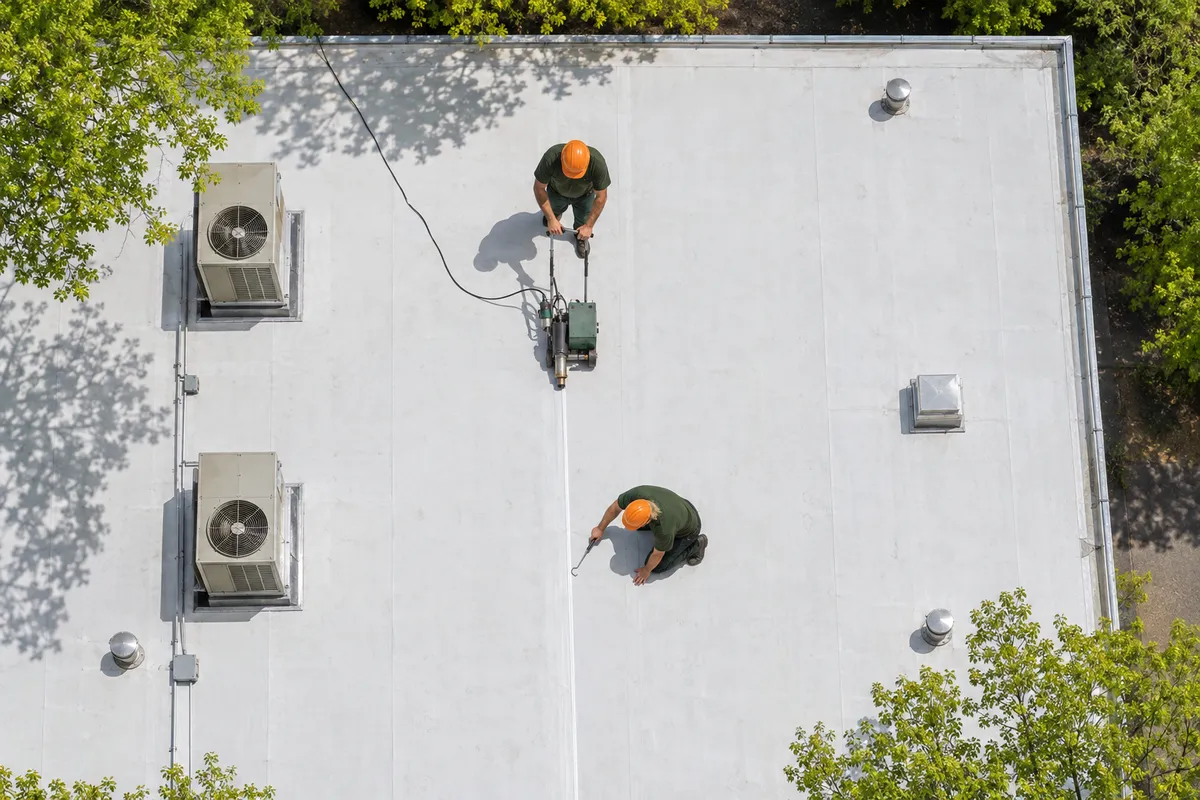
Welded white membrane goes over a cover board on a dry existing roof, or onto new insulation after tear-off.
TPO Roofing details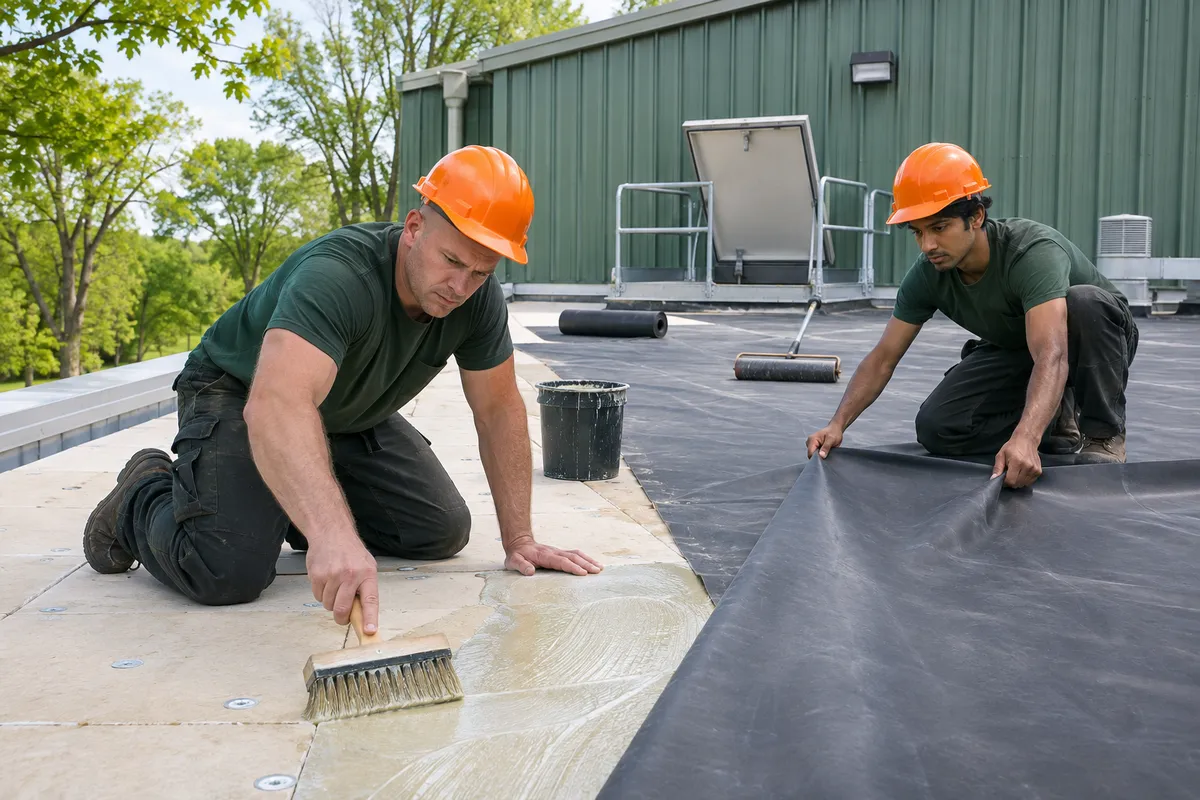
Rubber membrane fits older low-slope buildings and flexes along walls and additions.
EPDM Roofing details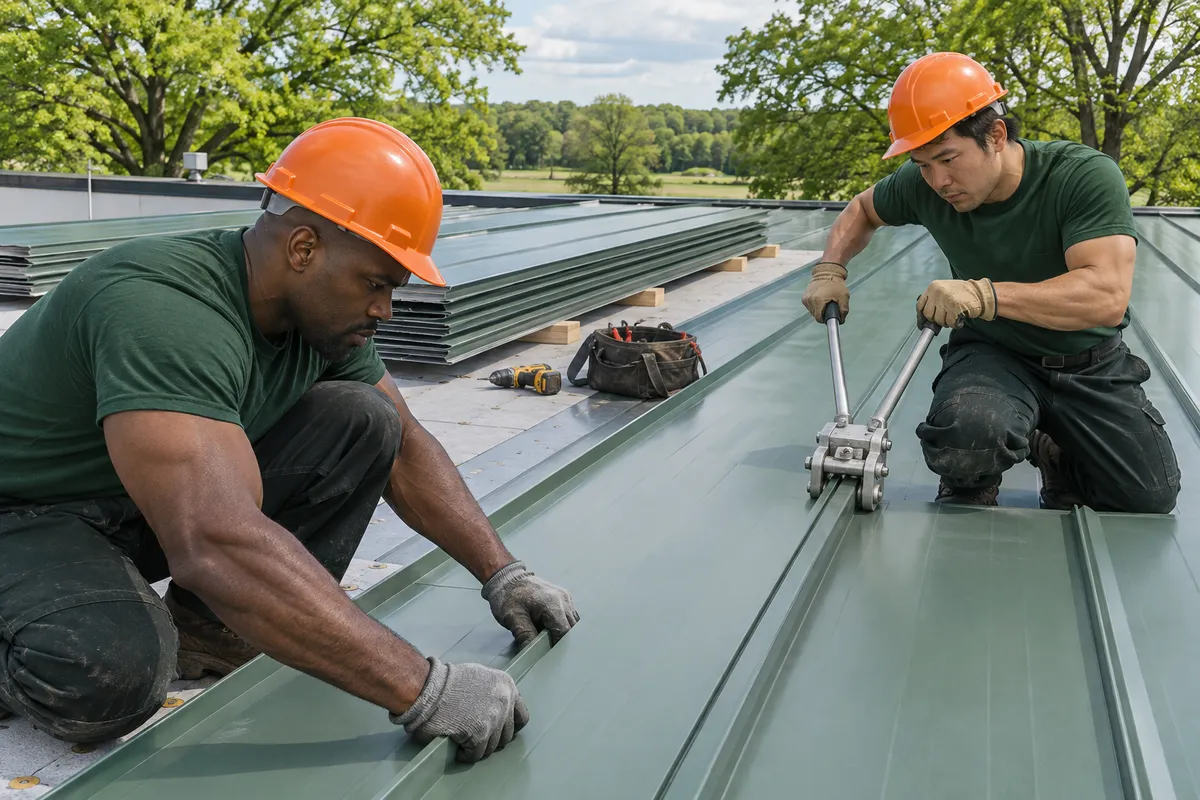
Metal panels on new framing can go over an old low-slope roof when the structure allows.
Commercial Metal Roofing details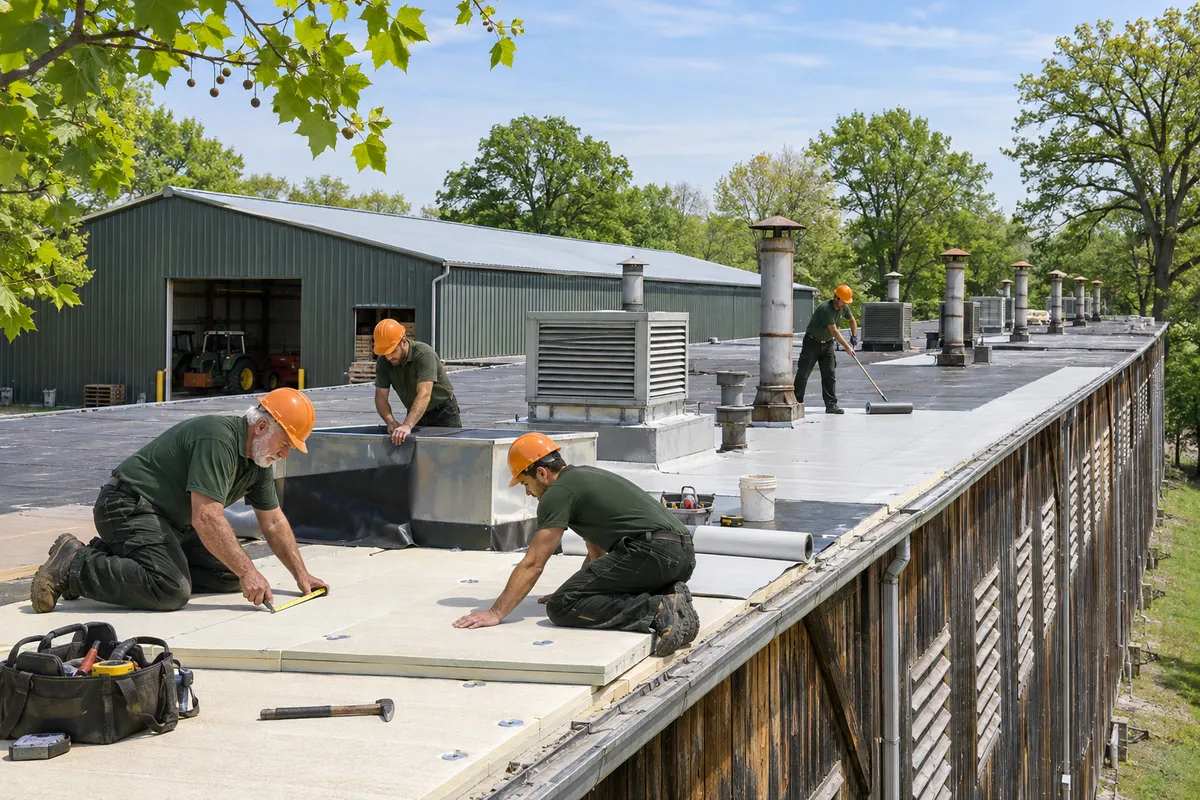
Plants and shops with equipment get industrial roofs planned around every unit.
Industrial Roofing detailsCall and tell us where the stain is. We check the roof above it and take a core cut if needed.
Older roofs follow this order so the recover or tear-off call is made from samples.
We walk the roof and note soft spots, ponding, and patches. Inside, we check stains and smells against the roof above.
Small samples are cut to the deck in several areas, layers are counted, and each cut is patched watertight.
Core cut results and code limits on roof layers set the path, and the written scope explains why.
Either a cover board and membrane go over the dry roof, or old layers come off and the new roof goes on.
Roof core results, layer counts, and photos go into your records, which helps with the next repair or sale.
Is your building outside the village? We also roof in the towns below; for anywhere else, call us or send us a message.
What owners of older buildings ask about recover and tear-off.
A small sample cut through the roof to the deck. It shows the number of layers, the insulation type, and whether it is wet. Each cut is patched watertight right after.
More roofing questionsWhen there is only one existing roof, it is dry and well attached, and the deck is solid. Code limits the number of layers, and wet roofs come off.
Trapped water keeps soaking the insulation and rusting the deck under the new membrane, and it can blister the new roof from below.
Broad Brook is a village in East Windsor, so roofing permits go through East Windsor's building department. We pull the permit as part of the job.
Not on their own. A few small blisters can be cut and patched, but blisters over a wide area usually mean moisture is trapped under the roof, which core cuts confirm.
A rigid board fastened over the old roof that gives the new membrane a flat, firm surface and separates it from the old one.
Enough to read each area of the roof: near drains, at wet spots, along walls, and in the open field. A small roof may need a handful, a large one more.
Rarely. Insulation sealed under a membrane has nowhere to dry, so wet boards stay wet and keep feeding stains and deck rust until they are removed.
Send the building address and we will take core cuts before pricing, or call about a stain that keeps returning.