Leaks At Exhaust Fans
Inside The Building
Water shows near production lines under an exhaust fan.
On The Roof
The fan curb flashing has cracked from vibration and heat.
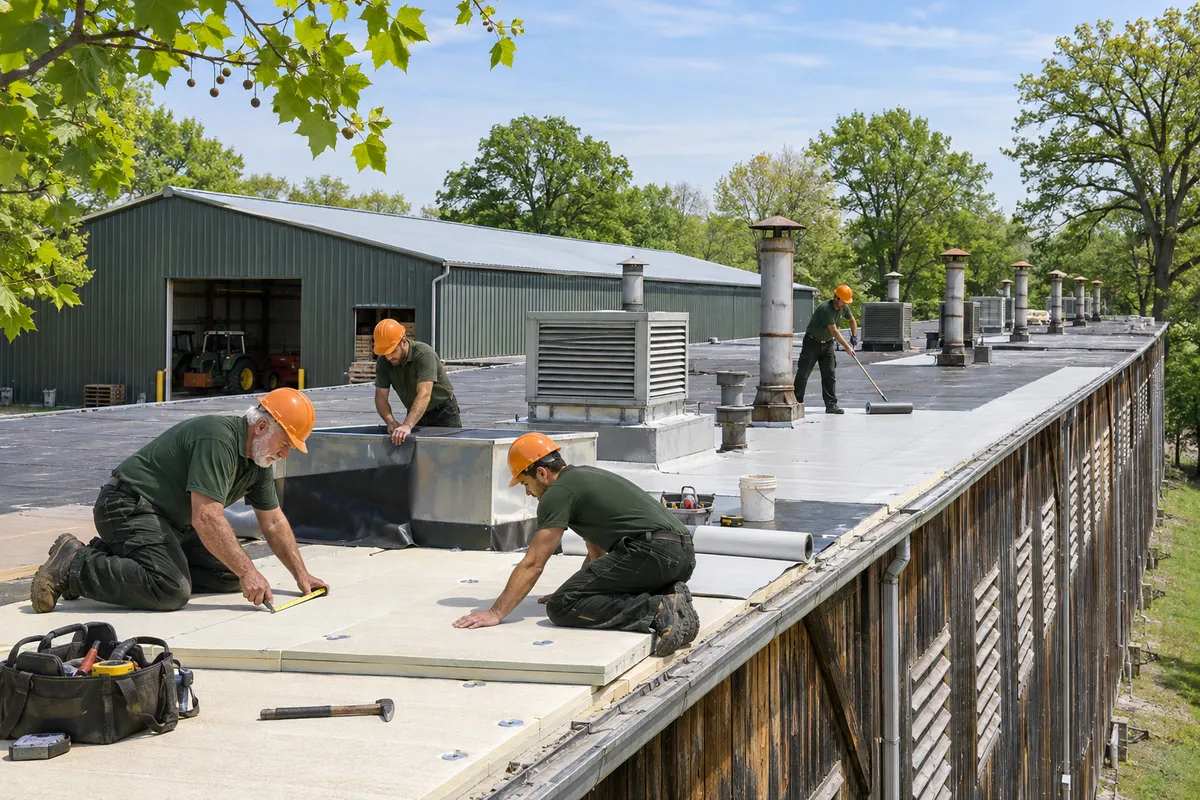
As an Enfield industrial roofing contractor, we install and replace membrane and metal roofs on plants and distribution centers, with every fan, duct, and curb flashed into the new roof.
Enfield industrial roofing covers big roofs with heavy equipment, and the right system follows what the building does inside. Here is how three approaches compare on plant roofs.
Plant roofs leak where equipment, heat, and traffic meet the membrane.
Water shows near production lines under an exhaust fan.
The fan curb flashing has cracked from vibration and heat.
Stains with an oily or dusty tint form near vent drops inside.
Process exhaust has built up on the membrane and broken down the flashing around the vent.
Drips follow the path technicians walk across the roof.
Foot traffic has worn through the membrane between the hatch and the units.
Frost or drips form on the underside of the deck on cold days.
Warm, moist plant air is condensing inside the roof because vapor control is missing.
Industrial jobs draw on these three systems, alone or together.
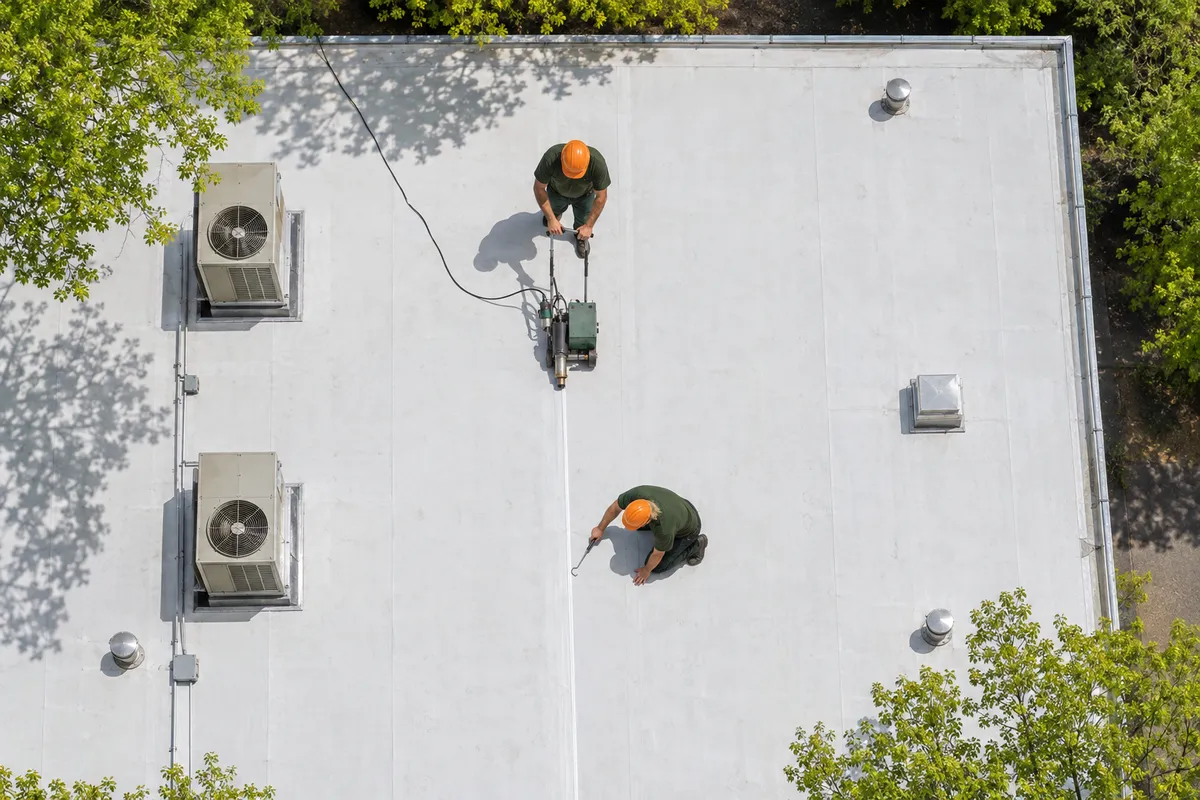
Welded white membrane holds tight around curbs and keeps summer heat off production floors.
TPO Roofing in Enfield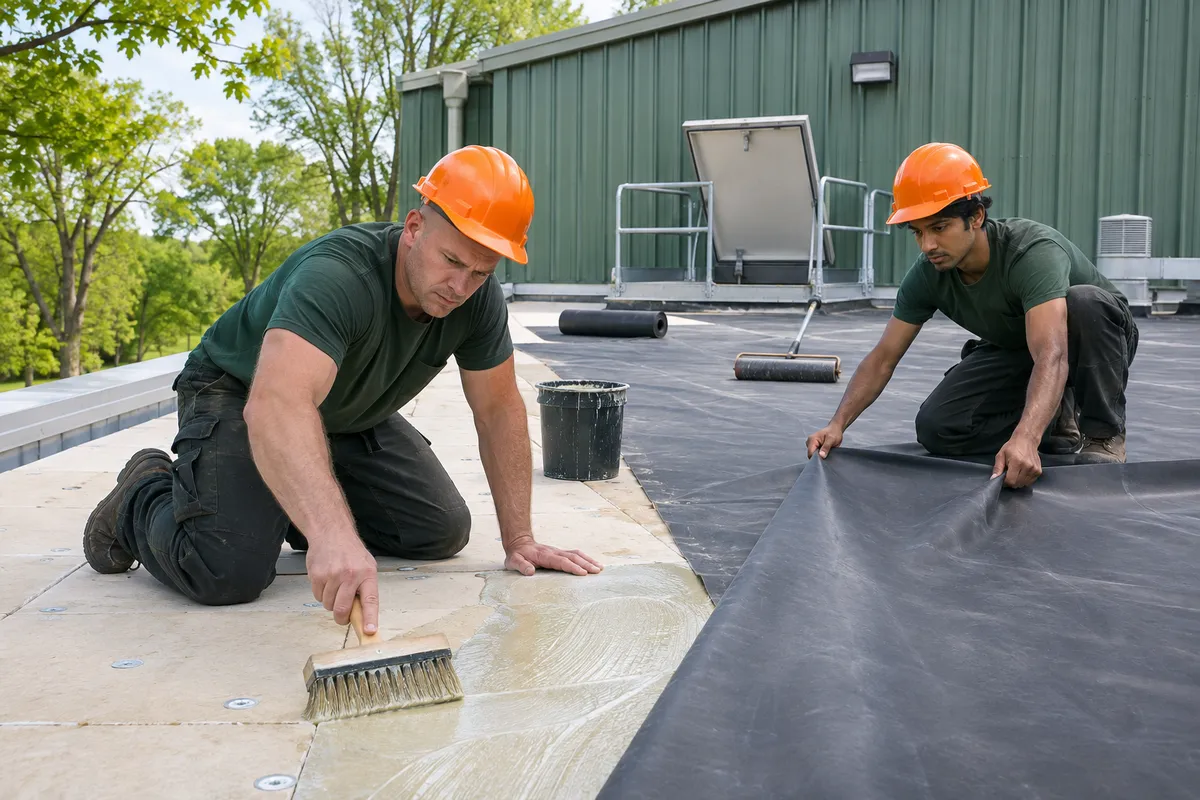
Rubber membrane suits older plant roofs with long runs of wall flashing and roof movement.
EPDM Roofing in Enfield
Sloped plant and storage buildings take new metal panels with framed curbs.
Commercial Metal Roofing in EnfieldCall and say which line or bay is wet. We check the fans and curbs above it first.
Send the address and an equipment list if you have one. We map every curb before pricing.
Get A Free EstimateA new industrial roof deals with the details that cause most plant leaks.
Every fan, duct, stack, and pipe gets its own flashing tied into the new membrane, closing the most common leak points on a plant roof.
Sections are planned around shifts and shipping, and each one is closed watertight before the crew leaves.
Vapor control and insulation set for the building keep warm process air from condensing inside the roof.
Walkway pads and clear paths to each unit protect the membrane and give technicians firm footing.
Plant roofs follow this order so equipment and production are planned with the roofing.
We walk the roof, list every unit, fan, and stack, take core cuts across the field, and note where process exhaust has damaged the membrane.
Sections, crane picks, and unit shutdowns are set around shifts and shipping with your plant manager and mechanical contractor.
New insulation and membrane go down in sections, curbs are raised, and every penetration is flashed into the new roof.
Walkway pads go on service paths, edge metal is fastened, and we walk the roof with your maintenance lead.
Your maintenance lead gets a short list of what to check on the roof, from curb flashings to drains, and when to call us.
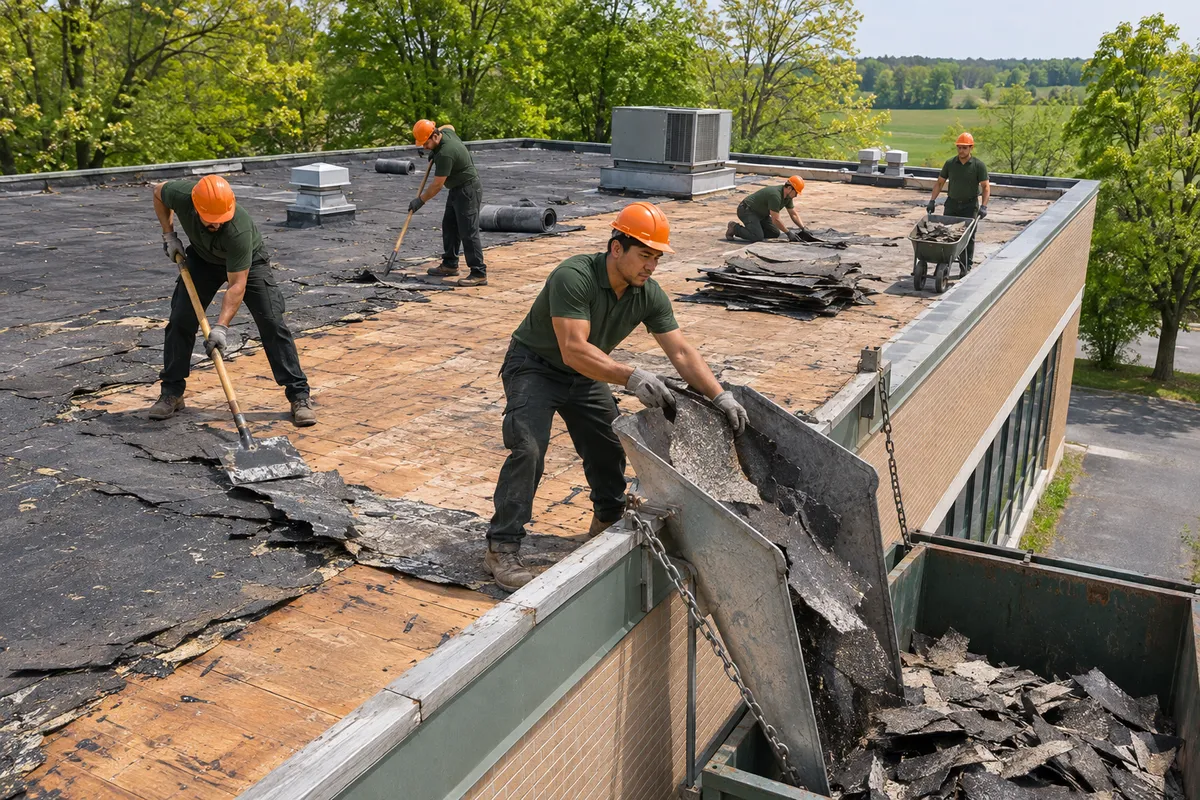
Replacing a plant roof is planned like any other shutdown, except the plant keeps running. Core cuts tell us how much deck and insulation work is coming, and that sets the size of each section.
Crews take old roofing off one section at a time, repair the deck, and close the section with new insulation, membrane, and equipment flashing before they leave. Stock and machinery below open areas are covered.
What plant and distribution managers ask before a roof project.
Industrial roofing covers manufacturing plants, distribution centers, and other heavy-use buildings with large roofs and rooftop equipment. The systems are mostly TPO, EPDM, and metal, picked for the roof size, drainage, and what happens inside.
More roofing questionsCore cuts come first, then a plan for tear-off or recover and for protecting the operation below. Old roofing comes off in sections, the deck is repaired, new insulation and membrane go down, and equipment is flashed before each section closes.
Ask each one how they handle core cuts, deck repair, equipment flashing, and daily tie-ins, and get it in writing. Ask how they work around active production and where staging and cranes go, then compare the scopes line by line.
It changes the details more than the system. Seam quality, flashing heights, and drainage matter most, along with vapor control, since warm plant air leaking into a cold roof can condense and freeze.
Some can. Units whose curbs would end up too low under the new insulation are lifted so the curb can be raised, and others are flashed in place. We plan it with your mechanical contractor.
At least once a year and after major storms, plus any time equipment is added or replaced. Plants with process exhaust benefit from checks twice a year around the vents.
Yes. New curbs and penetrations are cut in and flashed into the membrane by a roofer, which keeps the roof watertight and the details matched to the system.
Send the plant address and equipment details for a roof walk, or call about a leak over a line.