Wet Pallets After A Storm
Inside The Building
Stock on the top rack level is wet after rain, with stains on the cartons.
On The Roof
A seam or lap above the racking has opened, often near a low spot that holds water.
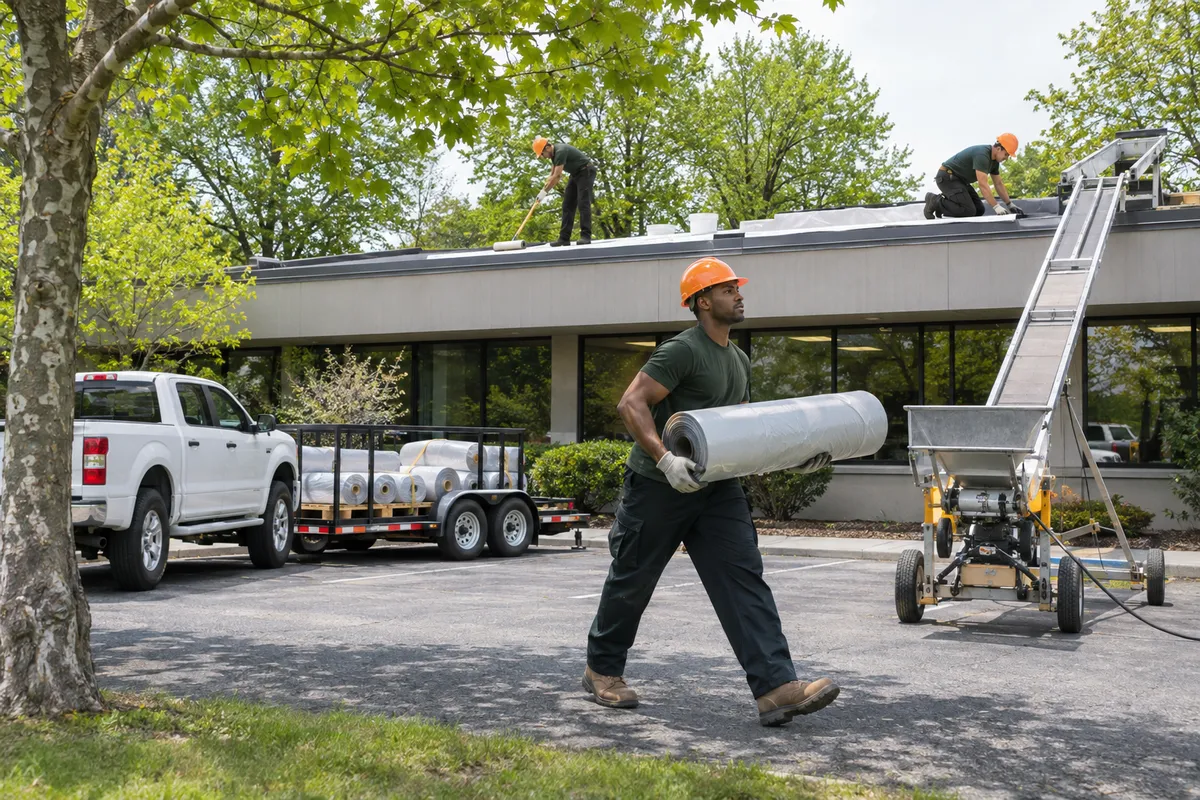
As an East Windsor commercial roofing contractor, we replace warehouse and distribution roofs in phases, with tear-off, staging, and crane picks planned around dock traffic.
East Windsor commercial roofing on a busy warehouse is a scheduling job as much as a roofing one. Trucks back into the docks all day, stock sits on racks under the roof, and the crane has to fit around both. Every hour the docks sit idle costs money, so the roof plan starts from the shipping plan.
We break the roof into phases, set staging away from the truck court, and plan crane picks for slow shipping hours. Areas over sensitive inventory get their own sequence and extra protection. Core cuts taken before the job show where deck repairs will slow a phase.
Distribution roofs leak in ways that hit inventory. Here is what staff see and the roof cause.
Stock on the top rack level is wet after rain, with stains on the cartons.
A seam or lap above the racking has opened, often near a low spot that holds water.
Puddles form inside near the docks after heavy rain.
The roof edge or gutter over the docks is overflowing, or the wall flashing there has failed.
Unit heater hanger rods drip in winter.
Roof penetrations for heater flues have cracked boots or loose storm collars.
Drips hit the floor near warehouse skylights during wind-driven rain.
Skylight curbs have open flashing or cracked lenses that let water in around the frame.
A phased replacement protects inventory and keeps the docks running.
Each phase is closed watertight before the crew leaves, and racking under open areas is covered.
Roofing materials and dumpsters sit away from the truck court, and lifts happen in slow shipping hours.
Heater flues and vents get new boots and storm collars tied into the membrane.
Edge metal, gutters, and wall flashing over the docks are rebuilt, ending the puddles inside.
Warehouse roofs in town use one of these four systems.
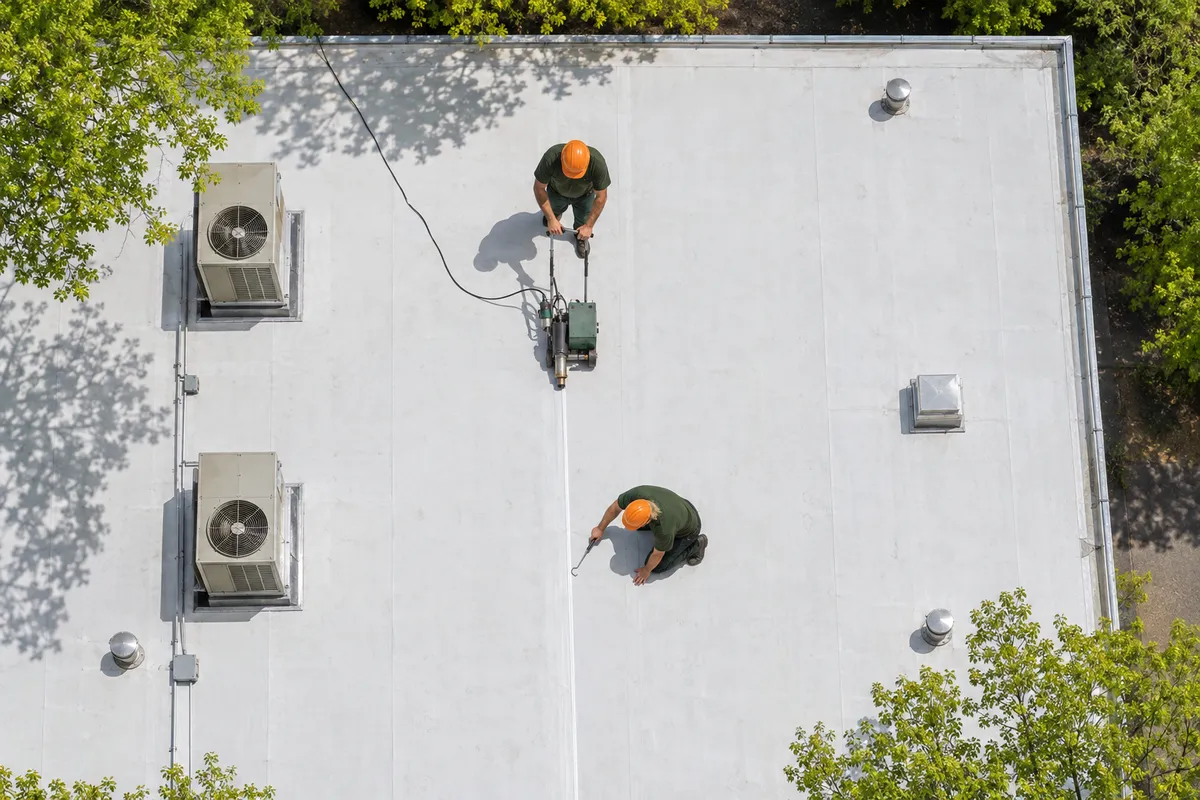
Wide welded sheets cover big warehouse roofs quickly, reflect summer heat off stock below, and keep seams tight across long open spans.
TPO Roofing details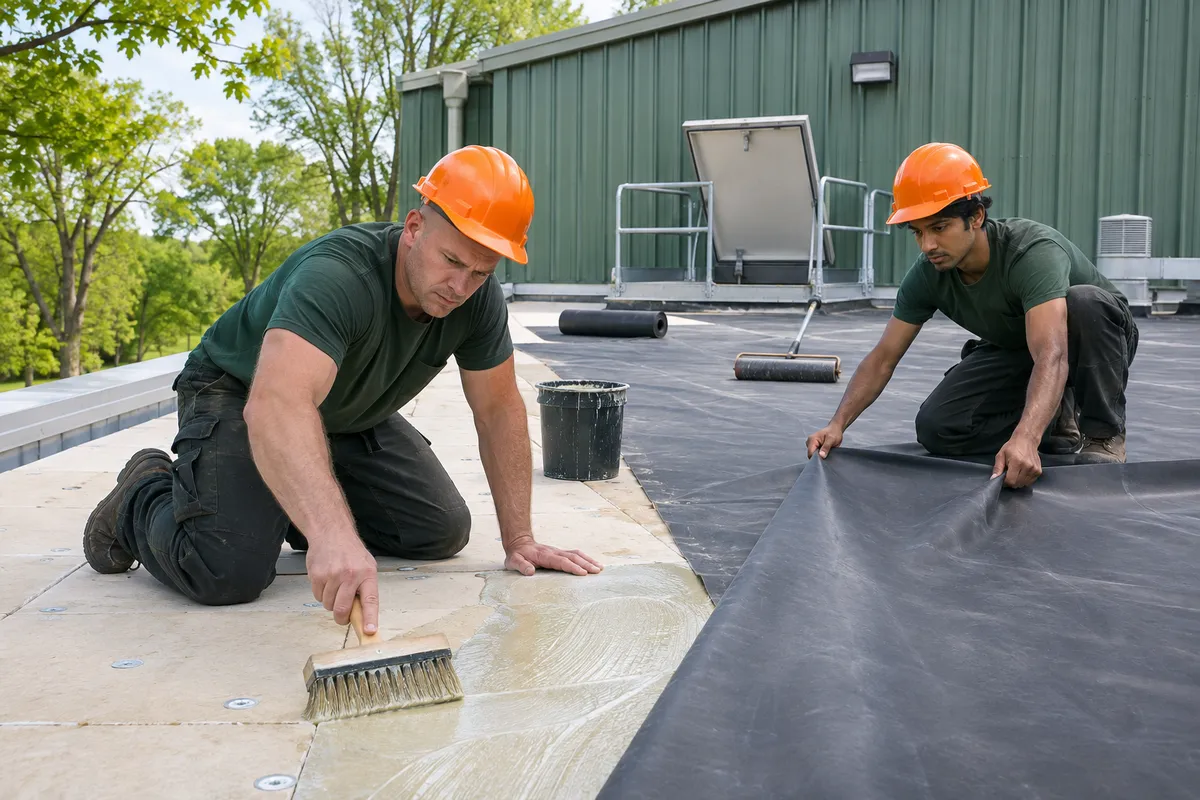
Rubber membrane suits older warehouses and additions with long wall flashings, flexing where the building moves through the seasons.
EPDM Roofing details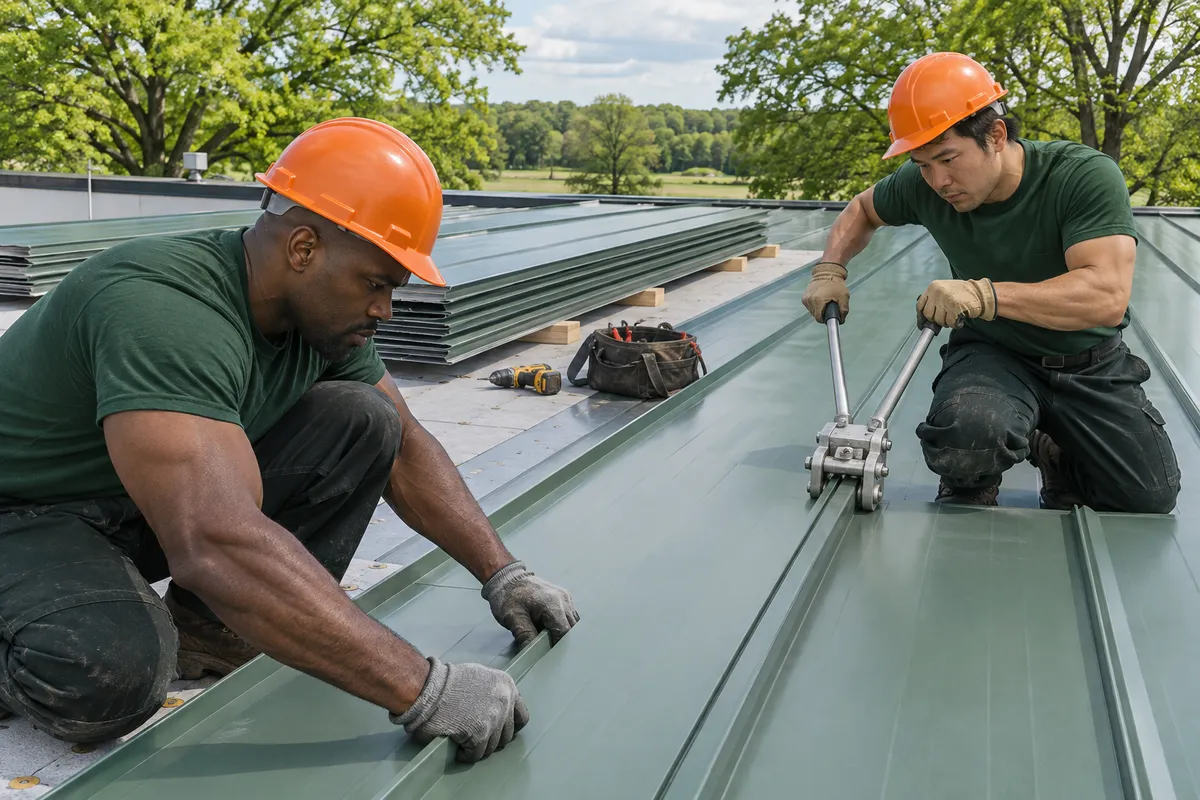
Pre-engineered warehouses take new standing seam or exposed fastener panels, sometimes installed over the old roof on new framing.
Commercial Metal Roofing details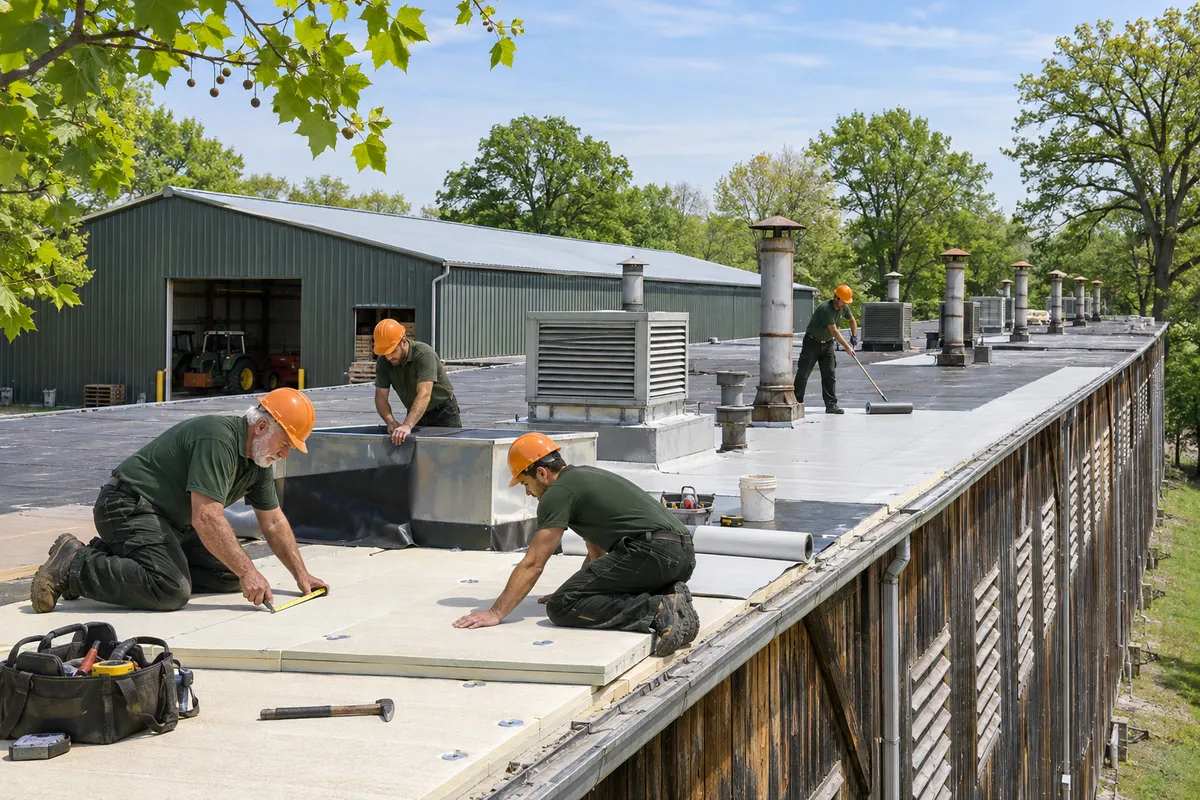
Buildings with heaters, fans, and units get roofs flashed around each one, with curbs raised to match the new insulation.
Industrial Roofing detailsCall and tell us the aisle and rack where water landed. We check the seams and low spots above it.
Send the address and your shipping hours. We plan phases before pricing the job.
Get A Free EstimateWarehouse replacements follow this phased order.
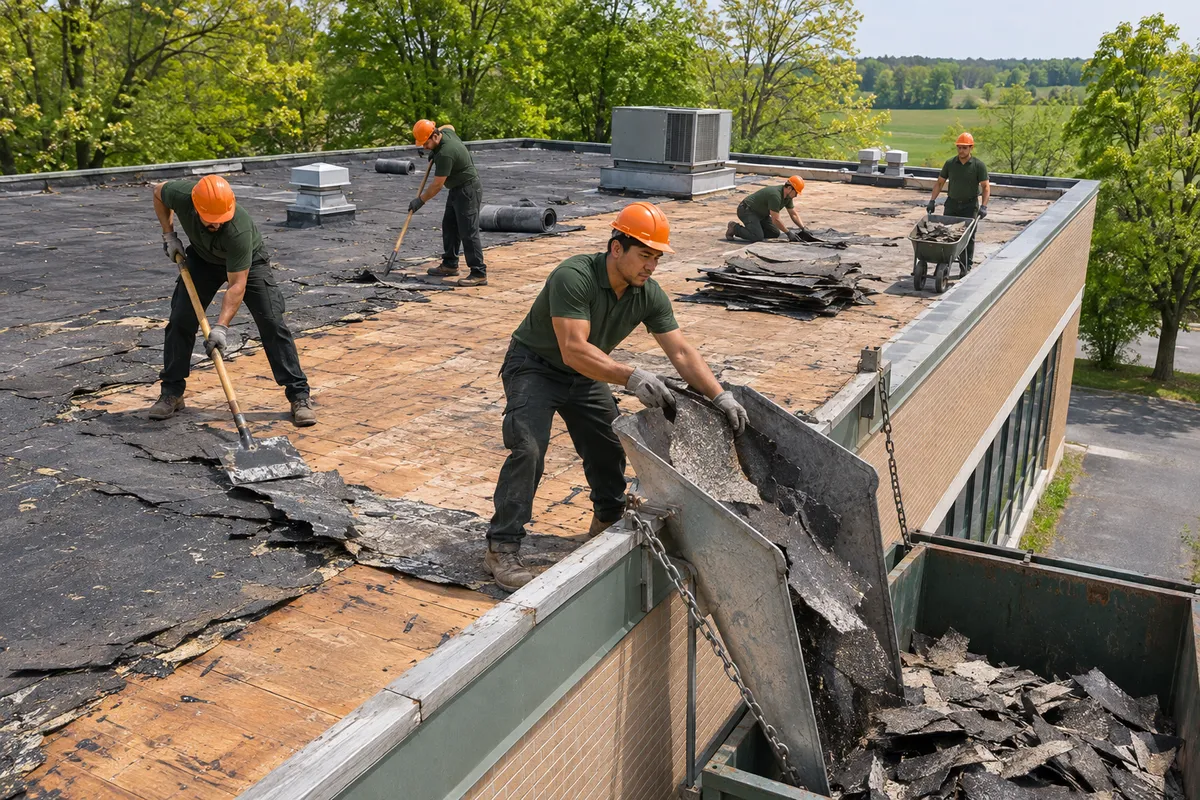
We walk the roof, take core cuts across it, and mark where deck or insulation repairs will be needed.
The roof is split into phases around shipping, inventory, and equipment, and the schedule goes in the written scope.
Roofing materials and dumpsters go away from the docks, and crane picks are timed for slow shipping hours.
Each phase is torn off, insulated, roofed, and closed watertight, with protection over racking below.
Once the last phase is done, the roof is walked with you and the staging area is cleared and returned to truck use.
Is your distribution building a town over? We cover the places below; for anywhere else, call us or send us a message.
What warehouse managers ask about reroofing an active building.
In most cases, yes. We replace the roof in phases, close each one watertight before leaving, and plan tear-off, staging, and crane picks around dock traffic. Core cuts before the job show where deck or insulation repairs will be needed.
More roofing questionsThat depends on the roof size, weather, and how much deck repair the core cuts show. We size phases so each can be finished and closed before the crew leaves.
Racking below open areas is covered, and only as much roof is opened as can be closed watertight before the crew leaves.
Yes. Flues and vents get new boots and storm collars sealed to the new membrane, since old ones often crack.
Skylight curbs are reflashed with the new membrane, and cracked or cloudy lenses can be replaced at the same time. Unused skylights can be removed and decked over.
When core cuts show one dry, attached roof, a cover board and new membrane can go over it where code allows. Wet areas are cut out first.
Lifts that use part of a public road may need town approval. Most warehouse lifts happen on the property, away from traffic.
Yes. Areas over cold rooms get their own phase, with refrigeration units coordinated and extra protection inside, so temperature-controlled stock stays in its room.
Send the warehouse address and shipping hours for a roof walk, or call about wet stock.