New Flat Roofs To Restore Worn Brick Downtown Buildings
As a Thompsonville commercial roofing contractor, we replace and repair flat roofs on brick storefronts, mixed-use blocks, and older commercial buildings in this Enfield village.
Thompsonville Commercial Roofing on Brick Downtown Blocks
Thompsonville commercial roofing work usually happens behind a parapet wall, on a flat roof over shops with apartments or offices above. Many of these roofs have been covered more than once, and the brick coping has shifted with decades of freeze and thaw.
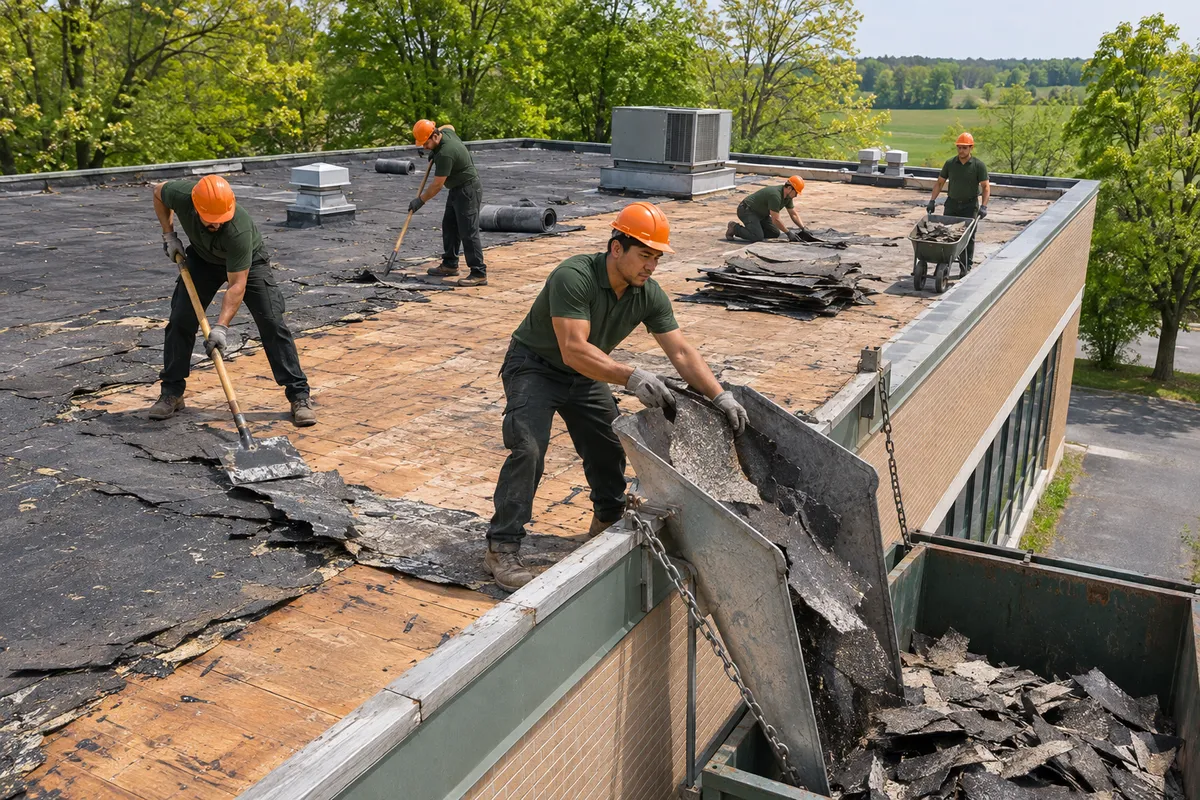
Access sets the plan. Narrow streets and shared walls leave little room for a dumpster or lift, so we map where materials go up, where debris comes down, and how tenants keep using their entrances.
Coping and wall flashing replaced together
Hoist and debris chute placed off the sidewalk
Old layers checked with core cuts
Permits through Enfield Building Inspection
Roof Trouble
Roof Problems Behind Commercial Roofing Calls in Thompsonville
Older brick buildings show roof trouble in a few familiar places. Here is what tenants notice and what we find above.
Water Down The Inside Of A Wall
Inside The Building
Plaster bubbles or paint peels high on an exterior wall, worst after a rain with wind behind it.
On The Roof
Open joints in the coping let water into the parapet, and it runs down behind the wall flashing.
A Stain Around A Light Fixture
Inside The Building
A brown ring spreads on the ceiling around a fixture near the middle of the room.
On The Roof
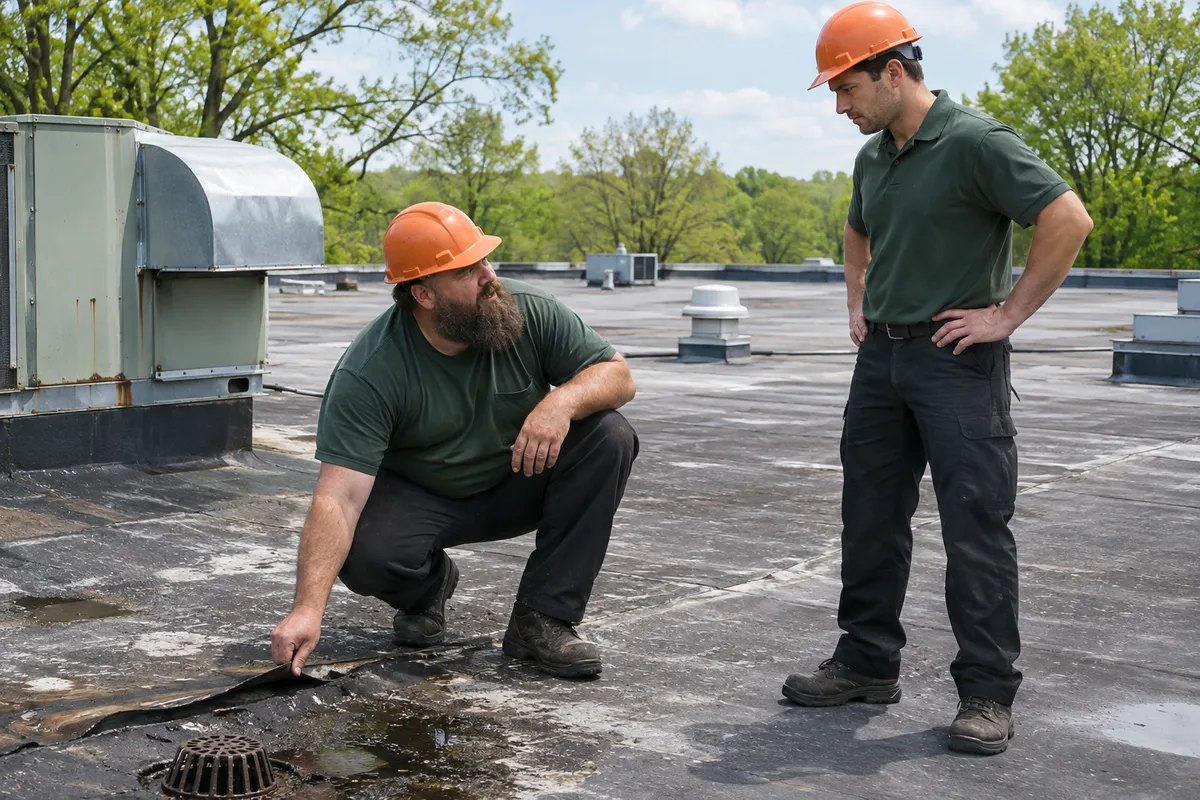
An interior drain with a cracked bowl or a loose clamping ring is letting water past the membrane.
Soft Spots Underfoot On The Roof
Inside The Building
Upstairs tenants hear water dripping inside the ceiling after storms, with no stain yet.
On The Roof
Two or three roofs are stacked on the deck and the bottom layer holds water from an old leak.
Water Standing Behind The Parapet
Inside The Building
Gutters and downspouts on the street side stay dry during storms, yet stains spread inside.
On The Roof
The roof drains to a single interior drain, and a sag in the deck holds water away from it.
What The Work Changes
What New Commercial Roofing Does for Thompsonville Storefronts
A full replacement on an older downtown building fixes the details that patches keep missing.
One Dry Layer Instead Of Three
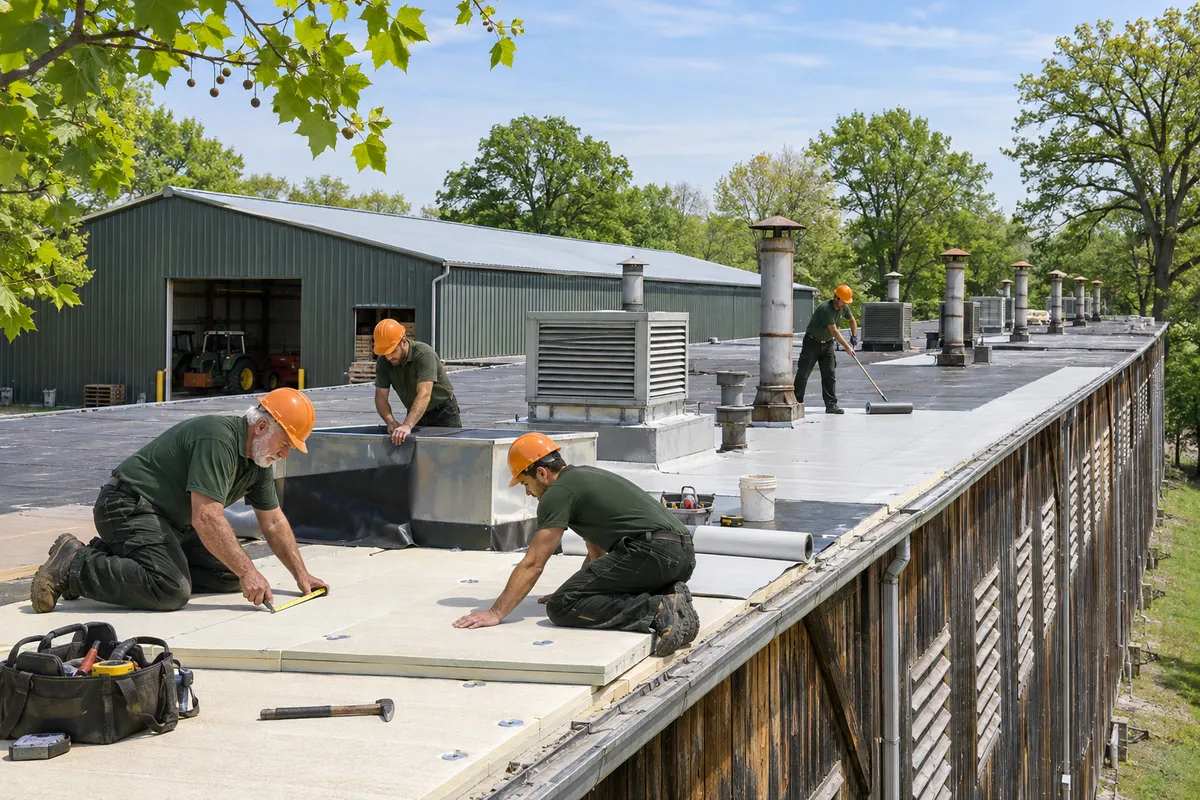
Stacked roofs come off to the deck, wet boards go out, and new insulation and membrane go on, so the roof sheds water from one known layer.
Parapets Sealed At The Top
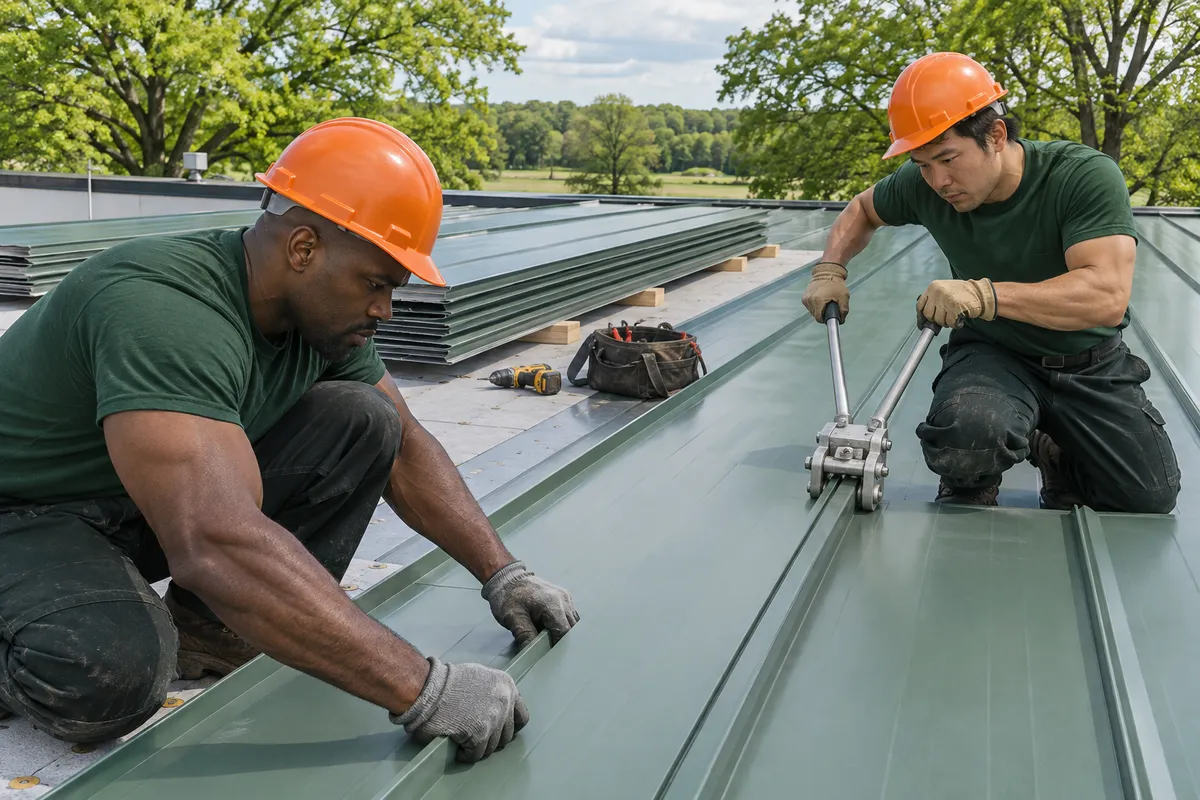
New coping caps or metal covers over the parapet stop water from entering the wall from above, which ends the plaster damage on upper floors.
Drains Rebuilt At The Bowl
Cracked drain bowls and missing strainers get replaced and clamped to the new membrane, so the low point of the roof carries water away again.
Tenants Kept Informed
Work hours, entrances, and noisy days are set before the crew starts, and each tenant hears what is happening on the roof above them.
Roof Systems
Commercial Roofing Systems for Thompsonville Buildings
These are the systems that fit downtown flat roofs and the shops behind them.
TPO Over Storefronts
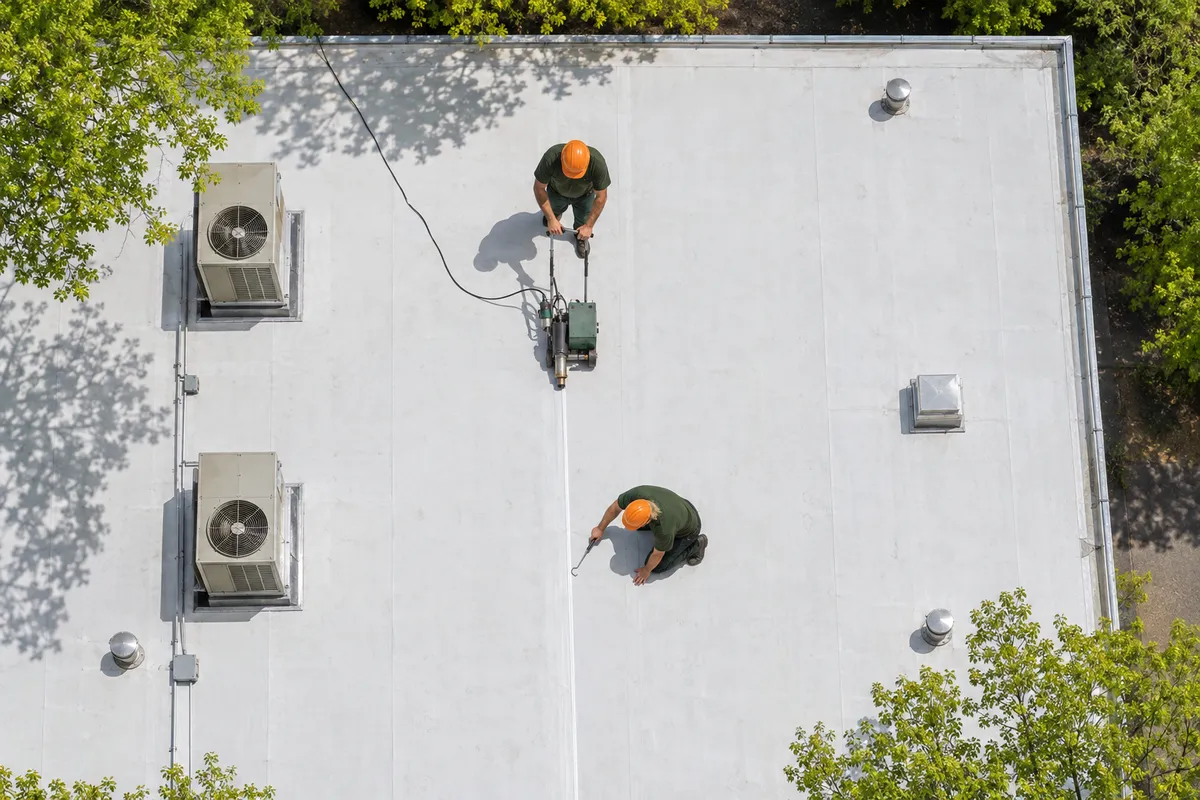
A white welded membrane suits flat roofs over shops, and its seams hold well around the small units on mixed-use blocks.
Steps For Commercial Roofing on a Thompsonville Block
Downtown jobs follow this order so tenants keep working and the street stays clear.
1
Inspect Your Roof
We walk the roof, check the coping and wall flashing, and take core cuts to count the old layers. Inside, we look at the stains tenants have reported.
On The Roof
2
Set Access And Staging
A hoist spot for roofing materials, a debris chute, and a dumpster location are chosen with you, and any street or sidewalk use is cleared with the town first.
At The Building
3
Strip, Repair, And Roof
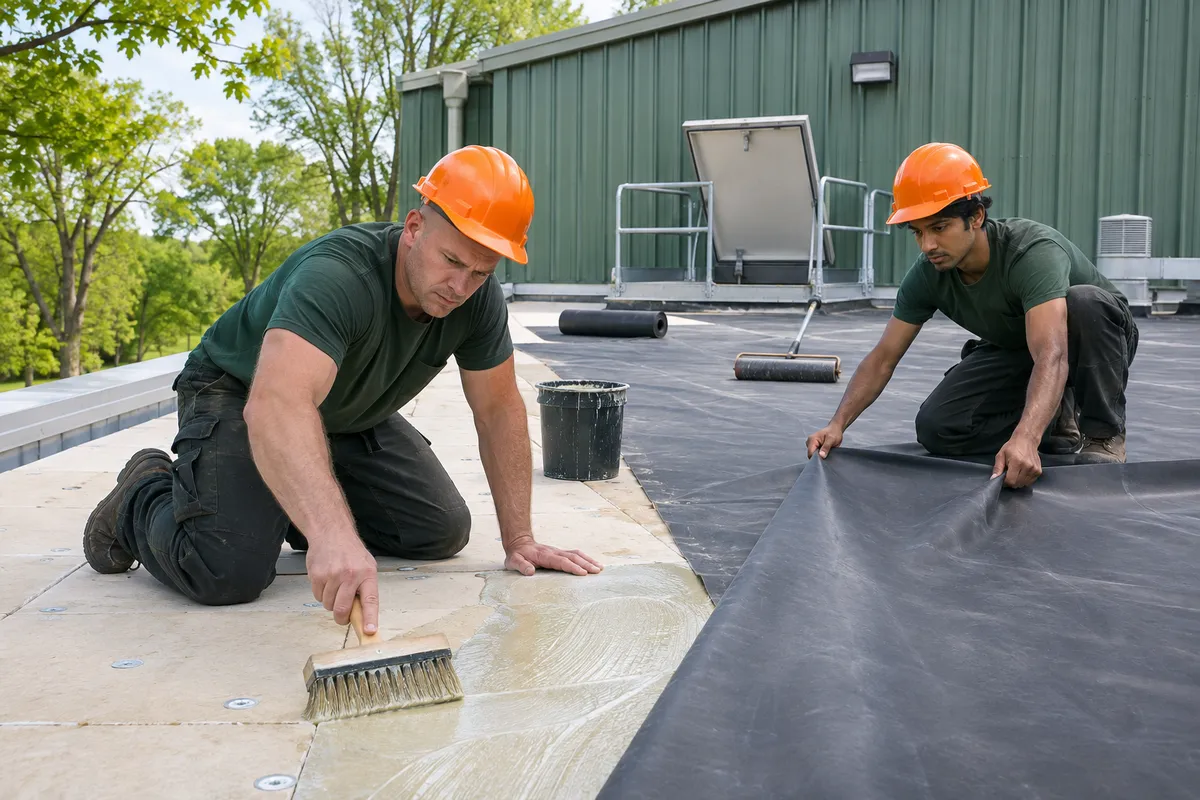
Old layers come off in sections, deck damage is fixed, and new insulation, membrane, and parapet flashing go on before each section is closed.
On The Roof
4
Cap The Parapets Last
New coping or metal caps go on once the wall flashing is done, then we walk the roof with you and record what was installed.
Final Check
5
Record The Finished Roof
Photos of the coping, flashing, and drains go into a closeout record, so the next owner or tenant knows what is on the roof.
Answers to what downtown owners ask before a roof replacement.
Asked Most Often
Can a flat roof on a brick downtown building be replaced while tenants stay open?
Yes, in most cases. We stage materials off the sidewalk, work one section at a time, and close each one watertight before the crew leaves. Noisy tear-off is scheduled with tenants, and entrances stay usable during the job.
Do old roof layers have to come off before a new one goes on?
It depends on what the core cuts show. When there are already two roofs on the deck, or the bottom layer is wet, everything comes off. One dry, attached roof can sometimes take a recover where code allows.
Who issues roofing permits for Thompsonville buildings?
Thompsonville is a village within the Town of Enfield, so permits go through Enfield's Building Inspection department, which takes applications online. We pull the permit as part of the job.
What does parapet repair involve on a flat roof replacement?
The wall flashing is stripped and replaced up the inside face of the parapet, and the coping on top is reset or covered with new metal caps. That keeps water out of the wall from both directions.
Can a flat roof be added over an old downtown roof instead of a tear-off?
Sometimes, when the core cuts show one dry roof and the parapet flashing can still be carried high enough above the new surface. Two existing layers or wet insulation mean the old roof comes off.
Free Estimate
Hire a Thompsonville Commercial Roofing Contractor
Send the building address and tell us about the parapets and tenants, or call to talk through a leak.