Drips Under A Makeup Air Unit
Inside The Building
Water lands near a duct drop or diffuser under a large unit, mostly in wind-driven rain.
On The Roof
The curb counterflashing has pulled away, or the membrane at a curb corner has split.
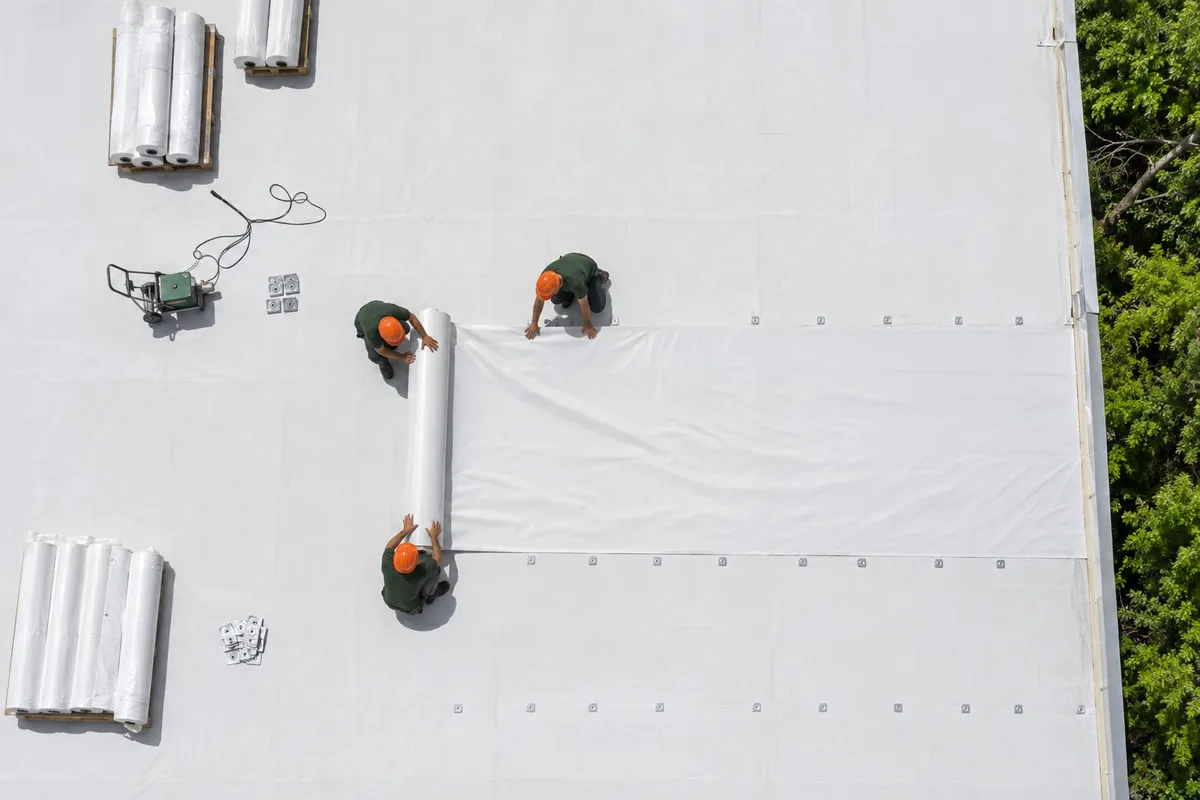
As a Windsor Locks commercial roofing contractor, we install and replace TPO, EPDM, and metal roofs on industrial buildings, hangars, and warehouses with heavy rooftop equipment.
Windsor Locks commercial roofing work near Bradley International Airport covers large industrial and hangar roofs, many crowded with exhaust fans, makeup air units, and ductwork. Each of those pieces is a hole in the roof that needs its own flashing.
Open land around these buildings brings wind across the roof edges, so attachment and edge metal matter as much as the membrane. We plan both with the equipment layout in hand.
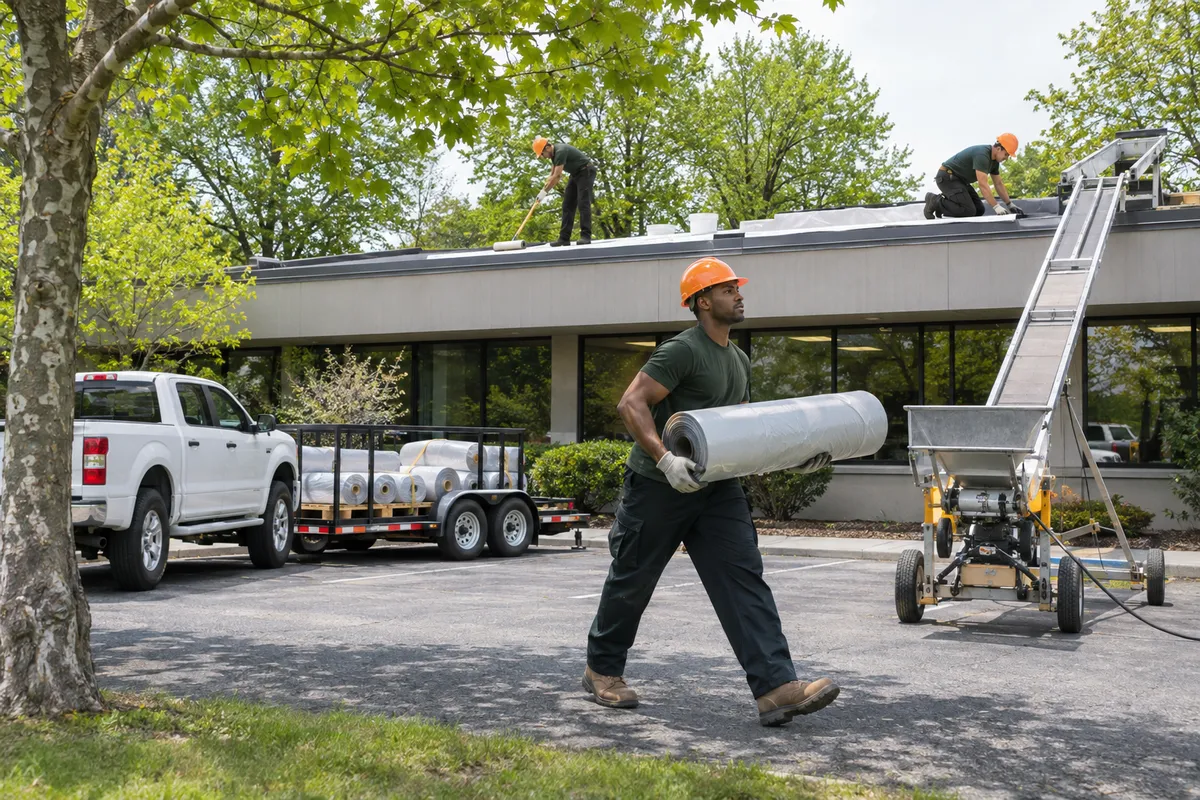
Busy roofs leak where equipment meets membrane. Here is what staff see and what we find.
Water lands near a duct drop or diffuser under a large unit, mostly in wind-driven rain.
The curb counterflashing has pulled away, or the membrane at a curb corner has split.
Ceiling stains line up in a row between the roof hatch and the equipment.
Technicians have walked the same route for years and worn through the membrane without walkway pads.
Stains show along the outer wall after storms with high wind.
Edge metal has loosened and the membrane at the perimeter has lifted, letting rain blow under it.
Brown stains form on the deck under abandoned stacks and curbs.
Unused penetrations were capped with patches years ago, and the patches have split.
A new roof on an equipment-heavy building handles the details that cause most of its leaks.
Curbs are raised where new insulation makes the roof thicker, then flashed into the membrane so units sit above the waterline.
Walkway pads run from the hatch to each unit, taking foot traffic off the membrane on the routes service crews use.
New edge metal and added attachment along the perimeter keep the membrane flat in high wind across open land.
Unit lifts, disconnects, and restarts are scheduled with your mechanical contractor so equipment is off for as short a time as possible.
These systems cover the industrial and hangar roofs around town.
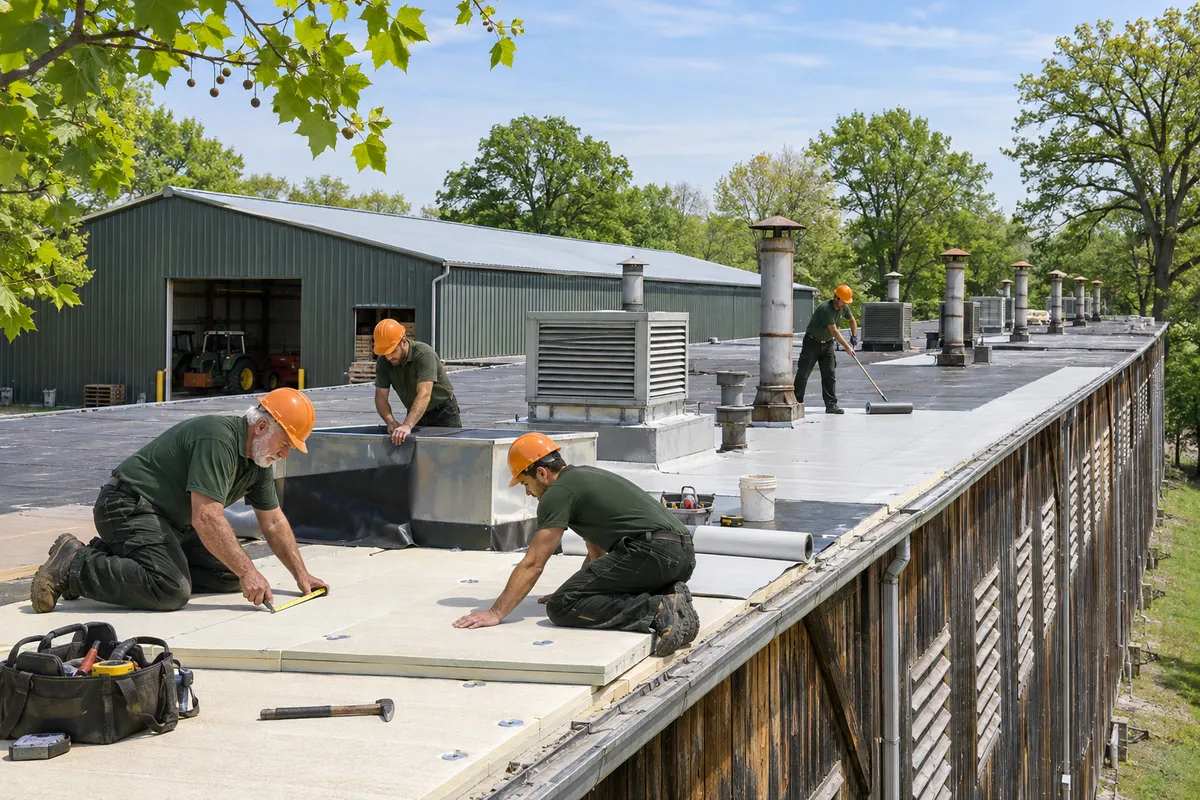
Plants with fans, stacks, and ducts get membrane roofs laid out around the equipment, with walkway pads on service routes.
Industrial Roofing details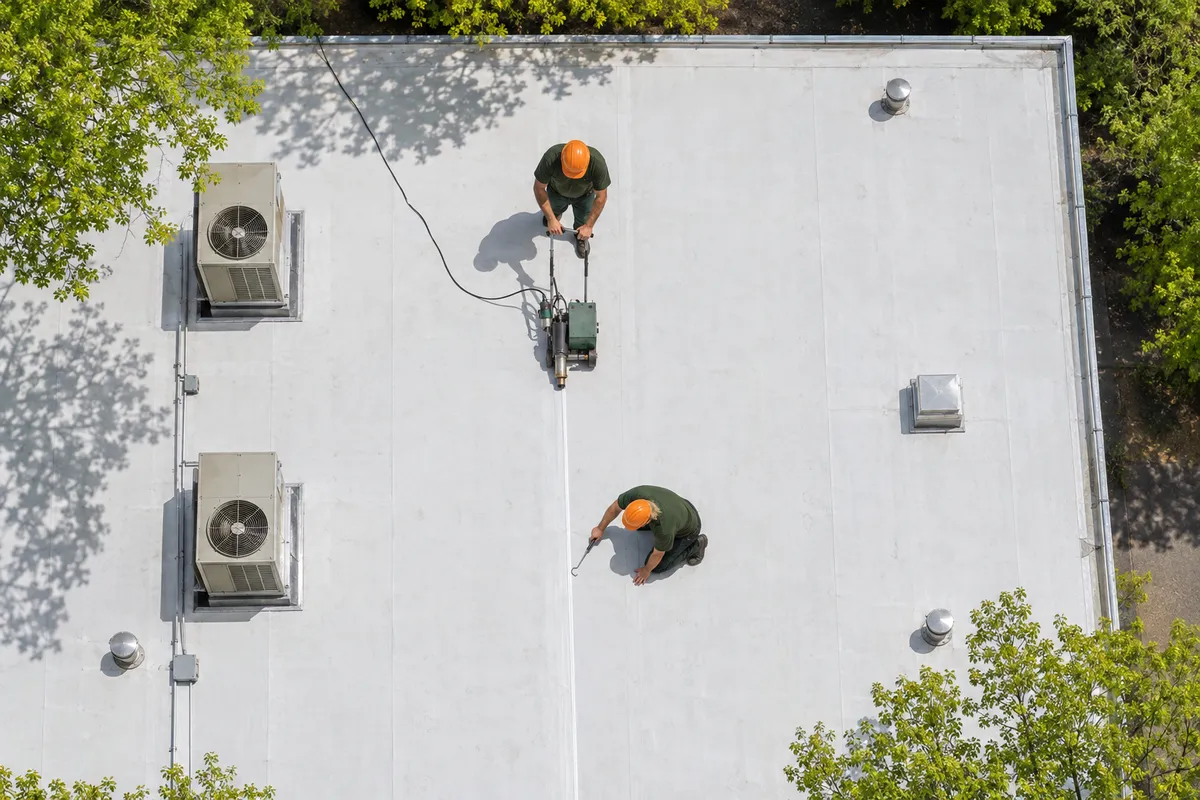
Welded white membrane covers big hangar and warehouse roofs and reflects summer heat off the space below.
TPO Roofing details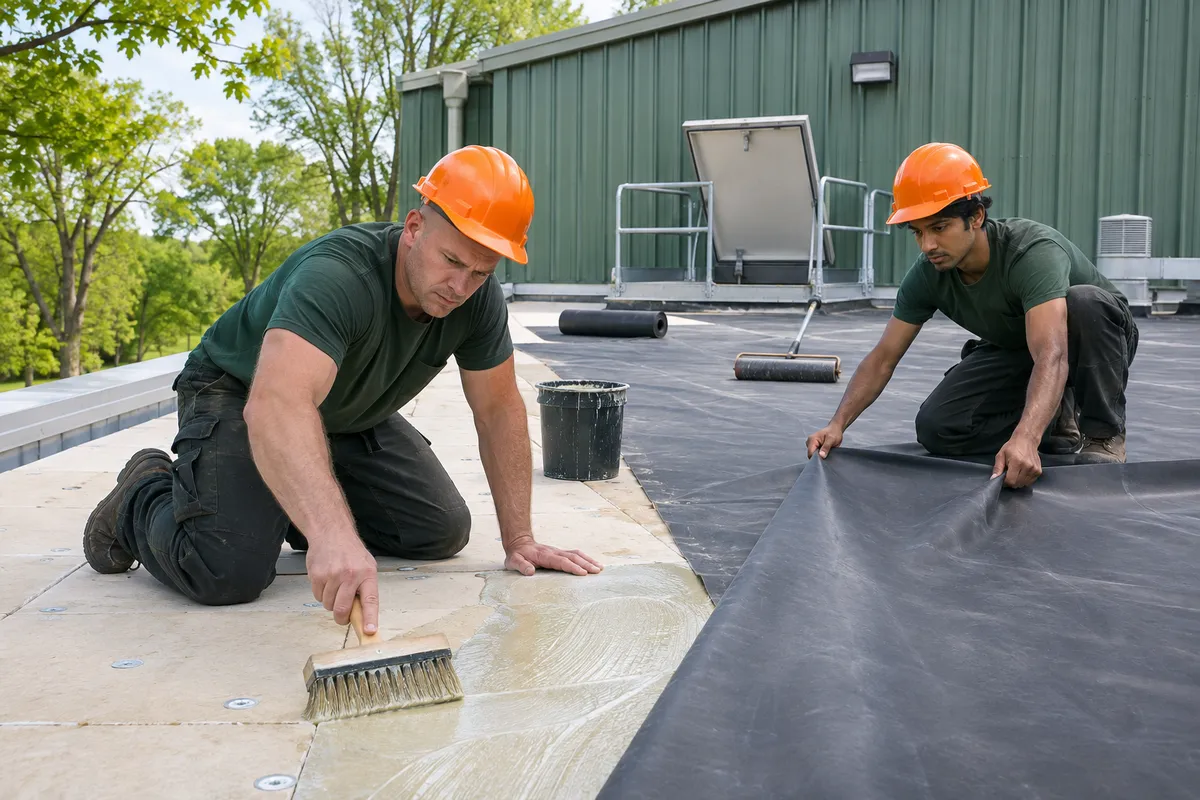
Rubber membrane suits older roofs with movement at joints and long runs of flashing.
EPDM Roofing details
Sloped metal roofs on hangars and shops get new panels and trim, installed over the old roof where the framing allows.
Commercial Metal Roofing detailsCall and tell us which unit is above the drip. Curb flashing is the first place we look.
Send the plant address and roof size. Every curb and fan gets mapped before we price the job.
Get A Free EstimateEquipment-heavy roofs need the mechanical side planned as carefully as the roofing.
We walk the roof, list every curb, fan, duct, and pipe, and take core cuts across the field and near equipment where leaks have been reported.
Units that must be lifted or disconnected are scheduled with your mechanical contractor, and crane picks are set around shifts.
New insulation and membrane go down in sections, curbs are raised where needed, and each penetration is flashed into the new roof.
Walkway pads go down on service paths, edge metal is fastened, and the roof is walked with you before closeout.
Abandoned stacks, curbs, and pipes are taken out and the deck is patched, so the new roof has fewer holes to flash.
Is your building across the town line? We also roof in the towns below; for anywhere else, call us or send us a message.
What plant and facility managers in town ask about roofing around equipment.
Yes. We install and replace TPO, EPDM, and metal roofs on industrial and commercial buildings in Windsor Locks. Roofs with heavy equipment get curb, duct, and pipe flashings tied into the new membrane, and work is planned around production and shipping.
More roofing questionsNot always. Units on low curbs are often lifted so the curb can be raised and reflashed, while others are flashed in place. The core cuts and the new insulation thickness decide which.
Walkway pads run from the roof hatch to each unit, so foot traffic stays on the pads. We also ask service crews to keep tools and panels off the open membrane.
Fastener spacing, adhesive, and edge metal are set for the exposure. Perimeters and corners get tighter attachment because wind pulls hardest there.
Yes. Old penetrations that no longer serve equipment are cut out and the deck is filled, which removes flashing details that would otherwise need upkeep.
Hangars often have long clear spans and large door openings, which affect drainage and edge details. The roof systems are the same, but edge metal and attachment get extra attention.
Send the plant address and equipment details for a roof walk, or call about a leak near a unit.