Drips In The Middle Of A Bay
Inside The Building
Water drips onto racking far from any wall, often a day after the rain stops.
On The Roof
Water is ponding in a low spot between drains and finding a weak lap in the membrane.
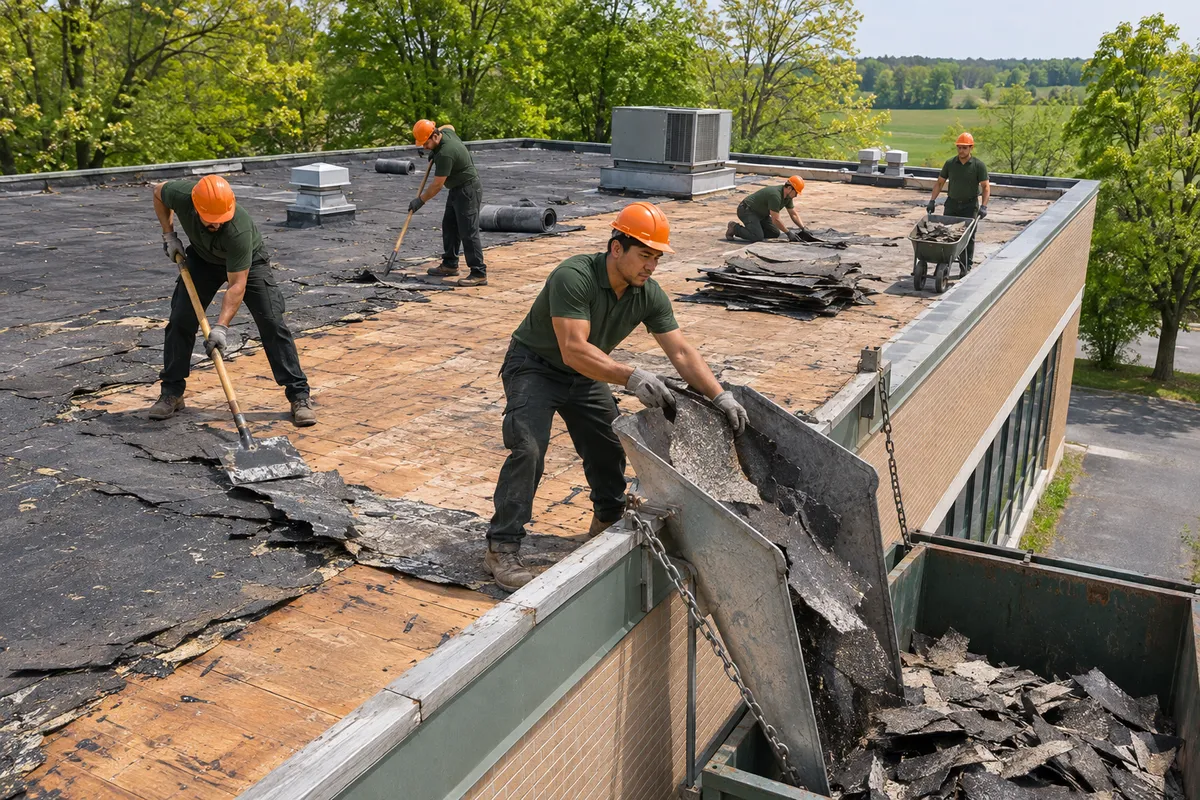
As an East Granby commercial roofing contractor, we replace and repair low-slope roofs on warehouses, distribution centers, and flex buildings in the town's industrial parks.
East Granby commercial roofing work in the industrial parks covers large, flat warehouse roofs. Those roofs drain to a handful of interior drains, and any low spot between them holds water for days after a storm.
We look at drainage first: where water stands, how deep, and why. Tapered insulation and new drain sumps change the slope at those low spots, and the membrane goes on over a roof that drains.
Large warehouse roofs give warning signs on the floor below. Here is how they connect.
Water drips onto racking far from any wall, often a day after the rain stops.
Water is ponding in a low spot between drains and finding a weak lap in the membrane.
A puddle forms at the base of a column after every heavy rain.
The interior drain near the column has a loose clamping ring or a cracked line inside the building.
Stains spread slowly along a joist line with no single drip.
Wet insulation under the membrane has compressed and the membrane over it has cracked.
Small rust flakes land on pallets and shelving under the roof deck.
Moisture trapped under the membrane is rusting the steel deck from above.
A new roof on a distribution building pays off in drainage and fewer interruptions.
Tapered insulation and crickets give low spots a slope, so rain reaches the drains instead of standing on the membrane.
Drain bowls, strainers, and clamping rings are replaced or reset, and the new membrane is sealed into each one.
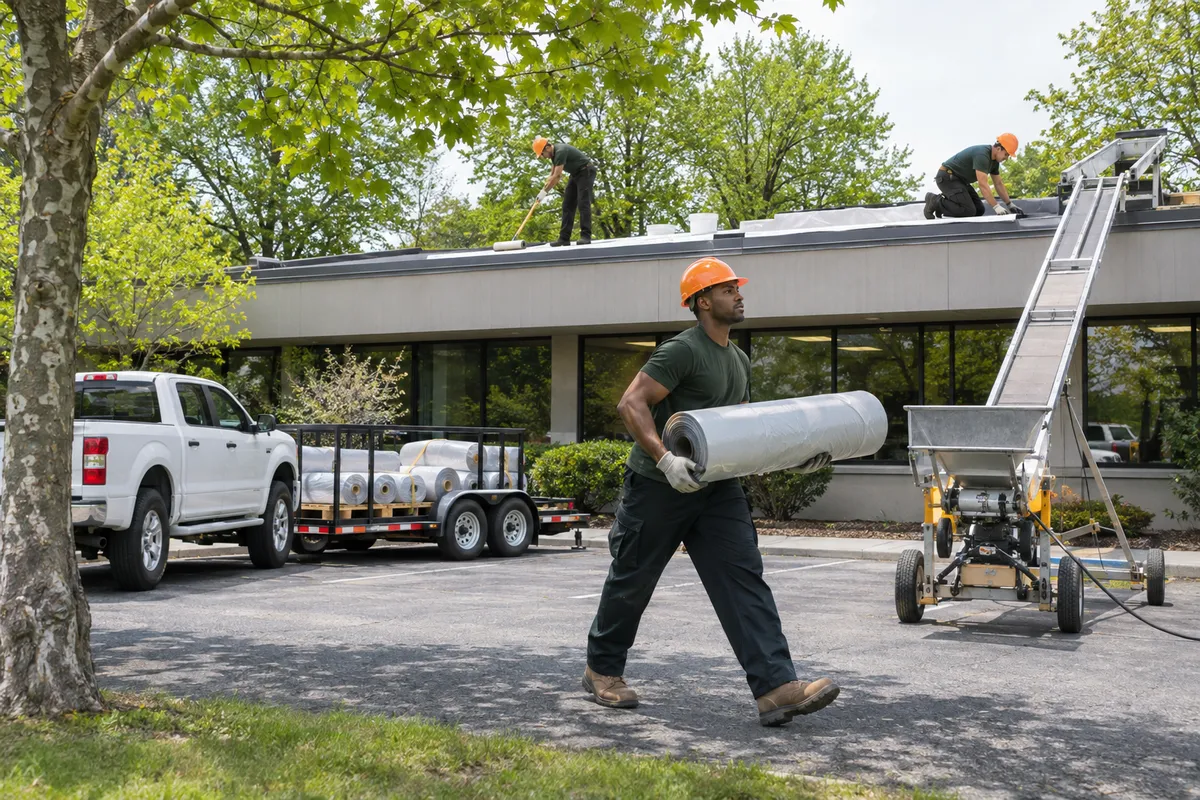
Each section is closed watertight before the crew leaves, and tarps go over stock below open areas.
Roofing materials and dumpsters sit away from the truck court, and crane lifts are timed around shipping windows.
Warehouse roofs in town take one of these four systems.
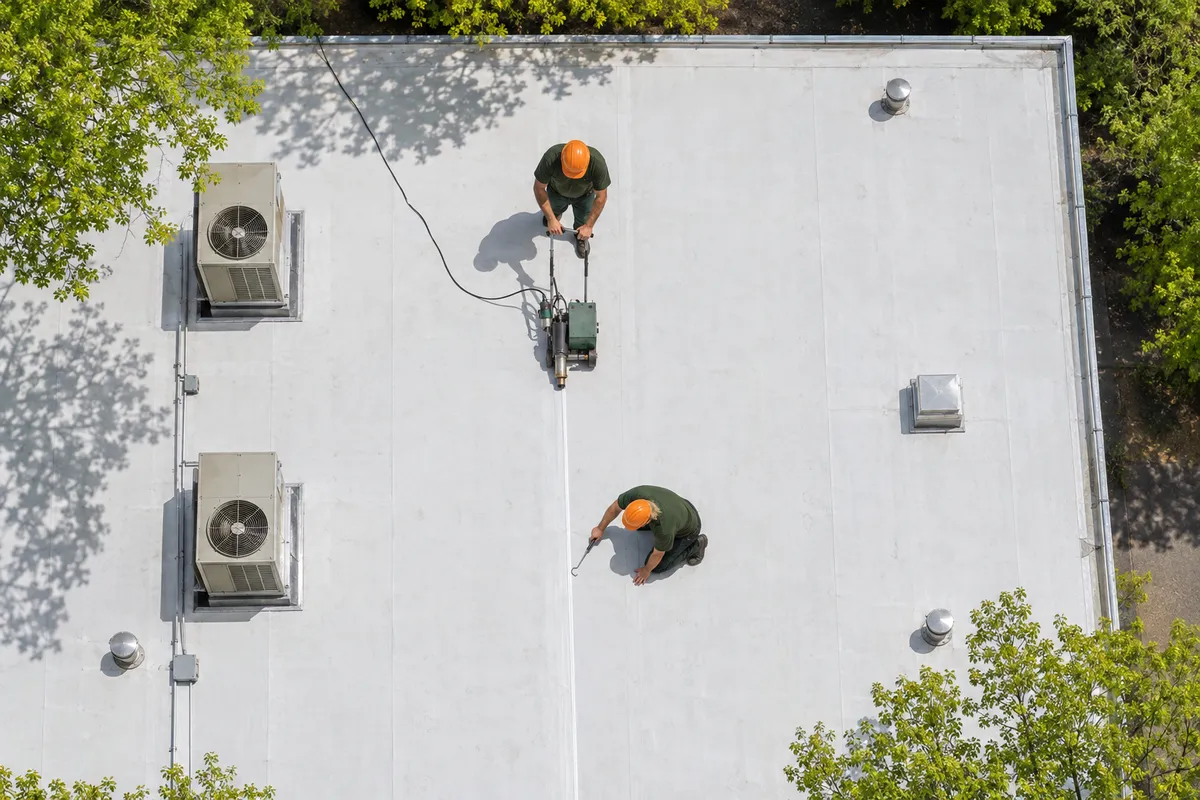
Wide white sheets with welded seams cover large warehouse roofs and reflect summer heat off the stock below.
TPO Roofing details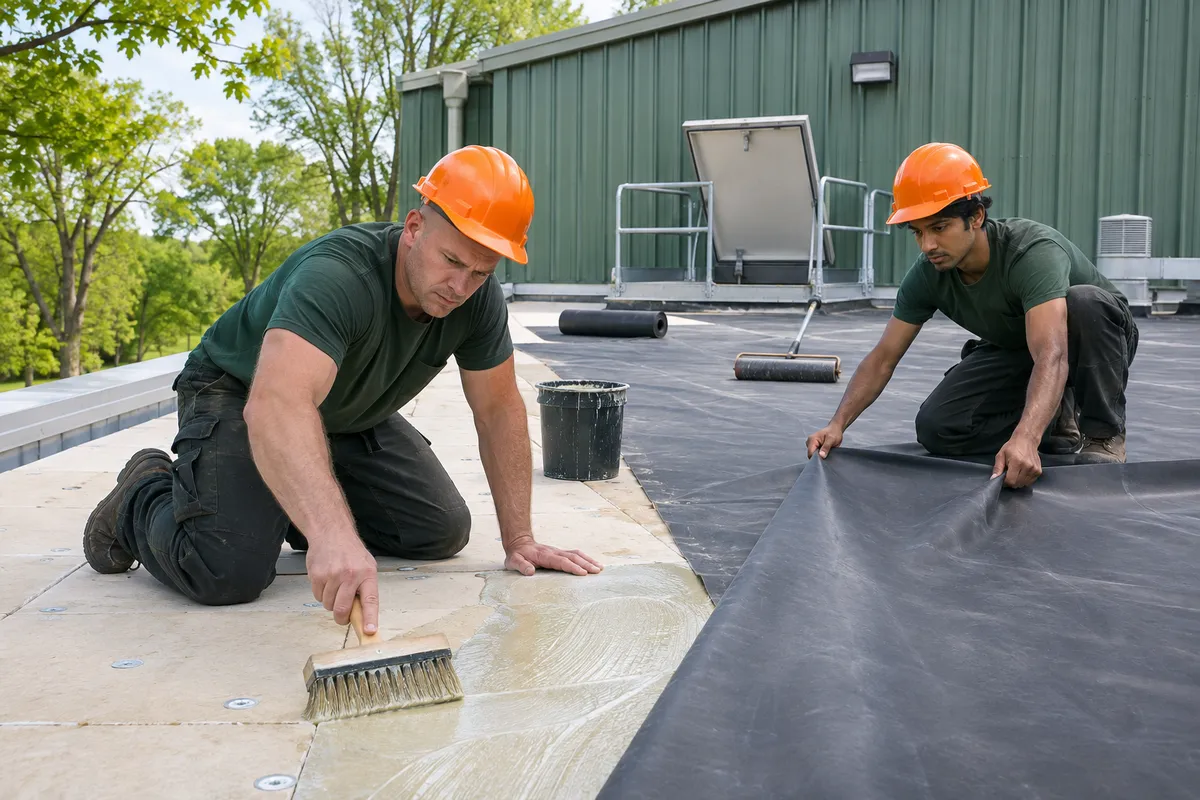
Rubber membrane suits older buildings and additions with long flashing runs at walls.
EPDM Roofing details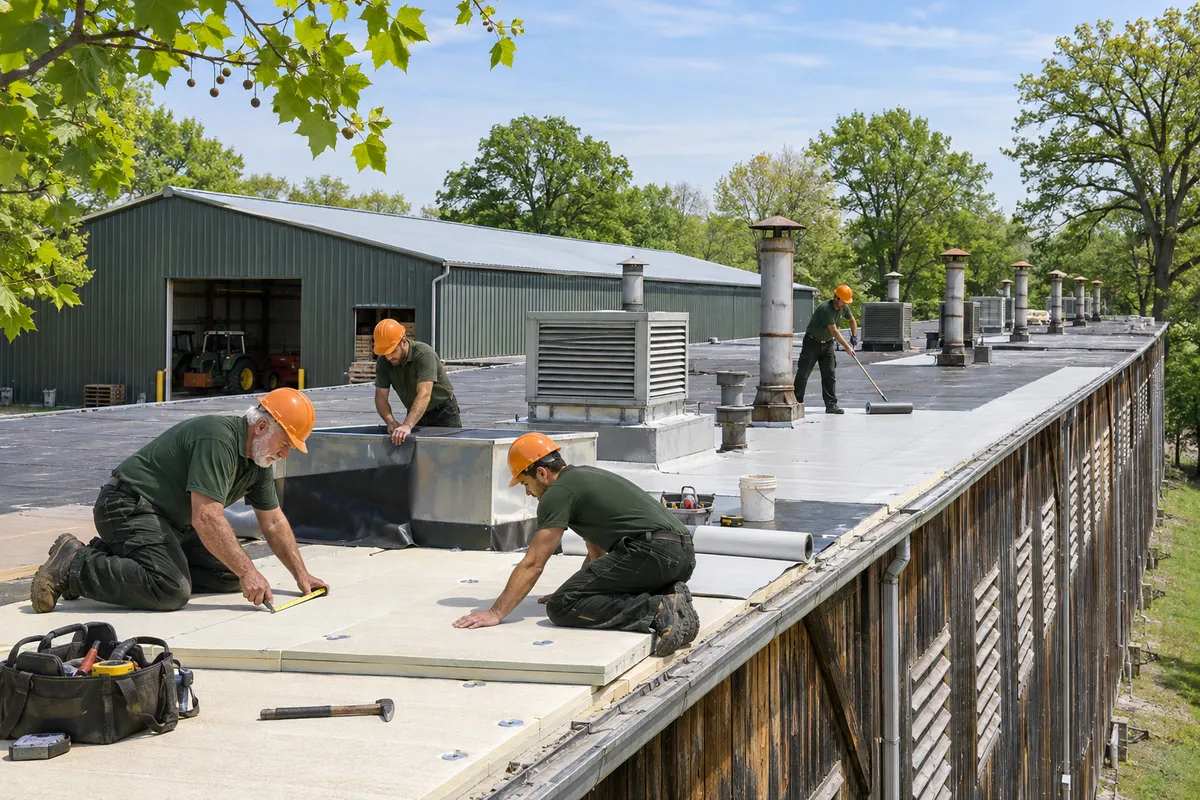
Distribution buildings with fans and units get industrial roofs flashed around every penetration.
Industrial Roofing details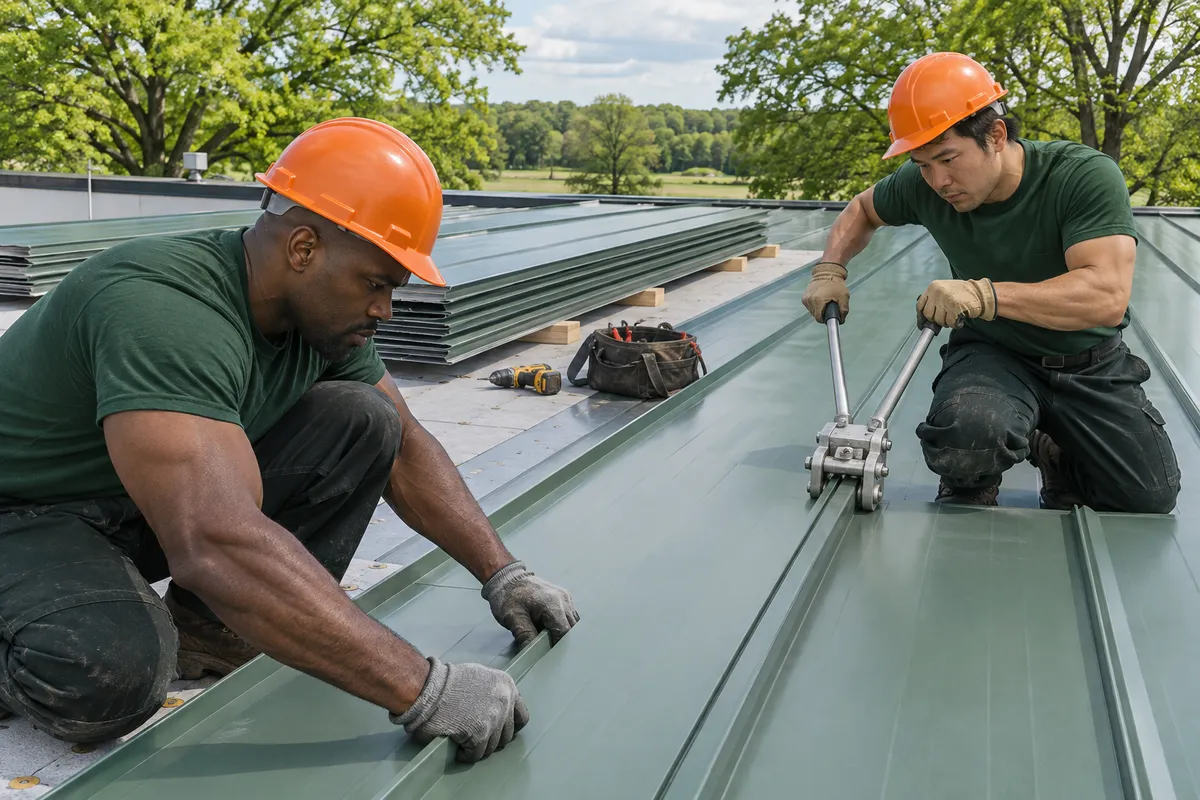
Metal warehouses take new standing seam or exposed fastener panels, sometimes installed over the old roof.
Commercial Metal Roofing detailsCall with the bay number and where the drip lands. We check the low spots and drains above it.
Send the address and roof size. We map ponding before pricing the work.
Get A Free EstimateWarehouse reroofs follow this order so shipping keeps moving.
We walk the roof after a rain if we can, mark where water stands, check every drain, and take core cuts at wet areas.
Tapered insulation and crickets are laid out to move water from low spots to the drains, and the scope lists each area.
Roofing materials, dumpsters, and the crane go where trucks do not need to turn, and lifts are timed around shipping.
Each section is torn off or recovered, insulated, and roofed, then closed before the crew leaves for the night.
Water is run to each drain where we can, strainers are set, and the finished roof is walked with you before closeout.
Is your warehouse in a nearby town? We work across the towns below; for anywhere else, call us or send us a message.
What warehouse owners and managers ask about roofs and drainage.
We find the low spots, then add tapered insulation, crickets, or new drain sumps so water reaches the drains. On a replacement, the new insulation is laid out to slope toward each drain.
More roofing questionsYes. Staging stays away from the truck court, crane lifts are scheduled around shipping windows, and the roof is replaced in sections closed each night.
It often is. TPO comes in wide sheets with welded seams and a white surface that reflects summer heat. The deck, drainage, and equipment still decide the final choice.
It builds slope into a flat roof by stepping up the insulation thickness away from the drains, so water runs to them instead of standing in place.
That follows from the roof area, slope, and drain size under the plumbing code. When ponding shows the drains are too few or too far apart, new drains or crickets are added during the reroof.
Yes. Rusted deck sections found during tear-off are cut out and replaced, or overlaid with new deck plate, before insulation goes down.
Yes. Flex buildings often have office units with rooftop units at the front and open warehouse space behind, and the reroof is planned around both.
Most warehouse roofs here go white, since a reflective TPO surface keeps summer heat off stock and loading areas. Black EPDM still fits older buildings and additions where flexibility at walls matters more.
Send the warehouse address and roof size for a roof walk, or call about water on the floor.