
Drips Under The Unit In Summer
Inside The Building
Water drips near the supply vents on hot days, even without rain.
On The Roof
The condensate line is clogged or draining onto the roof and finding an open lap at the curb.

As a Willington commercial roofing contractor, we replace and repair roofs on offices and small retail buildings, with curb flashing and condensate routing done around every rooftop unit.
Willington commercial roofing on offices and small retail buildings centers on the rooftop units. One or two units on a small roof cut big holes in the membrane, and their curbs are where most leaks start. Technicians walking to those units wear paths into the roof as well.
We check each curb, the condensate lines, and the path technicians take to reach the units. New roofs get raised curbs where needed, tight flashing, and walkway pads from the hatch to each unit. Your HVAC contractor gets the same plan, so units go back on dry, raised curbs.
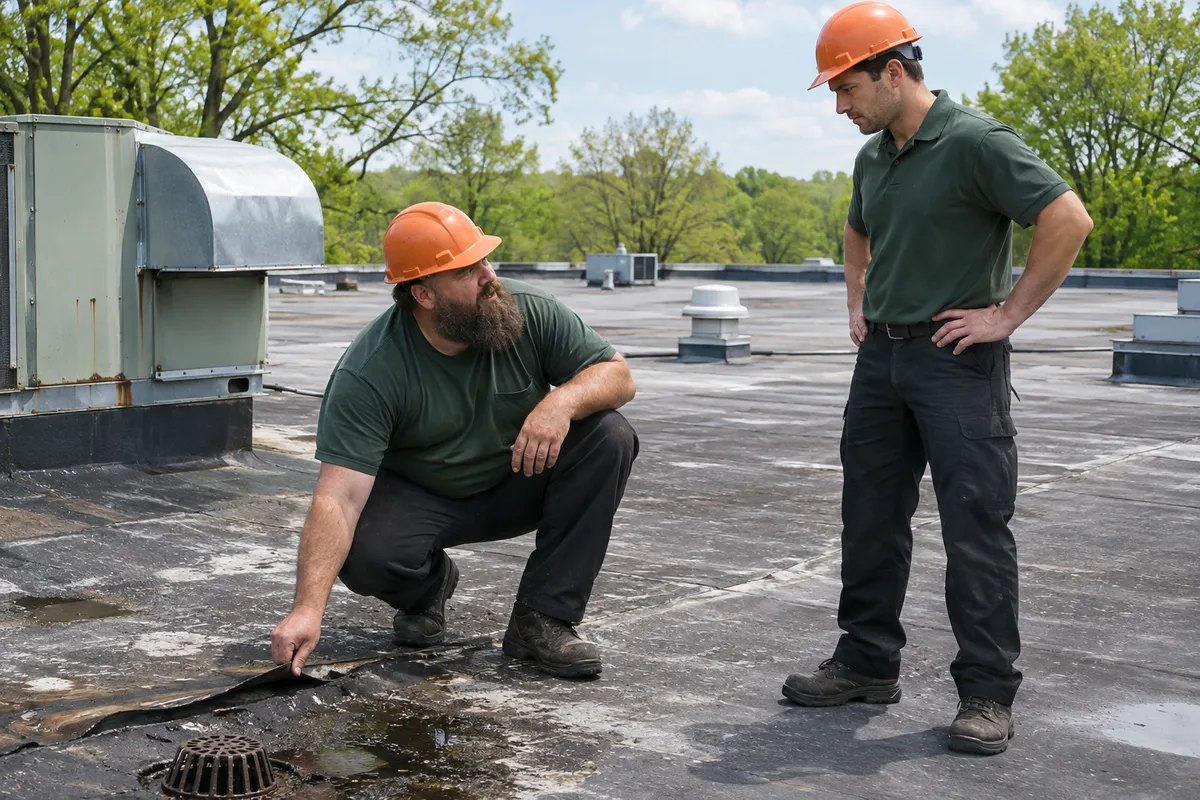
Rooftop units cause most leaks on small commercial roofs. Here is how they show up.
Water drips near the supply vents on hot days, even without rain.
The condensate line is clogged or draining onto the roof and finding an open lap at the curb.
A stain grows at one spot near the unit after rain.
The membrane at the curb corner has split, often where flashing was folded tight.
Small stains line up between the roof hatch and the unit.
Service technicians have worn through the membrane walking the same path.
Rust-colored water runs down the wall near the unit after rain.
The metal curb under the unit has rusted where water pooled against it.
A roof built around its units stops the leaks that come back every season.
Raised curbs and new flashing tied into the membrane keep water out at the unit base, even in wind-driven rain.
Lines are routed to drains or splash blocks, so summer condensate stops pooling at curbs and finding open laps.
Walkway pads take technician traffic off the membrane from the hatch to each unit, where most wear happens.
With curbs, lines, and paths fixed, owners stop calling both roofers and HVAC techs about the same roof leak.
Small offices and retail buildings here take one of these systems.
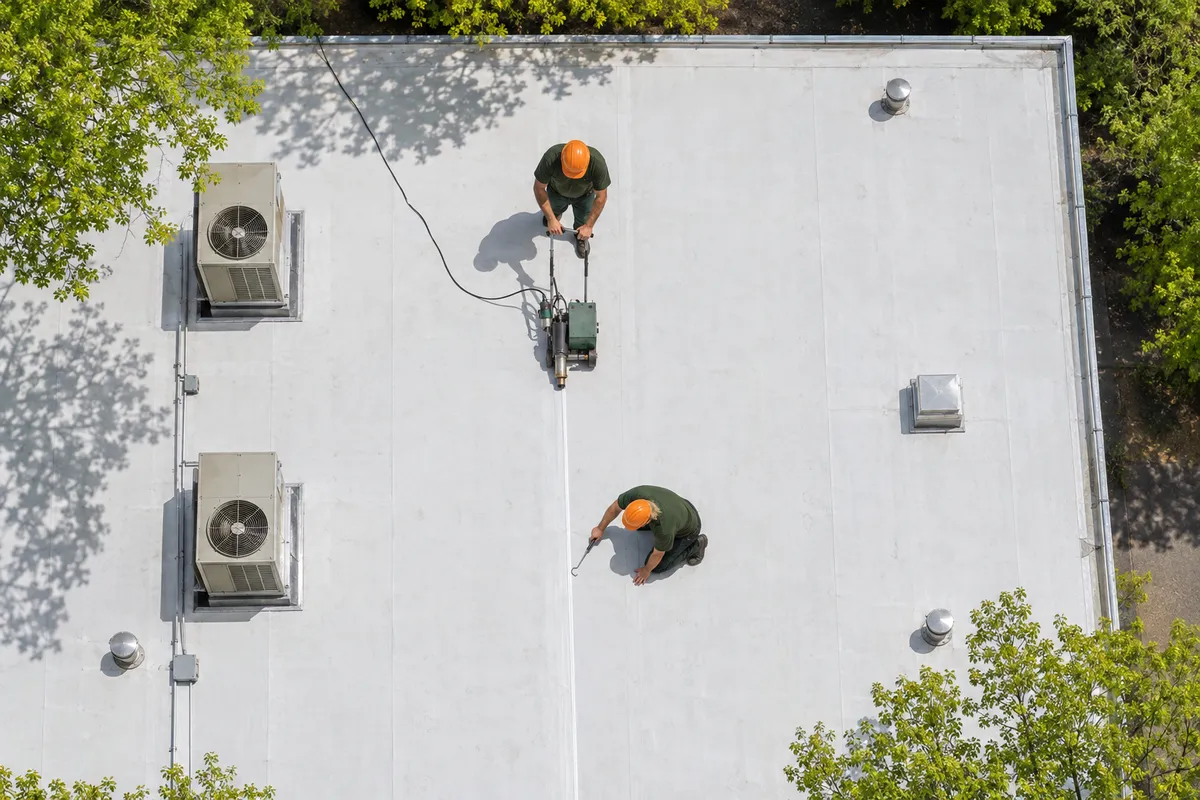
Welded white membrane forms tight flashings at curbs, reflects summer heat off the roof, and takes welded repairs if a unit is moved.
TPO Roofing details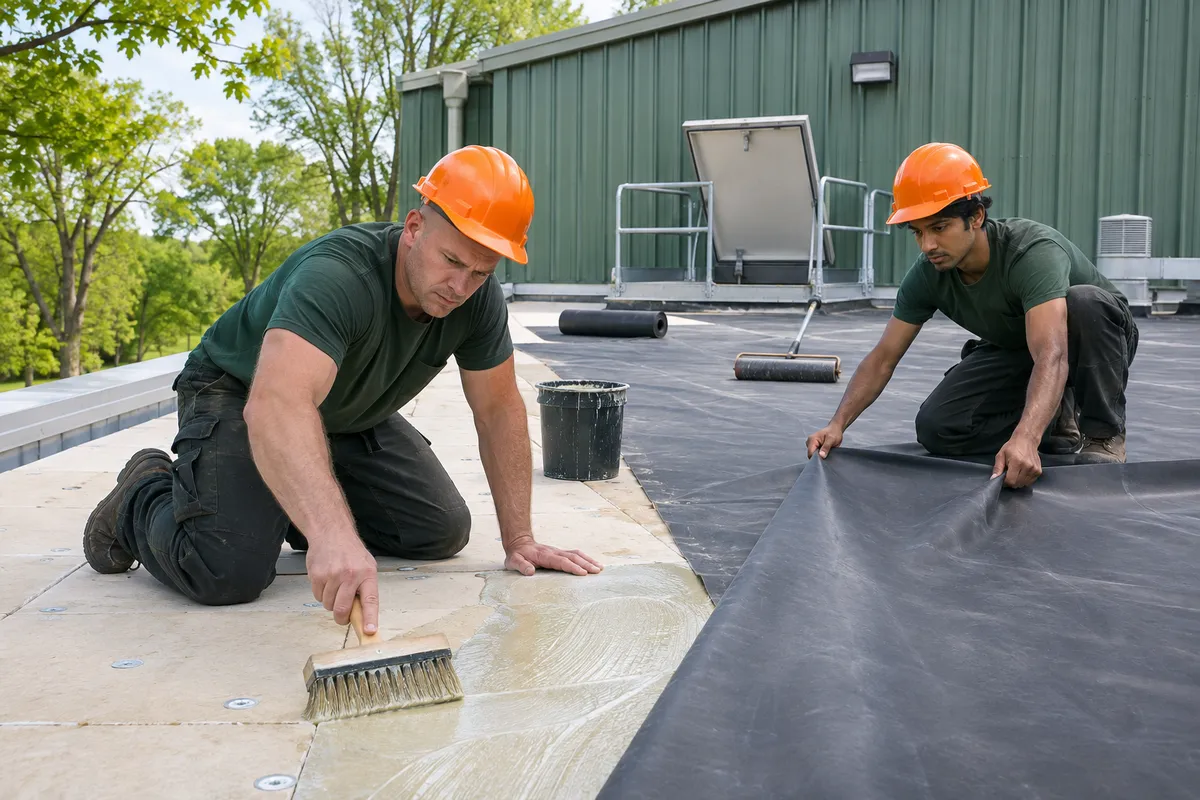
Rubber membrane suits small low-slope roofs with few seams and simple details, and flexes where additions meet the main building.
EPDM Roofing details
Sloped office and retail roofs take new standing seam panels, with curbs framed in where units sit on the roof.
Commercial Metal Roofing details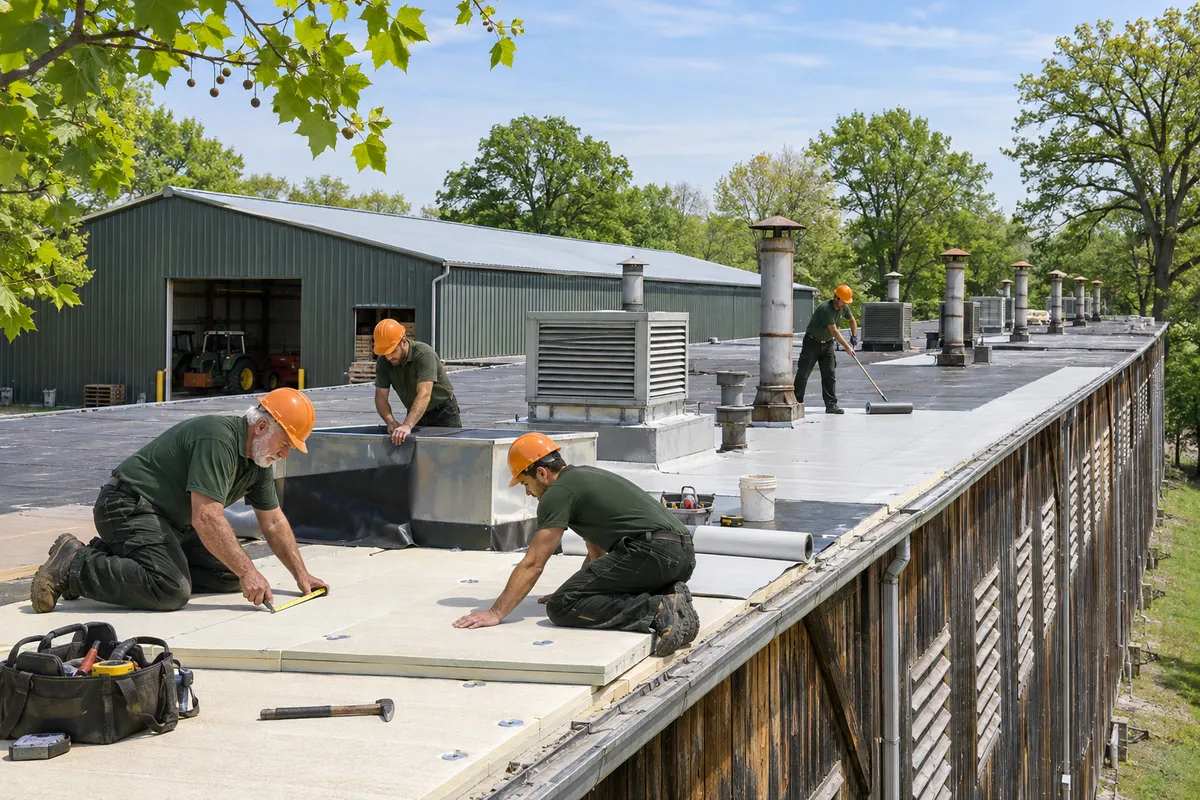
Larger buildings with many units get industrial roof systems, planned with the building owner and the HVAC contractor.
Industrial Roofing detailsCall and tell us which unit is above the drip. We check the curb and condensate line.
Send the address and the number of units. We plan the curbs before pricing.
Get A Free EstimateSmall roofs with units follow this order.
We walk the roof, check each curb, condensate line, and service path, and take core cuts near the units.
Unit disconnects and lifts are scheduled with your HVAC contractor before the roofing starts.
New insulation and membrane go down, curbs are raised where needed, and each one is flashed.
Condensate lines go to drains, walkway pads go down, and we walk the roof with you.
Your HVAC contractor gets notes on keeping condensate lines clear and staying on the roof walkway pads.
Is your office building next door to Willington? We also roof these towns; for anywhere else, call us or send us a message.
What office and small retail owners in Willington ask about leaks at rooftop units, curbs, and service paths.
That water is usually condensate. A clogged or misrouted line drains onto the roof and finds an open lap at the curb.
More roofing questionsOften. New insulation makes the roof thicker, so curbs are raised to keep the flashing high enough above the membrane.
Durable pads set on the membrane along service paths. Technicians walk on them instead of the roof, which prevents wear.
Often both. The roofer fixes the curb flashing and the HVAC tech fixes the condensate line, so we coordinate with them.
Yes, and it often saves money. The old unit comes off, the curb is replaced or adapted, the roof goes on, and the new unit is set on a dry, flashed curb.
At least once a year and after major storms. Curbs move with the unit and their flashing is often the first detail to open.
They need little. We check that each pad stays bonded to the membrane and replace any that crack or lift.
Corners are where flashing is folded and stretched the most. Heat, cold, and unit vibration work at those folds until they crack, so new curbs get pre-formed corners.
Send the building address and the number of rooftop units for a roof walk, or call about a leak showing up under one of them.