Leaks Along A Straight Line
Inside The Building
A row of stains follows a straight line across the ceiling.
On The Roof
A taped seam has let go along its length as the adhesive aged.
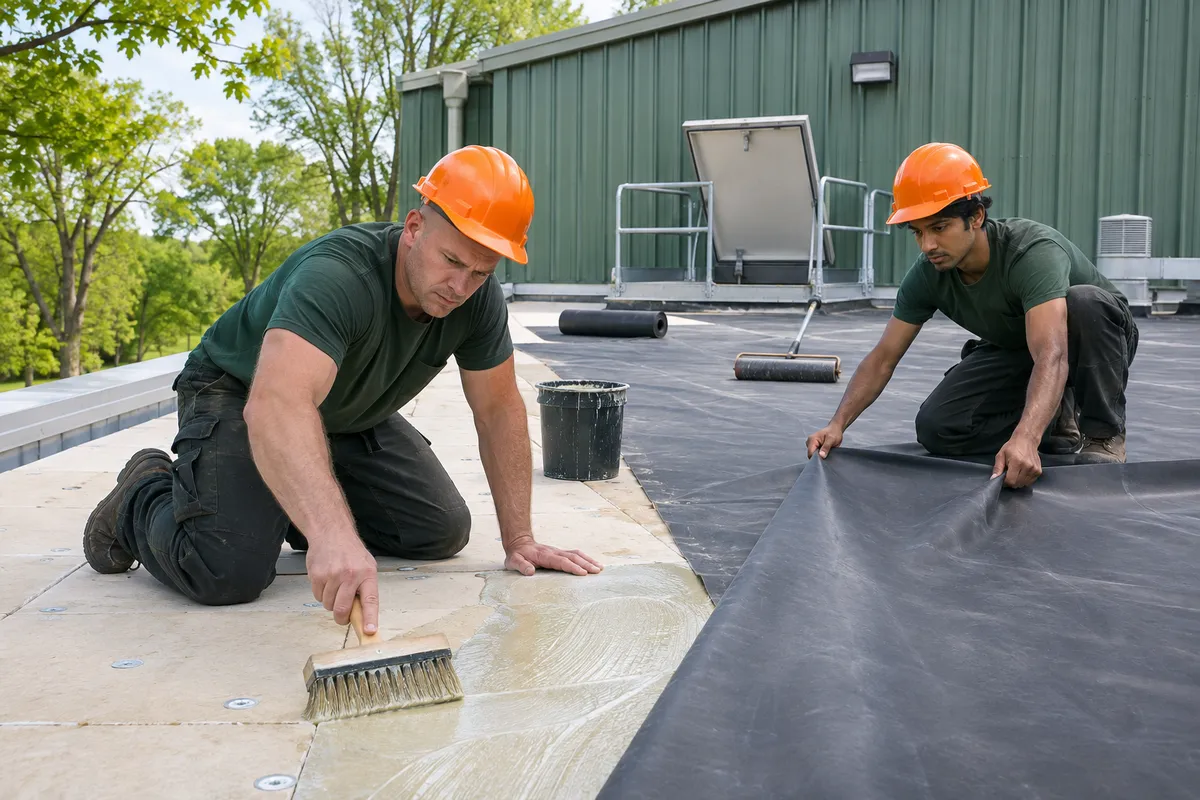
As an Enfield EPDM roofing contractor, we install, replace, and repair black rubber membrane roofs, fully adhered or ballasted, on older low-slope buildings and additions.
Enfield EPDM roofing fits many older low-slope roofs, and the attachment method matters as much as the membrane. These columns compare EPDM with two other systems we install.
EPDM rarely fails in the open sheet. These pairs show where it does.
A row of stains follows a straight line across the ceiling.
A taped seam has let go along its length as the adhesive aged.
Stains show where the roof meets an exterior wall, worst at the corners.
The membrane has shrunk over the years and pulled the wall flashing away from the corner.
New leaks appear soon after the roof was shoveled.
A shovel blade cut the rubber, or chipping at ice punctured it near a drain.
Water shows inside near roof drains during a midwinter thaw.
Ice has blocked the drain, and meltwater is sitting against the drain flashing.
If rubber membrane is the wrong match, these systems cover the rest of the roofs we see.
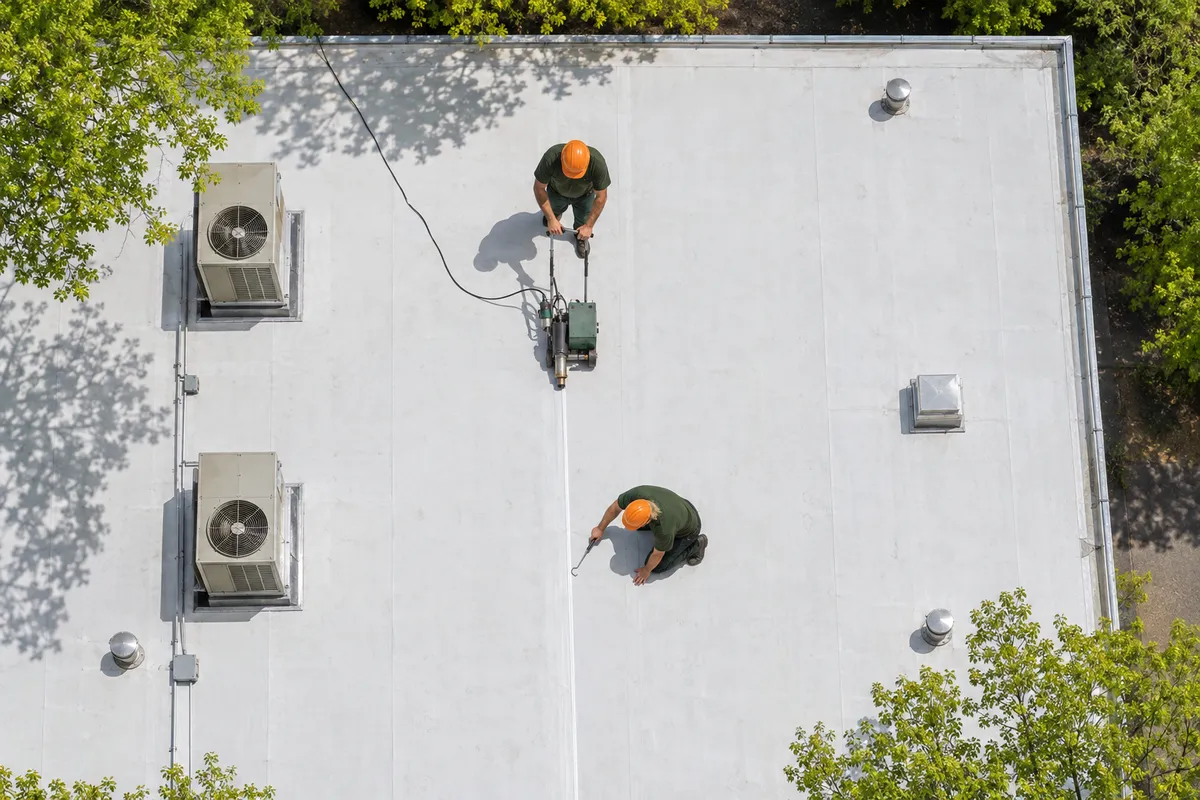
White welded membrane fits warehouses and cold storage where summer heat at the roof matters.
TPO Roofing in Enfield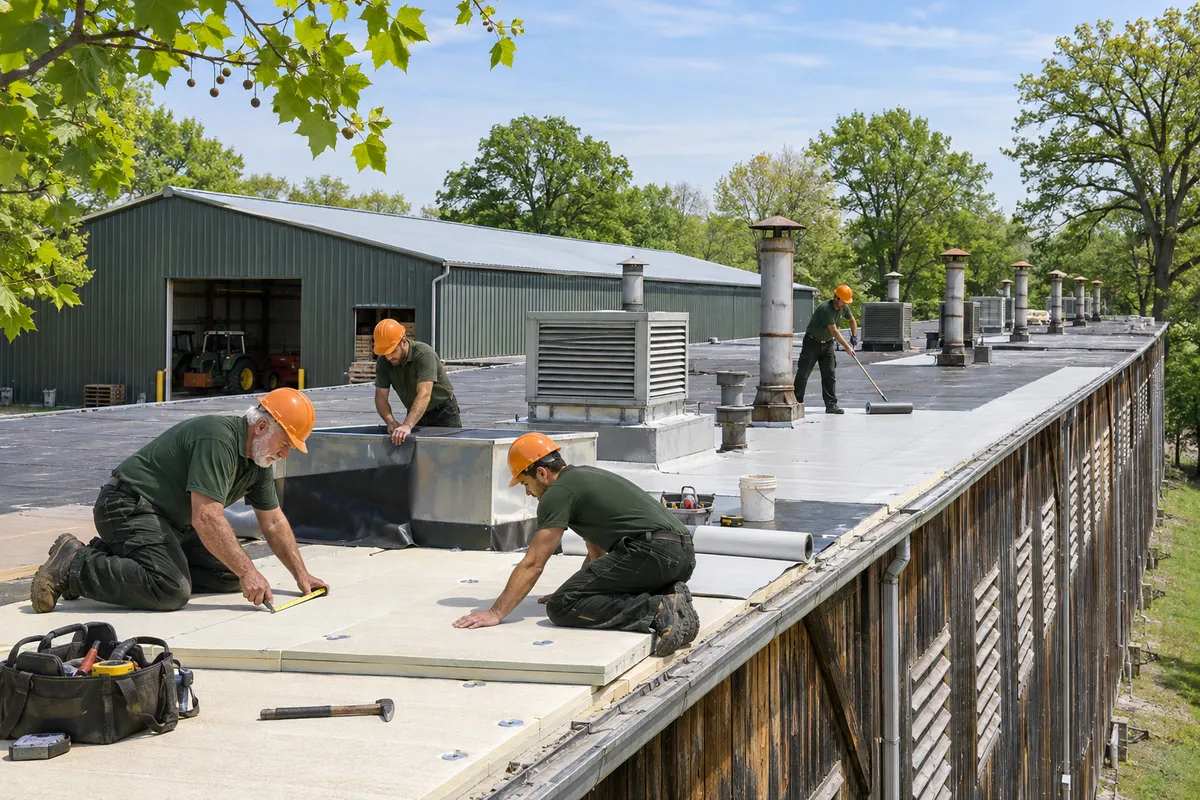
Plant roofs with heavy equipment get systems planned around every curb and service path.
Industrial Roofing in Enfield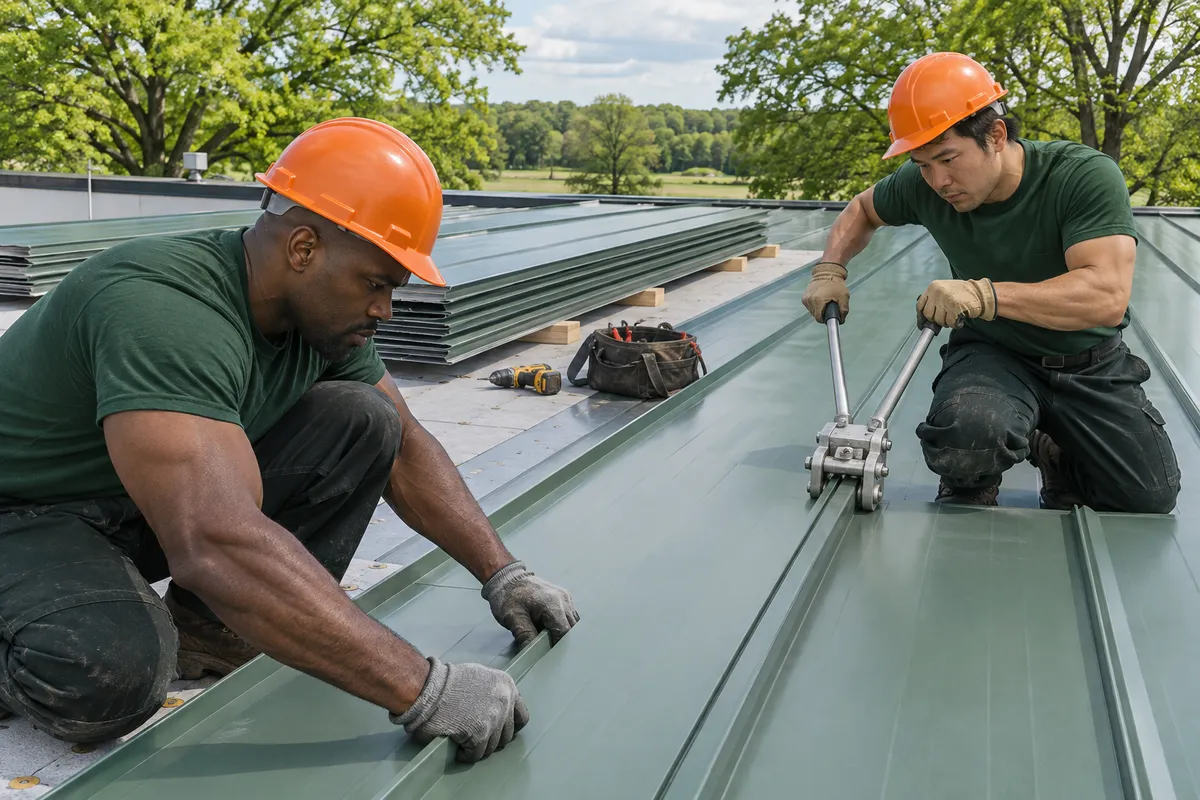
Pitched shop and storage roofs take new metal panels with fresh fasteners and trim.
Commercial Metal Roofing in EnfieldCall and describe where the stains line up inside. We check the seams and wall flashing above them.
Send the address and roof size. Core cuts come before the price.
Get A Free EstimateA new rubber roof handles cold, movement, and repairs in its own way.
The rubber stays pliable in cold weather, so it moves with the building through freeze-thaw seasons without cracking at the laps.
Wide EPDM sheets cover large areas with few laps, which leaves fewer places for water to find a way in.
On a fully adhered roof, water cannot travel far under the sheet, so a leak shows up close to where it starts.
Cuts and punctures are cleaned, primed, and covered with a taped patch that bonds to the old rubber.
EPDM jobs follow this order from the first core cut to the last wall flashing.
We walk the roof, take core cuts, and check the deck, insulation, walls, and drains, then choose fully adhered, fastened, or ballasted EPDM.
Old layers come off, the deck is repaired, and new insulation or cover board is fastened down ready for the rubber.
Wide sheets are rolled out, left to relax, and bonded with adhesive, and every lap is primed and taped.
Wall flashing, drain flashing, and pipe boots are bonded to the field sheet before each section is closed.
Together we walk the finished roof, check every taped lap and wall flashing, and hand over the details of the system installed.
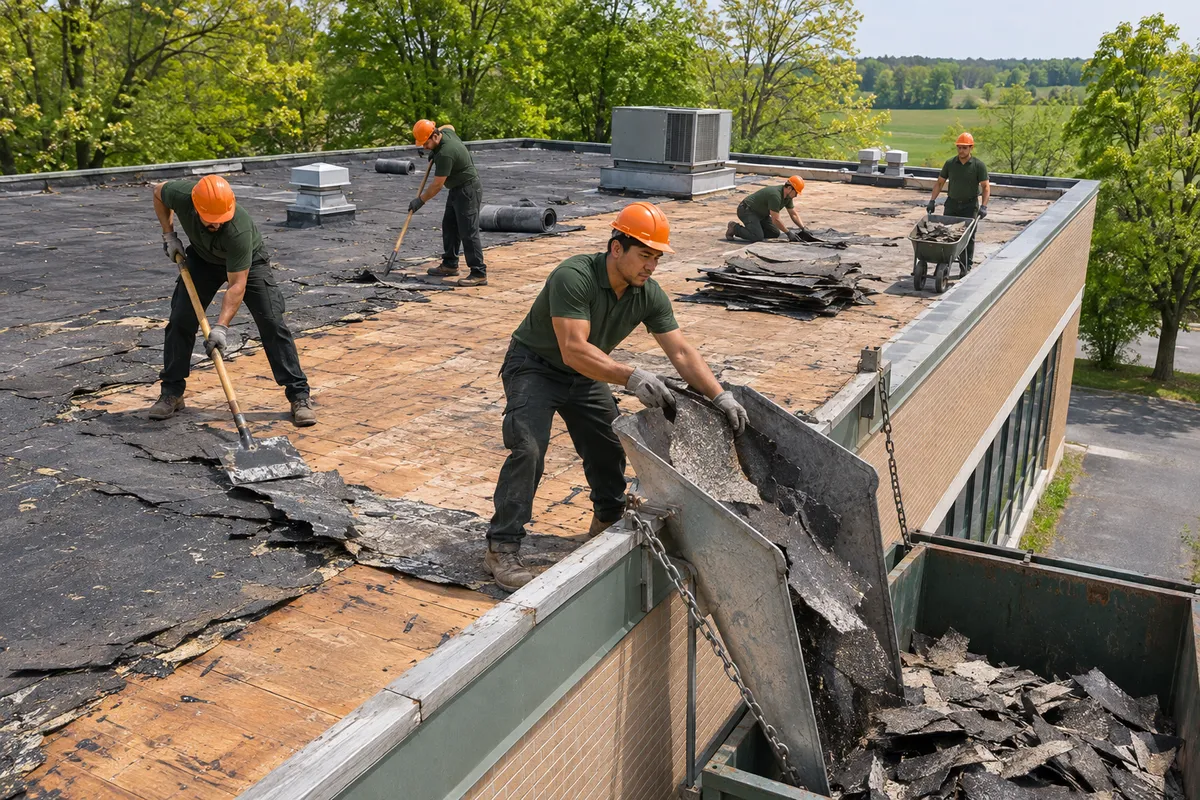
Older rubber roofs reach a point where patching just moves the leak. Seams are failing in many places, the sheet has shrunk and pulled flashings loose, and core cuts find wet insulation.
At that stage we replace the roof. When the deck and most of the insulation are dry, a recover over the old roof can work where code allows; when they are wet, everything comes off to the deck.
Answers on rubber roofs, from attachment to winter care.
EPDM is a synthetic rubber membrane, usually black, laid in large sheets over insulation on low-slope roofs. Seams are joined with tape or adhesive, and the sheet is held down by adhesive, fasteners, or ballast stone.
More roofing questionsMost trouble shows at seams, flashings, and edges: seam tape lifting with age, flashings pulling away at curbs, and shrinkage stressing the perimeter. Punctures from foot traffic and snow shovels happen too, and most of these are repairable.
Fully adhered EPDM is glued down, stays flat, and keeps leaks close to their source. Ballasted EPDM is held by stone, goes on quickly, and adds weight the structure must carry. Deck load and wind at the edges settle it.
When seams fail across the roof, shrinkage has pulled flashings loose in many places, or core cuts find wet insulation over large areas. Patching a roof in that shape tends to chase leaks from spot to spot.
Ice builds at drains and parapets, where meltwater refreezes and sits against flashings. We add membrane at those details, keep drains clear, and ask that snow be cleared with plastic shovels.
Commercial EPDM usually comes in 45 or 60 mil sheets. The thicker sheet takes more abuse from foot traffic and snow removal, so we pick it for busy roofs.
Yes, with care. Adhesives and seam tape need the right temperatures to bond, so in cold months we work in the warmer part of the day and keep materials warm before use.
Send the address for a roof walk and core cuts, or call about a seam or wall flashing that is leaking.