Drips In Rows
Inside The Building
Drips land in neat rows on the floor or stored goods during rain.
On The Roof
Fastener washers have cracked and screws have backed out across the roof.
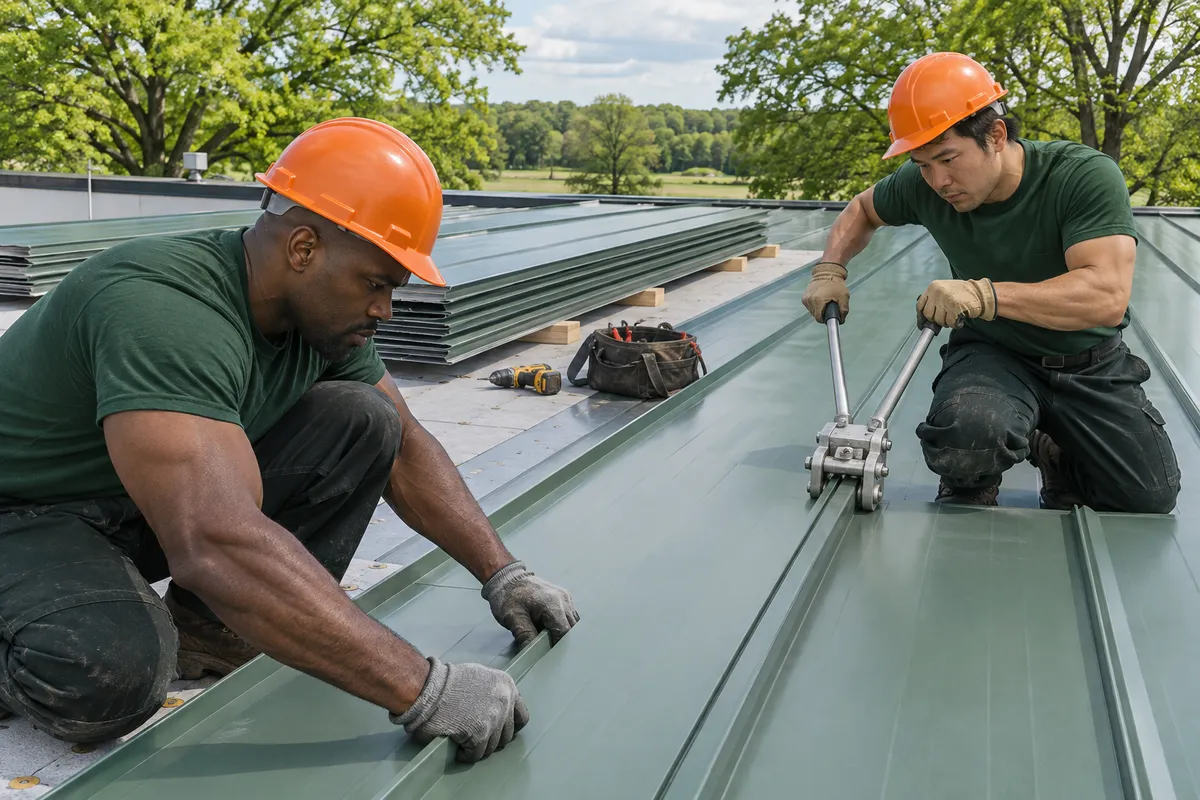
As an Enfield commercial metal roofing contractor, we install, replace, and maintain standing seam and exposed fastener metal roofs on shops, storage buildings, and farm buildings.
Enfield commercial metal roofing works on sloped roofs and buildings on open framing. The panel type matters, so here is standing seam beside exposed fastener panels and a membrane roof.
Metal roofs tell you where they are failing. These pairs show the signs and the cause.
Drips land in neat rows on the floor or stored goods during rain.
Fastener washers have cracked and screws have backed out across the roof.
Rust streaks run down the walls below the eaves.
Panel ends at the eave have held water for years and rusted through.
The underside of the panels drips on cold mornings.
Condensation is forming because the building has no underlayment or ventilation.
Water shows along the ridge line or the gable walls.
Ridge caps and gable trim have loosened, and their foam closures have broken down.
Low-slope sections and plant roofs on the same property take one of these systems.
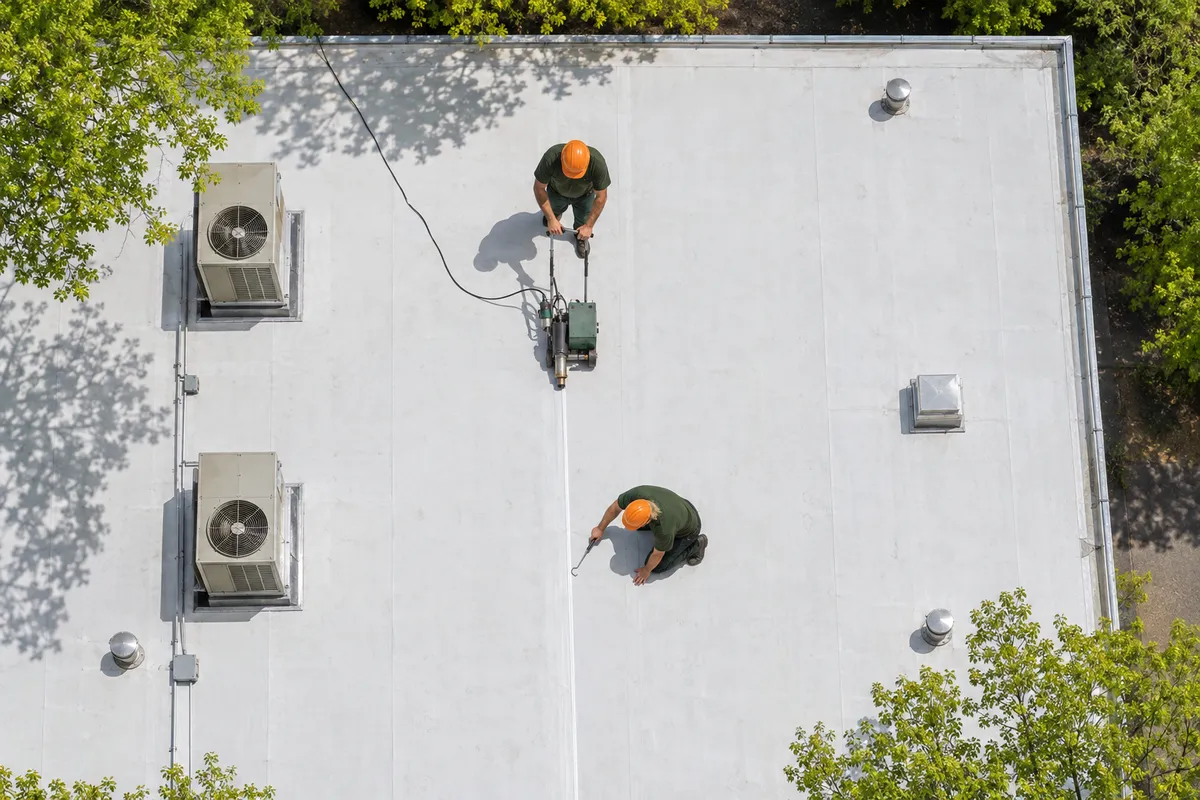
Flat roofs on offices and additions beside a metal building take welded white membrane.
TPO Roofing in Enfield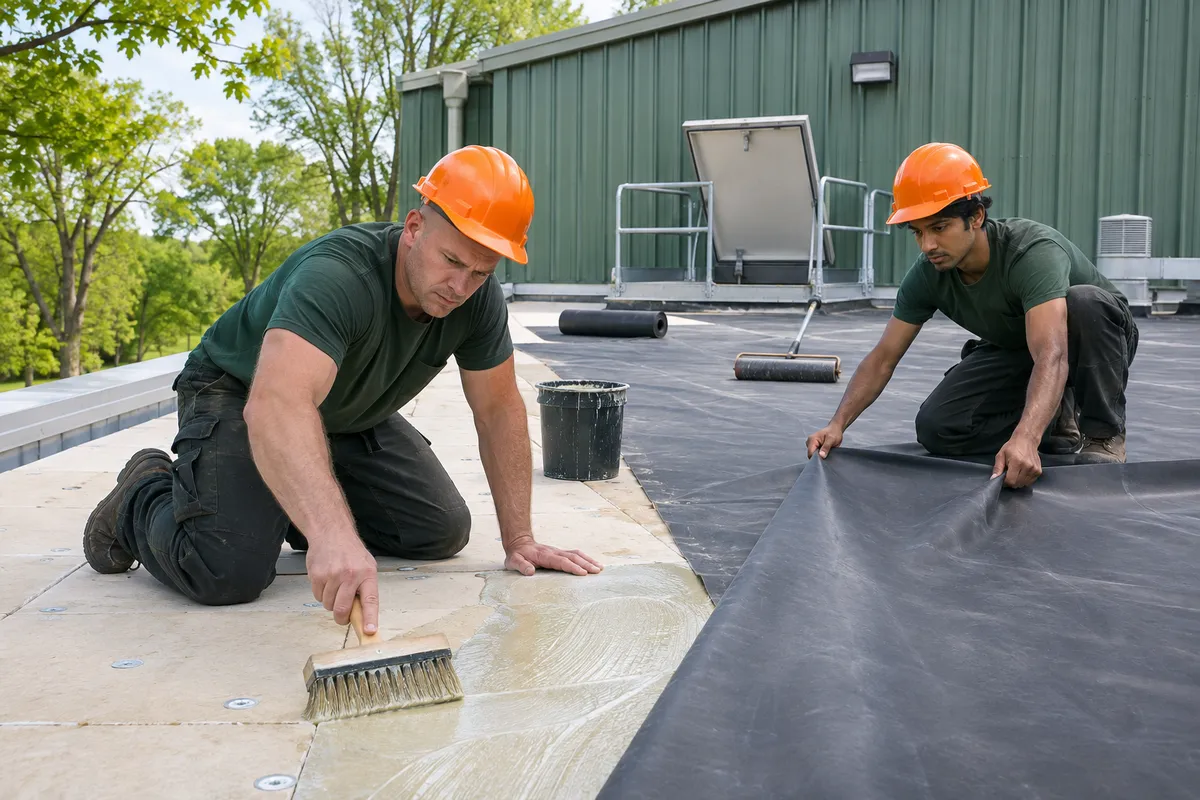
Low additions against a metal building take rubber membrane that flexes at the joint.
EPDM Roofing in Enfield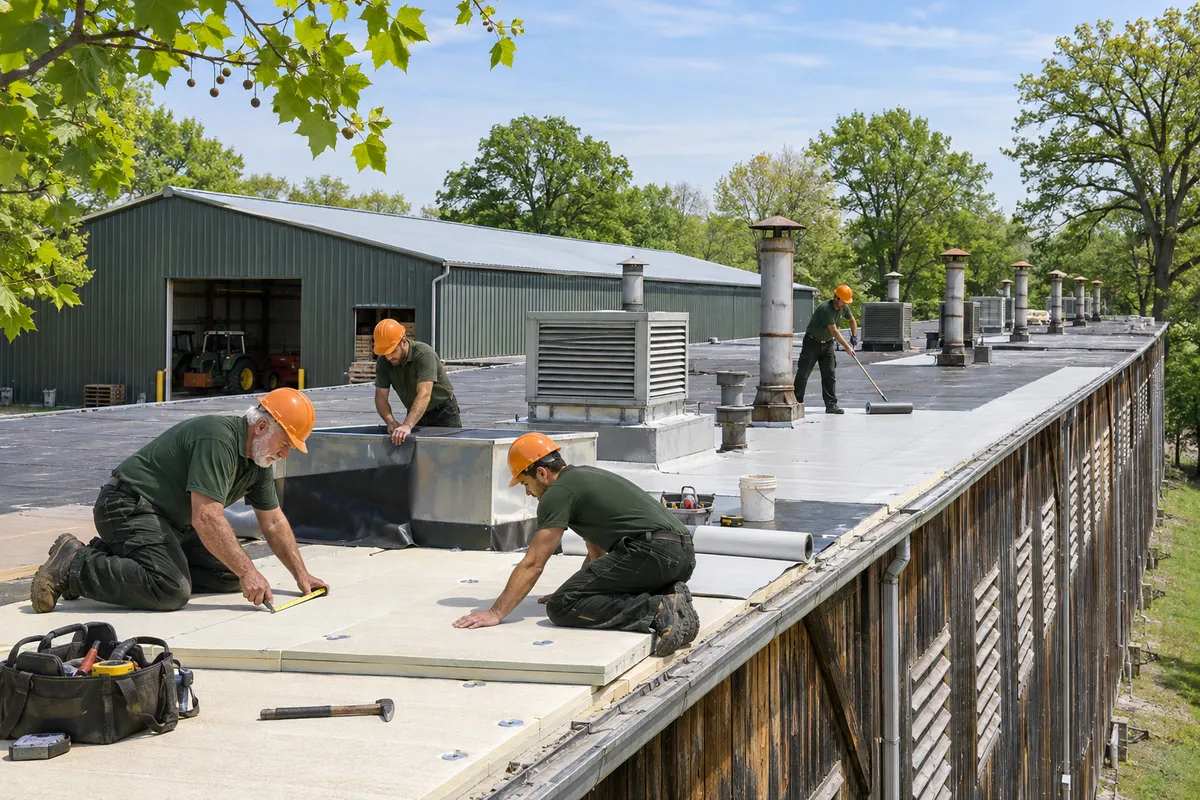
Plants with heavy equipment get roofs planned around every fan and curb.
Industrial Roofing in EnfieldCall and tell us where the drips land. Fasteners and laps above them are checked first.
Send the address and building size. We check the framing before quoting panels.
Get A Free EstimateA new metal roof changes how a sloped building handles snow, rain, and upkeep.
Sloped metal panels let snow and rain slide off, and snow guards go where sliding snow would land on doors or walkways.
Panels run from ridge to eave in one piece on most buildings, which leaves few laps for water to find.
Metal goes straight onto purlins on sheds and barns, with no deck needed under it.
Damaged panels, worn fasteners, and loose trim are replaced one at a time without tearing off the whole roof.
Metal jobs follow this order, from framing checks to the last piece of trim.
We check the framing, the existing roof, fasteners, trim, and ventilation, and look inside for condensation and rust.
Panel type, gauge, color, fasteners, and underlayment are picked for the building and written into the scope.
Rotted purlins are replaced, and furring or new framing goes over an old roof where a recover is planned.
Panels are fastened or clipped, then ridge caps, gable trim, closures, and snow guards go on.
You walk the roof and the inside of the building with us, and we note fastener and trim checks to plan for in coming years.
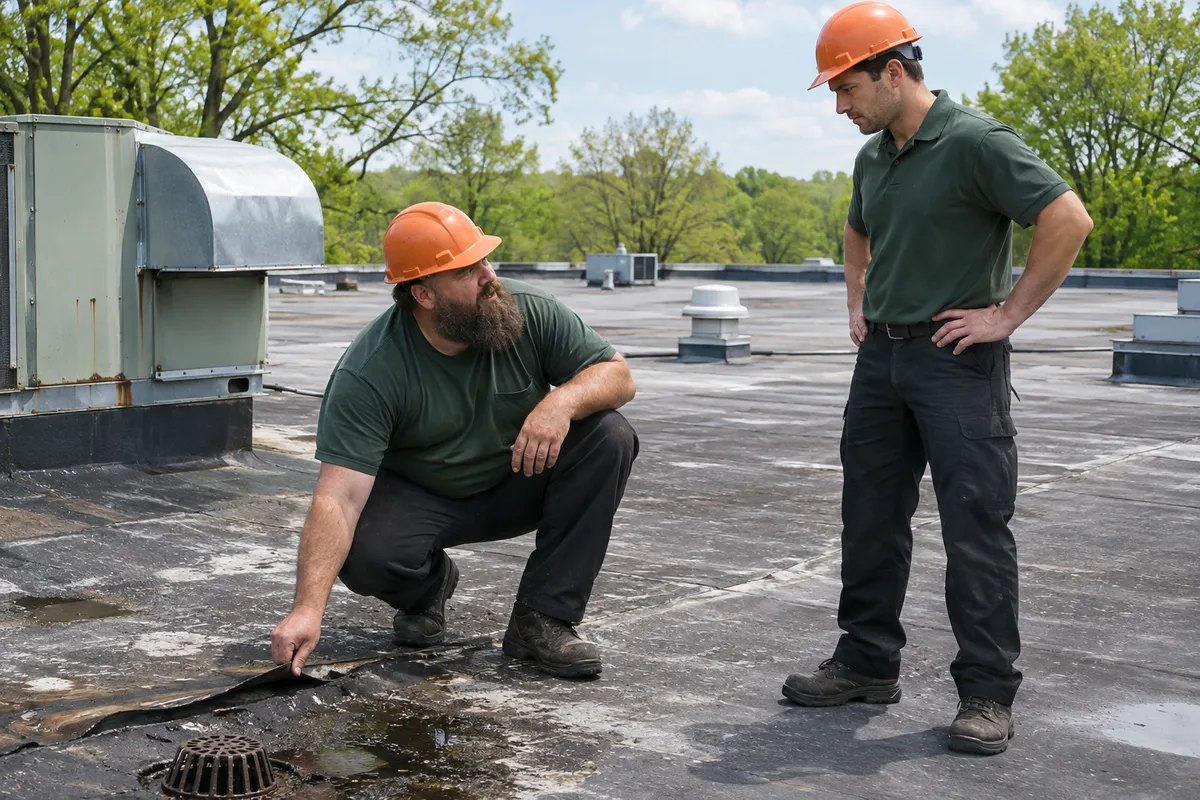
A new metal roof can go over an existing one on framing or purlins, as long as the structure carries the added load and the old layers fall within code limits.
We check the deck, count the layers, and look for moisture first. Trapping a wet roof under new metal leads to rust and rot, so wet areas come off before the new panels go on.
Answers on panels, farm buildings, recovers, and cost.
Standing seam panels join at raised seams with hidden clips, so no screws pierce the panel face and the panels can move with temperature. Exposed fastener panels are screwed through the face, cost less, and suit simpler buildings, but their fasteners need upkeep.
More roofing questionsYes. Metal sheds snow and rain on sloped roofs and installs straight onto open framing, which suits tobacco sheds, barns, and storage. We check ventilation and condensation control before choosing panels.
Often. Metal on new framing or purlins can go over an old roof when the structure carries the load and the layer count is within code. Wet layers come off first so moisture is not trapped under the panels.
Panel type and gauge, roof size and slope, tear-off or recover, framing repairs, insulation, trim, and access for lifts all move it. Snow guards, gutters, and penetrations add to it, and we price each roof after measuring it.
Look at exposed fasteners on every roof walk, especially after hard winters, since washers crack and screws back out as panels move. Standing seam roofs need far less fastener attention.
Most commercial panels are 24 or 26 gauge steel, with the heavier 24 gauge used where snow loads, foot traffic, or longer spans call for it. Framing spacing also plays into the choice.
Yes. Rigid insulation can go over the deck or purlins under new panels, and on a recover it sits between the old roof and the new metal. That also cuts condensation inside.
On roofs over doors, walkways, parking, or lower roofs, yes. Snow guards hold snow in place so it melts slowly instead of sliding off in one piece.
Send the building address and size for a framing check, or call about drips under a metal roof.