
Water Down An Outside Wall
Inside The Building
Water streaks run down the wall below a scupper after rain.
On The Roof
The scupper is clogged or the seal between it and the membrane has failed.
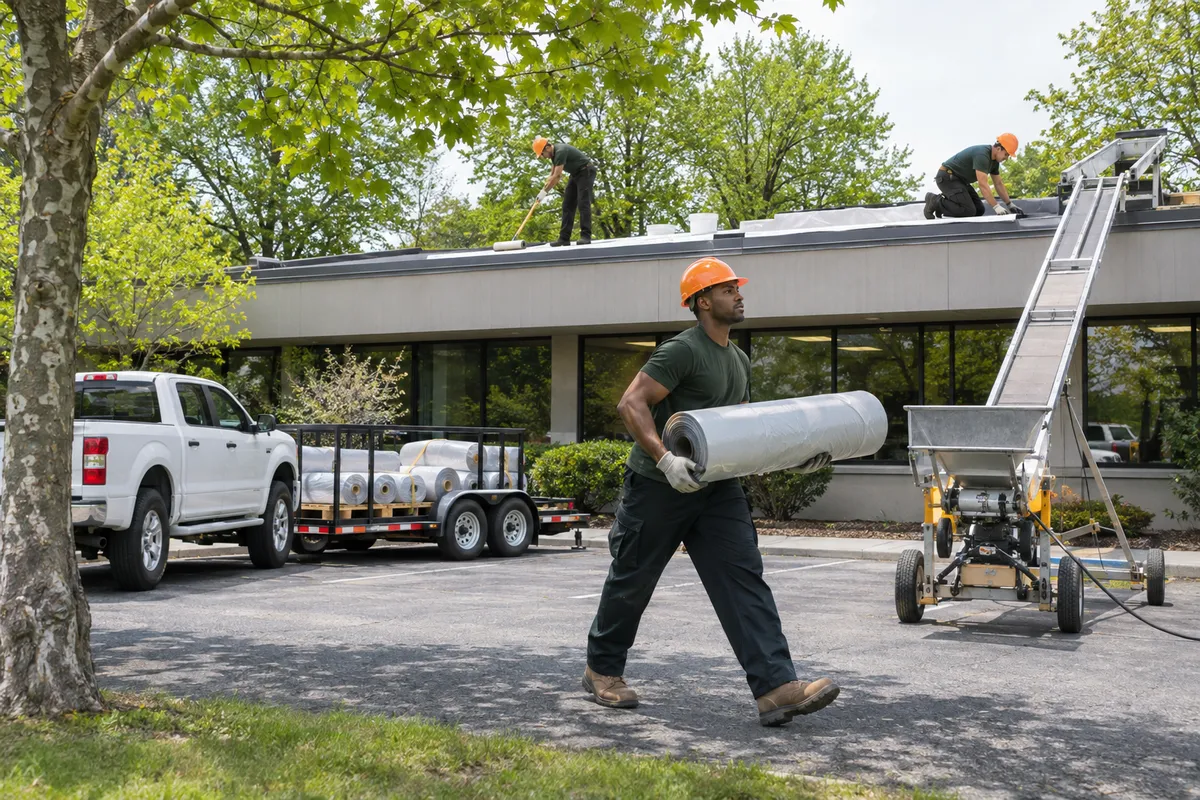
As a Chaplin commercial roofing contractor, we repair and replace small low-slope roofs, with scuppers, gutters, and edge metal rebuilt so water and ice leave the roof.
Chaplin commercial roofing on small low-slope buildings is often about the edges. These roofs drain to scuppers and gutters, and when edge metal loosens or ice builds at the eaves, water backs up into the building. Ice at the eaves each winter adds to the problem on roofs with little slope.
We check the slope to each scupper, the gutters, the edge metal, and how ice forms in winter. New roofs get rebuilt edges and drainage sized for the roof, with metal fastened tight. Gutters and downspouts are sized for the roof area each one serves.
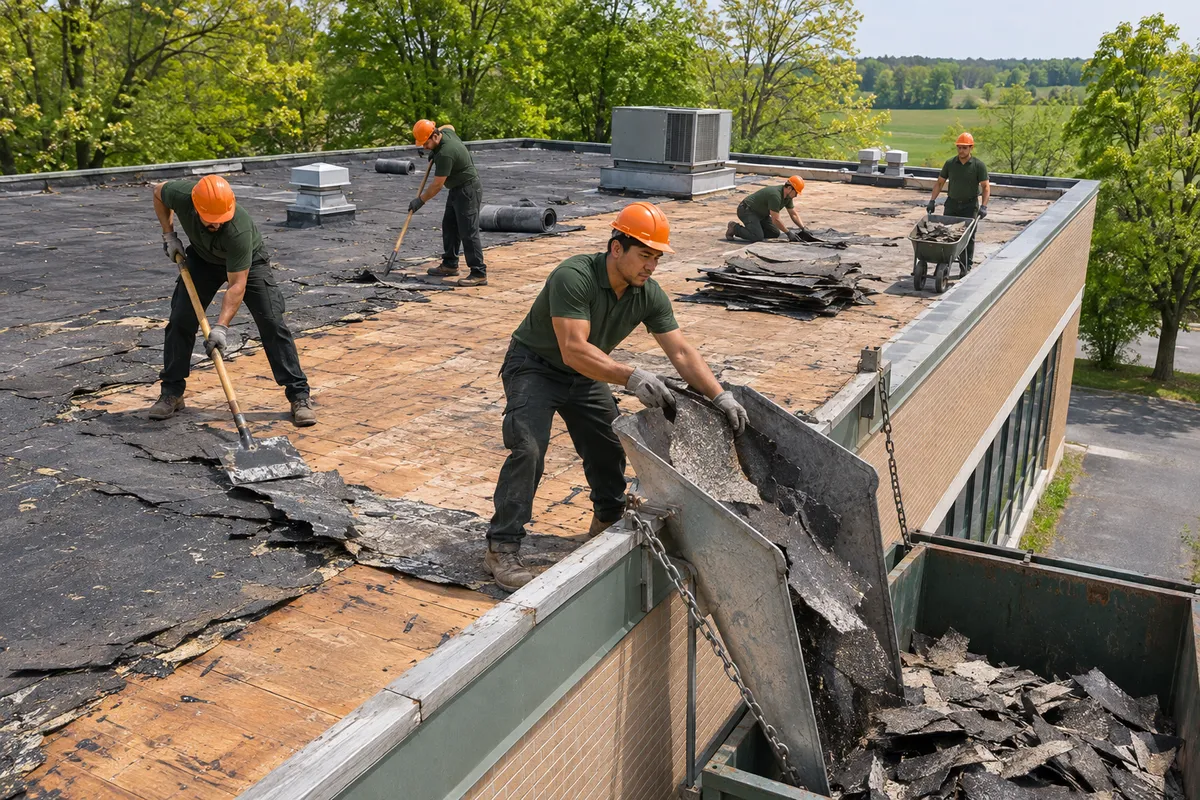
Small roofs leak at their edges more than anywhere else. Here is what owners notice inside and what we usually find at the edge above it.
Water streaks run down the wall below a scupper after rain.
The scupper is clogged or the seal between it and the membrane has failed.
Ceiling stains show along the outer walls after windy storms.
Edge metal has loosened and wind has lifted the membrane behind it.
Leaks show inside near the eaves only when snow is melting.
Ice in the gutter or scupper blocks meltwater, which backs up under the roof edge.
Gutters sag away from the building and water pours behind them.
Gutter hangers have loosened from the roof edge, often from ice weight in winter.
Rebuilt edges and drainage fix the leaks small roofs are known for.
Slope to scuppers and properly sized gutters move rain and snowmelt off the roof before it can back up at the edges.
New edge metal fastened tight along the perimeter keeps the membrane from lifting in wind across open land.
Resealed scuppers stop the streaks and staining that water leaves on outside walls below the roof edge.
Edge and gutter details keep meltwater moving off the roof instead of freezing at the eaves and pushing under the membrane.
Small commercial roofs in Chaplin take one of these four systems, chosen after we see the slope, the edges, and the drainage.
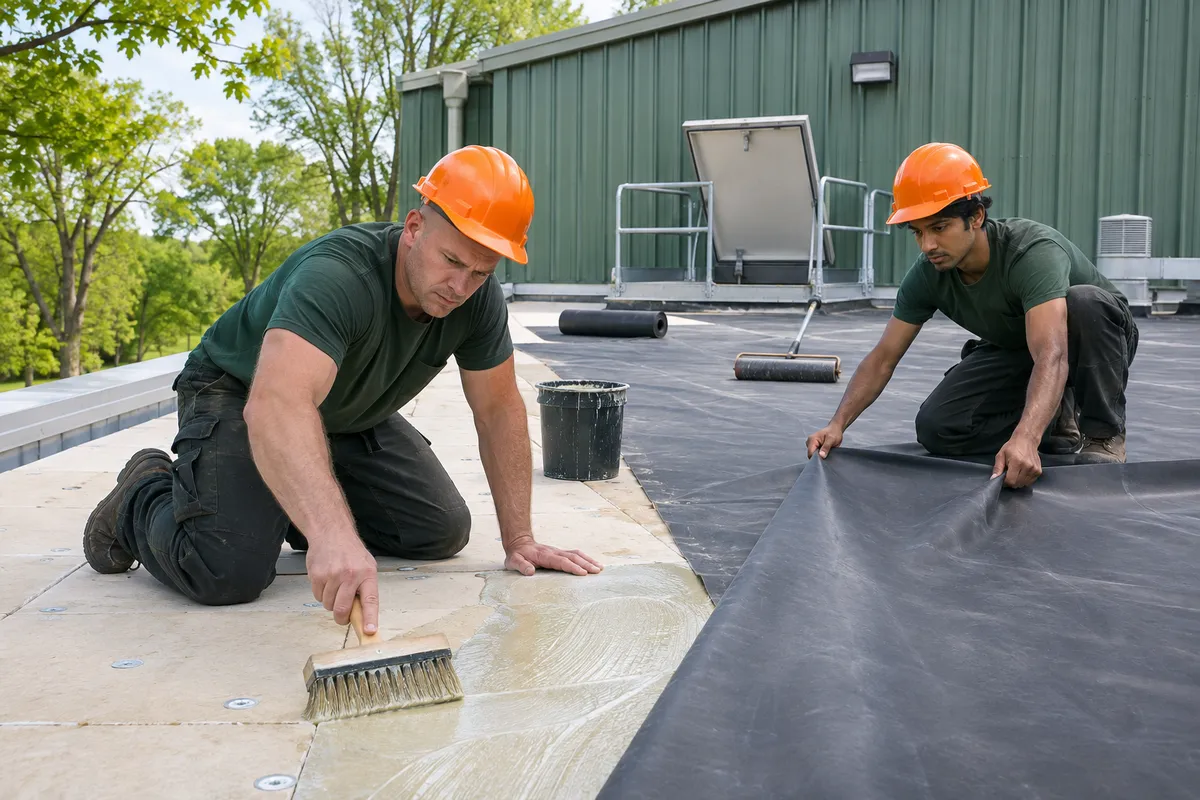
Rubber membrane suits small low-slope roofs, turns neatly into scuppers and edge metal, and stays flexible through cold winters.
EPDM Roofing details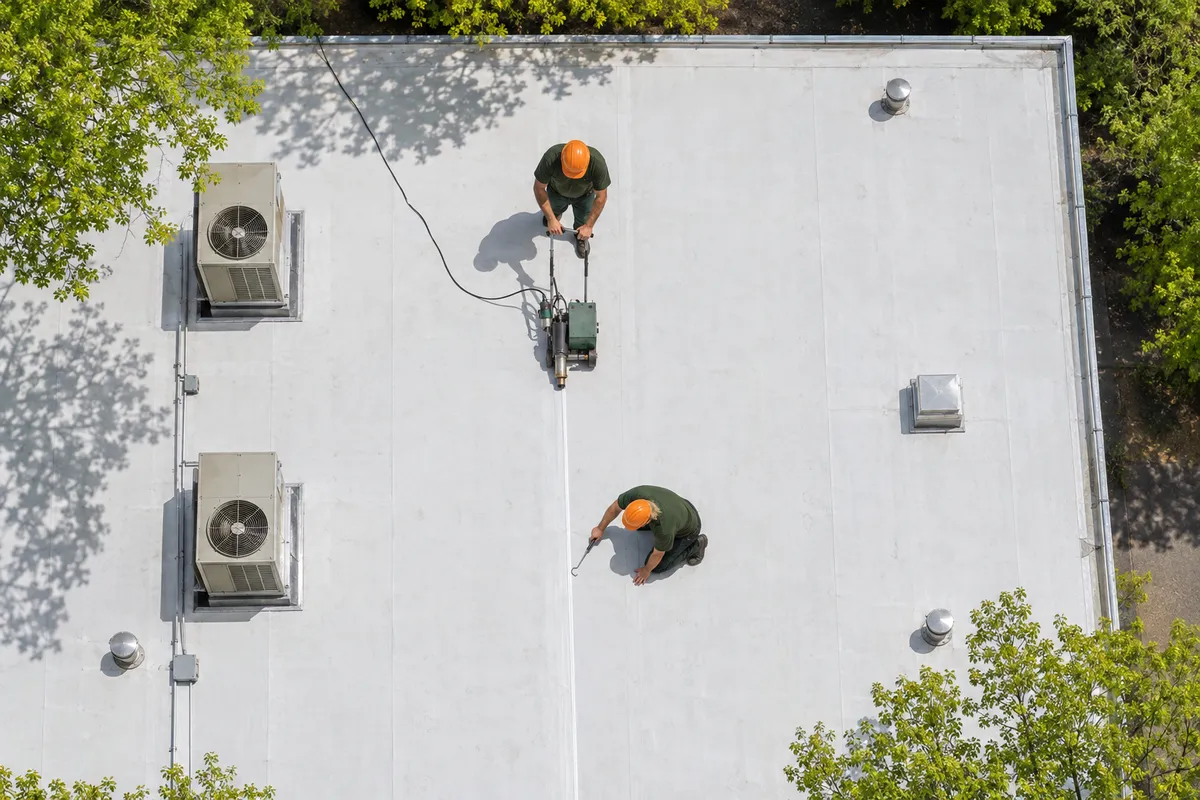
Welded white membrane forms tight seals at edges and scuppers, and its seams hold through ice at the eaves.
TPO Roofing details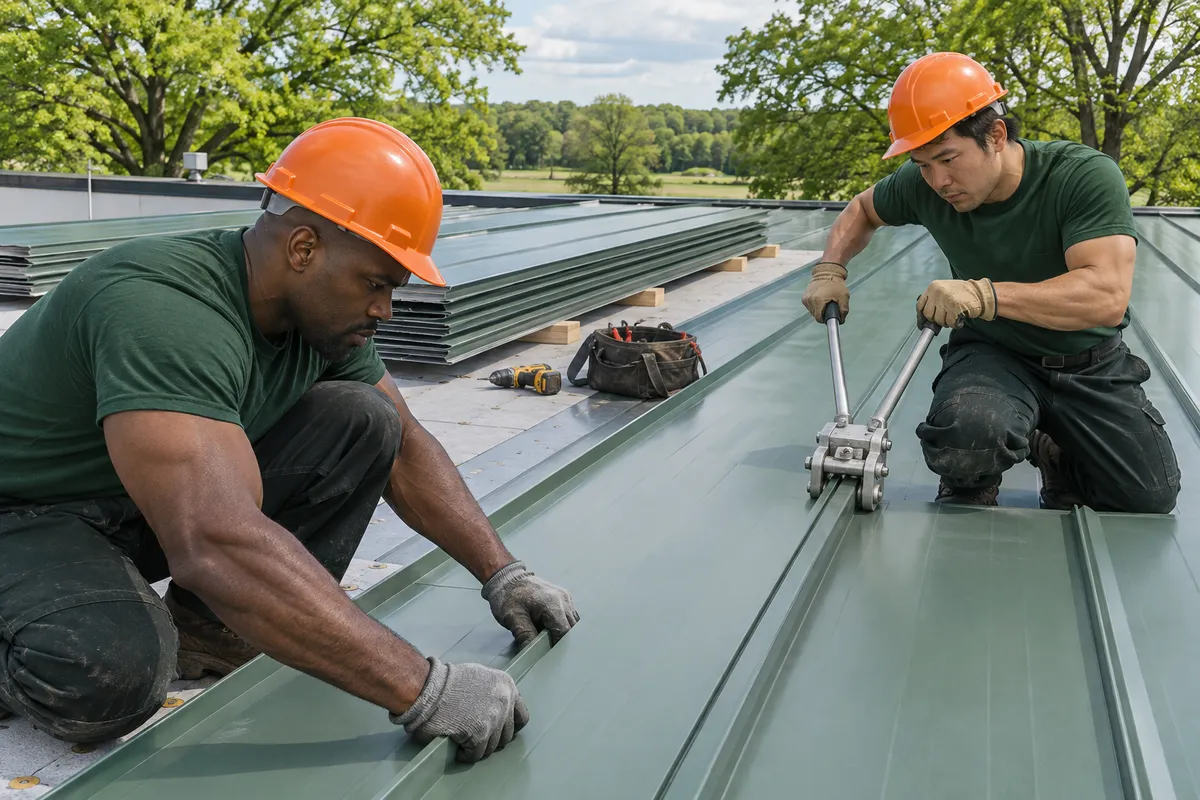
Sloped sections and additions take new metal panels and trim, with gutters sized to carry snowmelt away from walls.
Commercial Metal Roofing details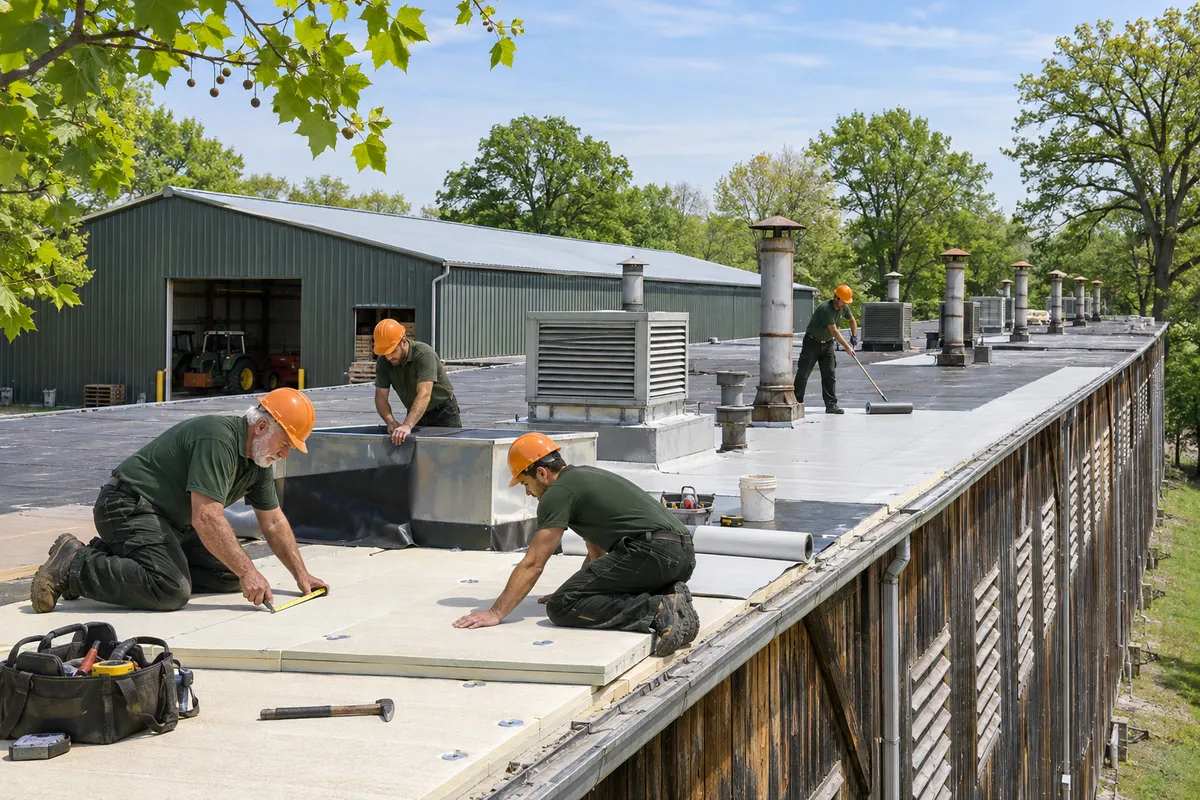
Larger buildings in the area with equipment on the roof get industrial roofs flashed around every unit.
Industrial Roofing detailsCall and tell us which wall is streaking. We check the scupper and edge above it.
Small roofs follow this order, with edges and drainage planned first.
We walk the roof, check slope to each scupper, the gutters, and the edge metal, and look for ice damage.
Scuppers and gutters are sized for the roof area, and the written scope lists each one.
New membrane goes down, scuppers are sealed in, and edge metal is fastened along the perimeter.
Water is run to each scupper where we can, then we walk the roof with you.
A short note covers when to clear scuppers and gutters and what to check after winter, so small roofs stay dry.
Is your building a short drive from Chaplin? These towns are on our list too; for anywhere else, call us or send us a message.
What owners of small commercial buildings in Chaplin ask about roof edges, scuppers, gutters, and winter ice.
The scupper is clogged, too small for the roof, or its seal to the membrane has failed. We clear, resize, or reseal it.
More roofing questionsIt holds the membrane down at the perimeter and covers the top of the wall, keeping wind and water out.
Keep gutters and scuppers clear, and rebuild edges so meltwater flows off. Reducing heat loss through the roof helps too.
Yes. Scuppers can be cut through the edge wall and sealed into the membrane where the roof needs more drainage.
At least twice a year, in spring and fall, and after big storms. Leaves and debris block them fast on small roofs.
Yes. Loose or bent edge metal can be removed and replaced, and the membrane edge resealed, when the rest of the roof is sound.
That depends on the roof area and how much rain falls in a heavy storm. We size gutters and downspouts for the roof they drain.
Most edge leaks come from loose edge metal, a failed seal at a scupper, or ice backing up in a gutter. The membrane in the open field is rarely the problem.
Send the building address for a roof walk and a drainage check, or call about water running down a wall or backing up at the roof edge.