
Efflorescence High On Brick Walls
Inside The Building
White salt stains spread on the inside face of brick near the ceiling line.
On The Roof
Water is entering through open coping joints and soaking down through the parapet.
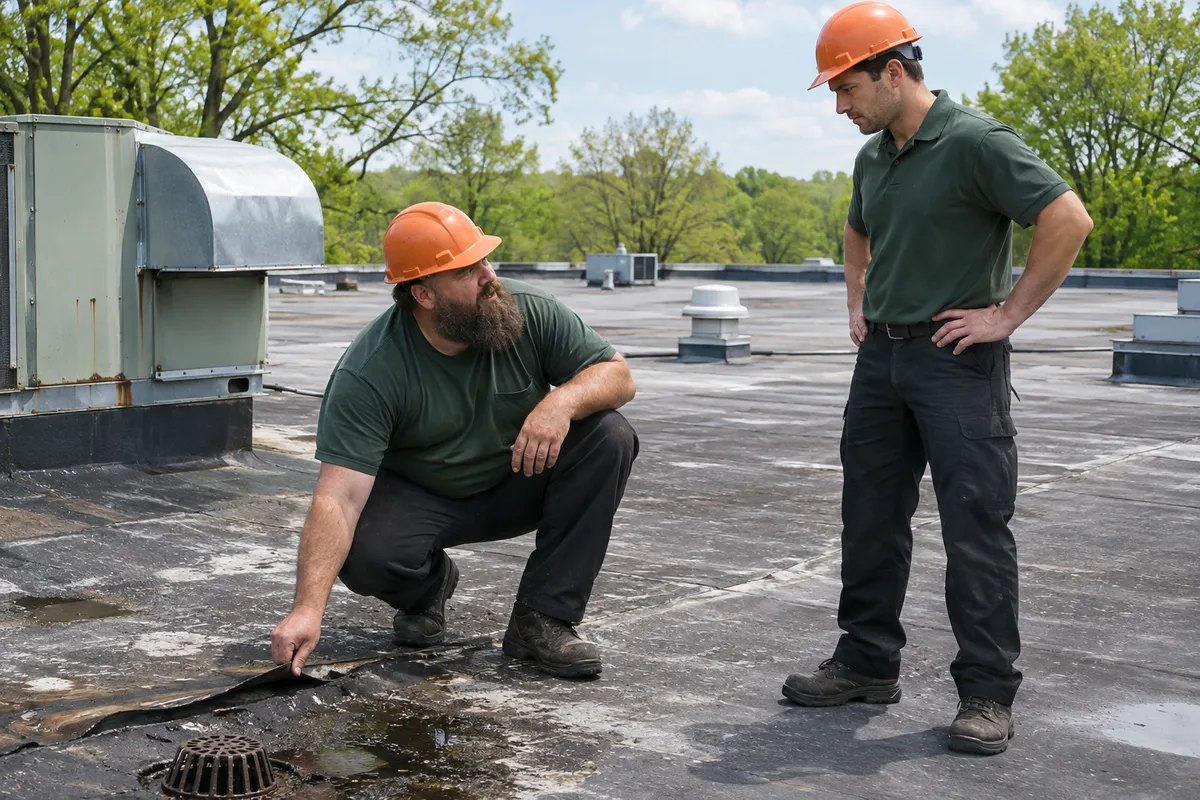
As a Stafford Springs commercial roofing contractor, we replace flat roofs on old mill buildings and downtown blocks, with parapet and coping work done in the same job.
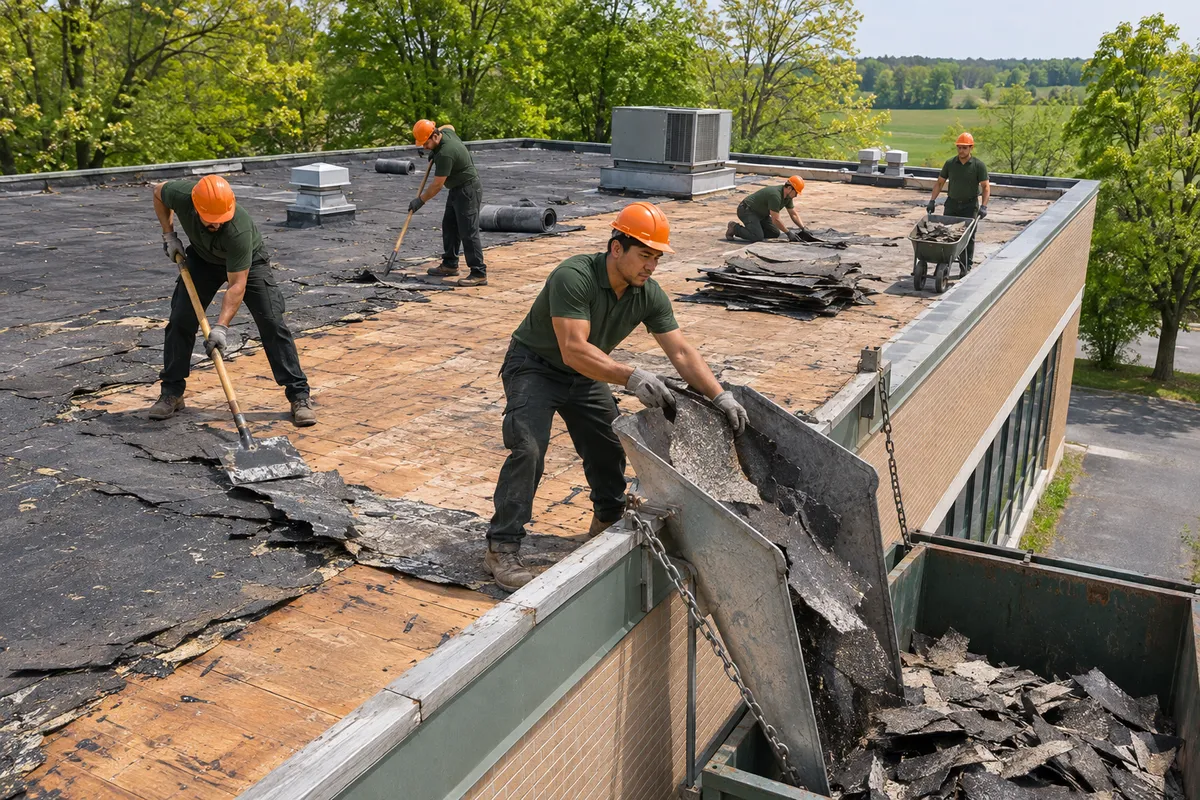
Stafford Springs commercial roofing jobs often sit on brick or stone mill buildings with tall parapets and large flat roofs. Many have several roofs stacked on the deck, and the masonry at the top of the walls has taken years of ice.
Those buildings now house shops, storage, and offices, so we plan the work around tenants. Core cuts show how many layers are there, and the parapet gets the same attention as the roof field.
Mill roofs leak in a few repeat places. These pairs tie what tenants see to the roof detail behind it.
White salt stains spread on the inside face of brick near the ceiling line.
Water is entering through open coping joints and soaking down through the parapet.
A section of ceiling dips and stains slowly over a season with no visible drip.
Wet layers stacked on the deck are holding water and adding weight over the joists.
Ice builds up at the base of an interior column or downspout each winter.
A conductor head or interior drain line is clogged, so water backs up onto the roof and into the wall.
Long icicles form along the top of the walls and drip onto the sidewalk below.
Meltwater is running over the coping because the roof edge behind the parapet is backing up with ice.
Replacing a stacked mill roof clears up problems that patching cannot reach.
With old layers gone and one new membrane in place, leaks can be traced to a single surface and fixed directly.
Removing wet, stacked roofs takes weight off the framing, and new insulation is far lighter than the soaked boards it replaces.
Parapet flashing carried up and over the wall, with coping sealed or capped, keeps water out of the masonry.
Clogged conductor heads and drain lines are cleared or rebuilt, so meltwater leaves the roof instead of freezing at the walls.
Mill and downtown roofs here take one of these systems.
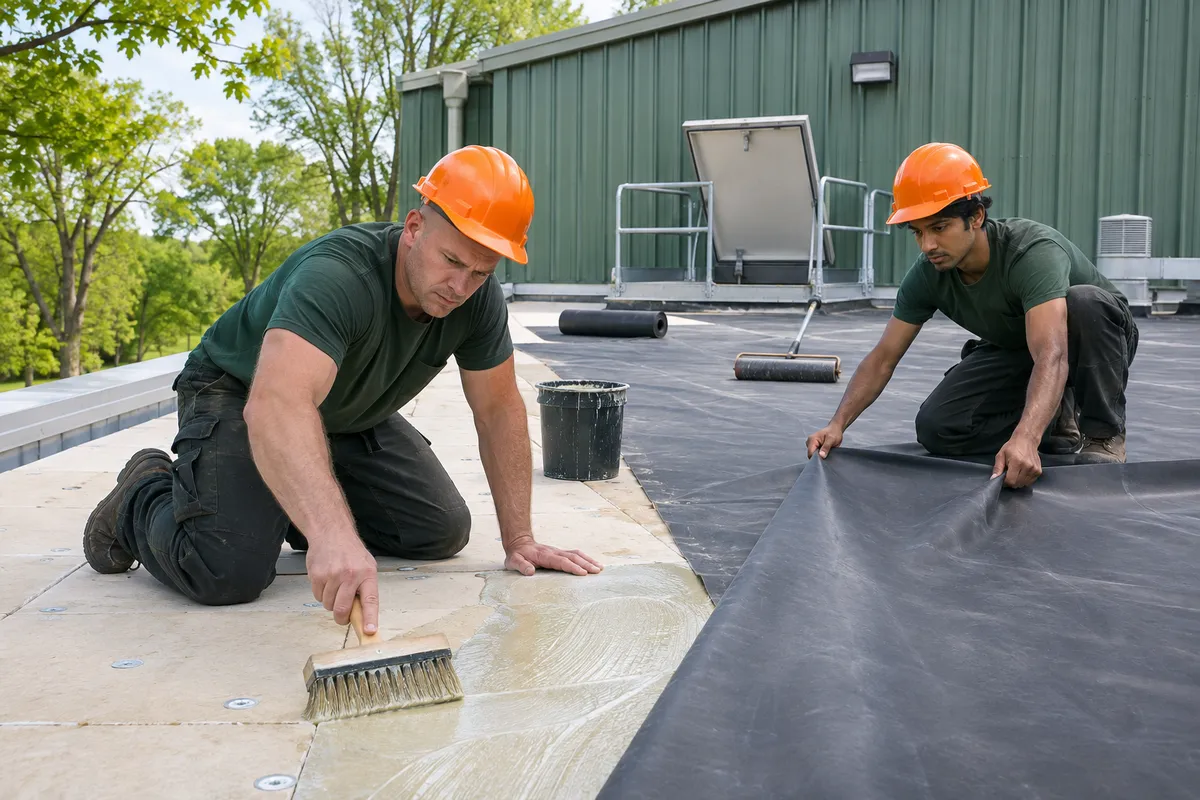
Rubber membrane in wide sheets covers big mill roofs with few seams and turns up tall parapets with flexible flashing.
EPDM Roofing details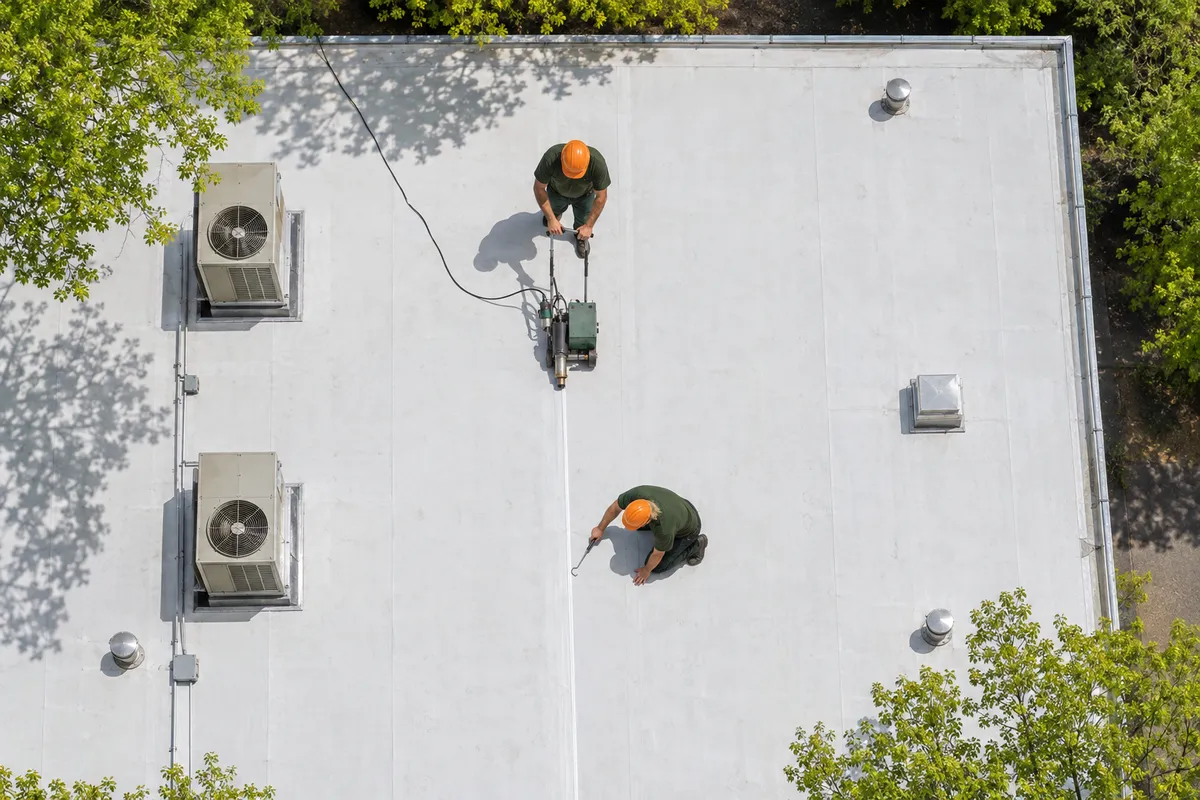
Welded white membrane suits mill space turned into offices or shops, where rooftop units have been added.
TPO Roofing details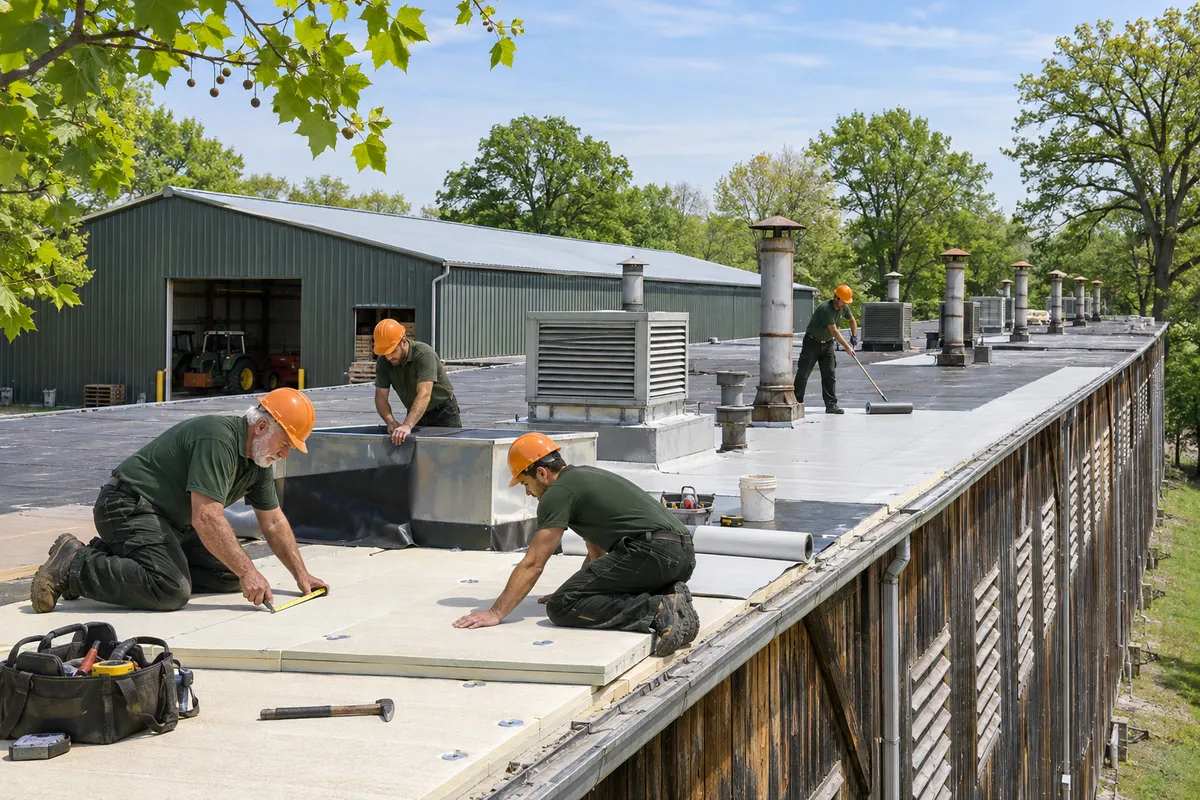
Buildings still running production get industrial roofs planned around fans, exhaust, and work shifts.
Industrial Roofing details
Sloped wings and storage sheds on mill properties take new metal panels.
Commercial Metal Roofing detailsCall and describe where the water shows. The coping and the drains above it are checked first.
Send the address and building size. We take core cuts before pricing the roof.
Get A Free EstimateMill roofs are large, so the job is broken into sections tenants can plan around.
We walk the roof and parapets, take core cuts to count layers, and check drains, conductor heads, and the masonry at the wall tops.
The roof is split into sections matched to the tenant spaces below, and each tenant learns when the crew is over their space.
Stacked layers come off to the deck, damage is repaired, and new insulation and membrane go down, closed watertight before the crew leaves.
Parapet flashing runs up and over the walls, coping is sealed or capped, and the drains are tested before the final walk.
Core results, photos of the parapets, and the list of materials go to you at closeout, ready for the next inspection.
Is your building just outside the borough? We also work in the towns below; for anywhere else, call us or send us a message.
Questions mill owners and managers in the borough ask most.
Code limits how many roofs can be stacked, and wet layers have to come off no matter what. Core cuts tell us the count and the moisture, and most mill roofs with two or more layers get a full tear-off.
More roofing questionsIt should. New membrane is flashed up the parapet, and the coping above it has to be sealed or capped at the same time, or water entering the wall can get behind the new flashing.
Stafford Springs is a borough inside the town of Stafford, so the permit goes through Stafford's building department. We pull it as part of the job.
Yes. We work over one tenant space at a time, close each section watertight before leaving, and protect anything below an open area.
Large mill roofs are done in sections over several weeks, set by roof size, weather, and the amount of deck repair the core cuts reveal. We share a section schedule before work starts.
Stone or terra cotta coping in good shape is reset on new flashing and sealed. Cracked or missing pieces are replaced, or the wall top is covered with metal caps.
Send the mill address and tenant count for a roof walk, or call about water on a wall or ceiling.