Leaks Next To Old Patches
Inside The Building
New leaks start a few feet from spots that were patched before.
On The Roof
Water got under the membrane at the first leak and has spread through the insulation.
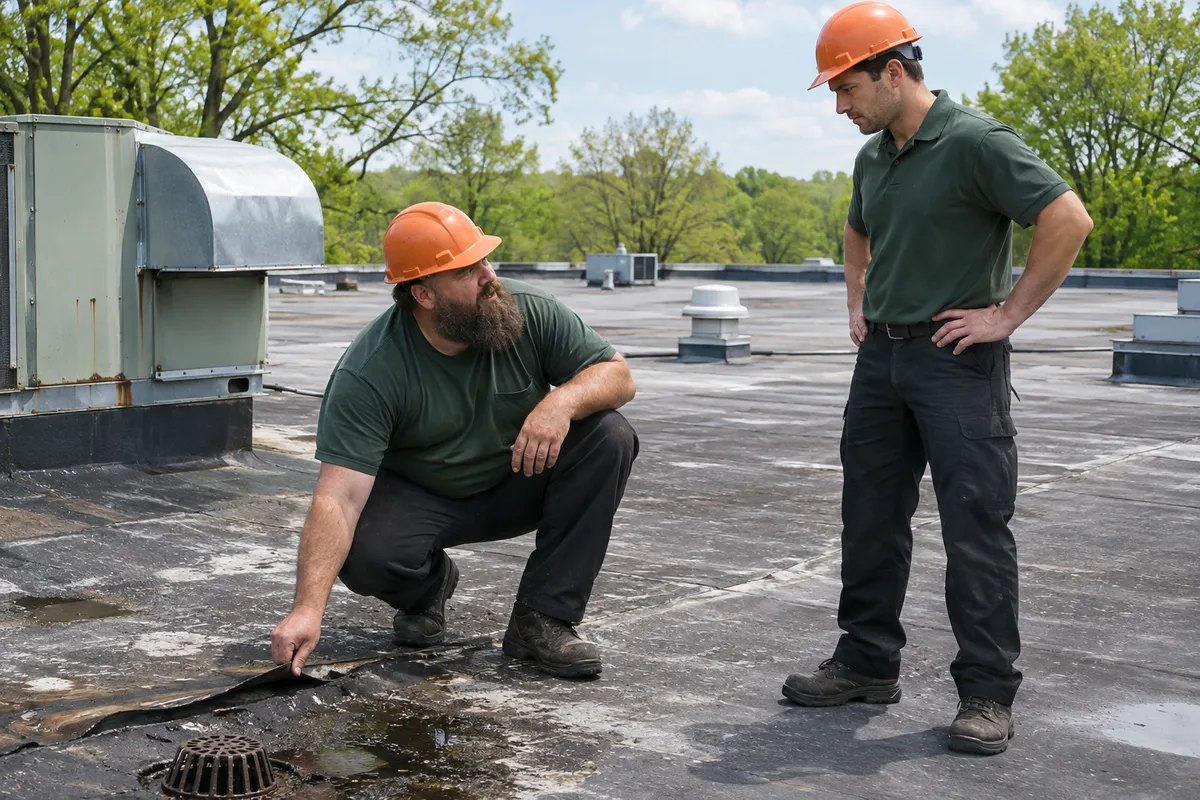
As a Stafford commercial roofing contractor, we review repair history, check for moisture, and repair or replace roofs on plants, shops, and commercial buildings across town.
Stafford commercial roofing decisions on older plants and shops start with the repair history. A roof with a dozen patches in five years tells a different story than one with a single leak. A roof that leaked in the same corner three winters running is telling you something.
We ask for whatever records you have: invoices, photos, notes from maintenance. Then we walk the roof, find the old patches, and take core cuts to see if water has spread under them. Those cores show whether the problem is one detail or the whole roof.
Roofs with long repair histories show the same patterns. Here is what to watch for.
New leaks start a few feet from spots that were patched before.
Water got under the membrane at the first leak and has spread through the insulation.
Maintenance logs show a roof repair call every few months.
Seams and flashings are failing across the roof, and each patch only fixes one spot.
Staff on the roof notice bubbles in the membrane that grow in summer.
Trapped moisture under the membrane is turning to vapor in the heat and lifting it.
The same corner leaks every spring, even after last year's repair.
The drain or flashing there was patched over, but ice keeps reopening the same joint.
Using the repair history to plan the roof ends the cycle of emergency calls.
Repair records and core cuts show whether patching still makes sense or replacement costs less over the next several years of roof upkeep.
Insulation soaked under old patches comes out with the old roof, so the source of the leak leaves with it.
The new roof starts a fresh repair log with photos and locations, which helps with future budgets and resale.
Roof work is phased around shifts and equipment, and each section closes watertight before the crew leaves.
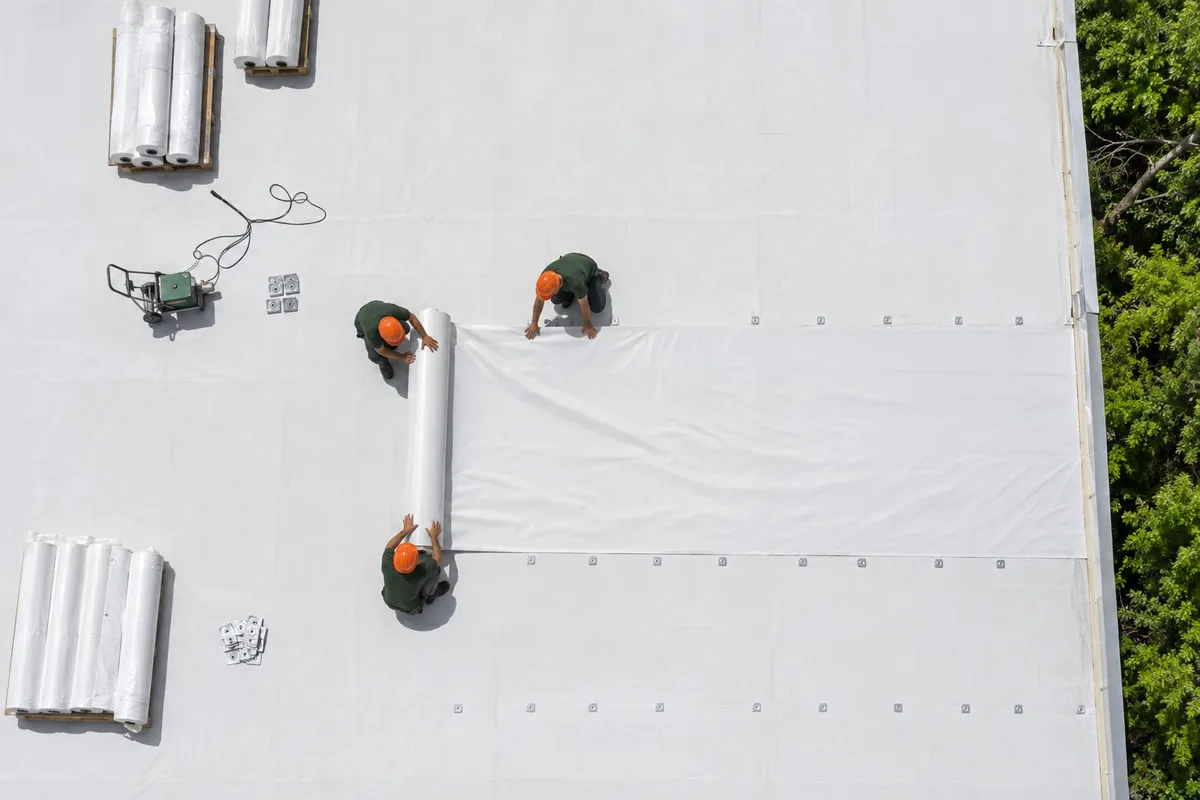
Plants and shops in town use one of these systems for a replacement.
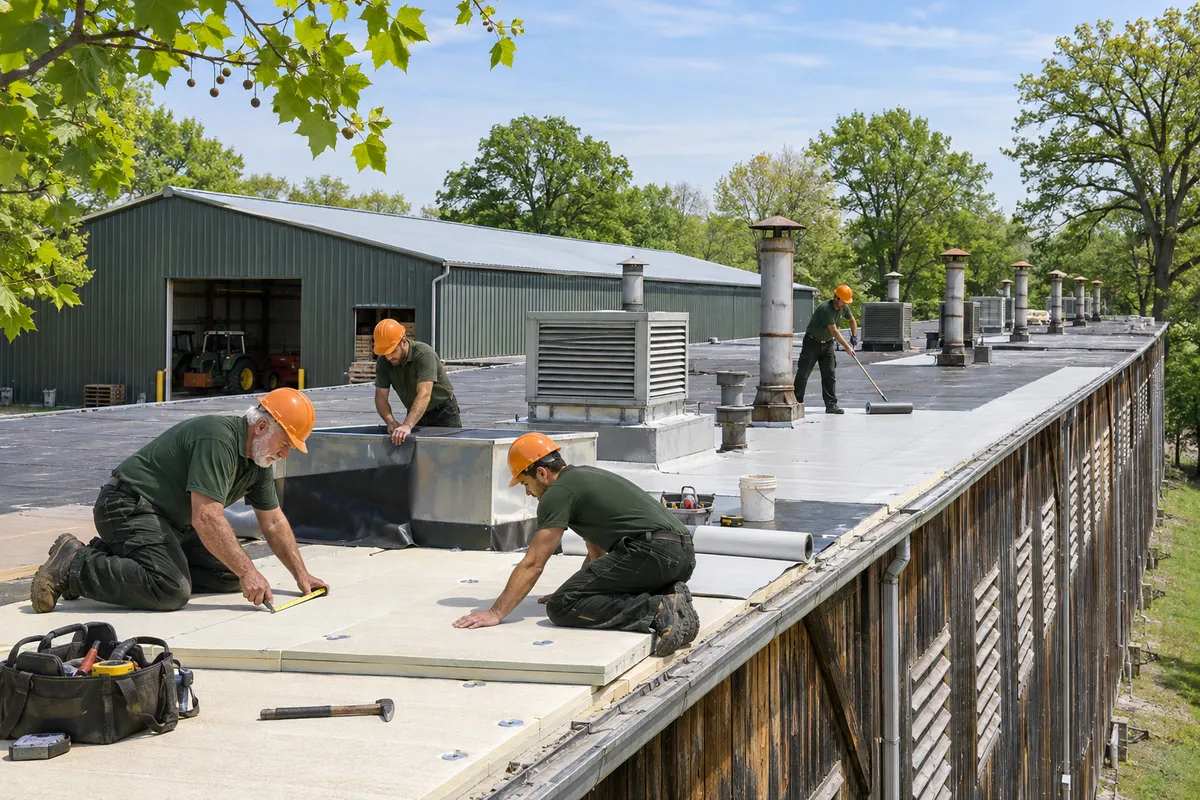
Plants with fans and exhaust get industrial roofs flashed around every penetration, with walkway pads on the paths technicians use.
Industrial Roofing details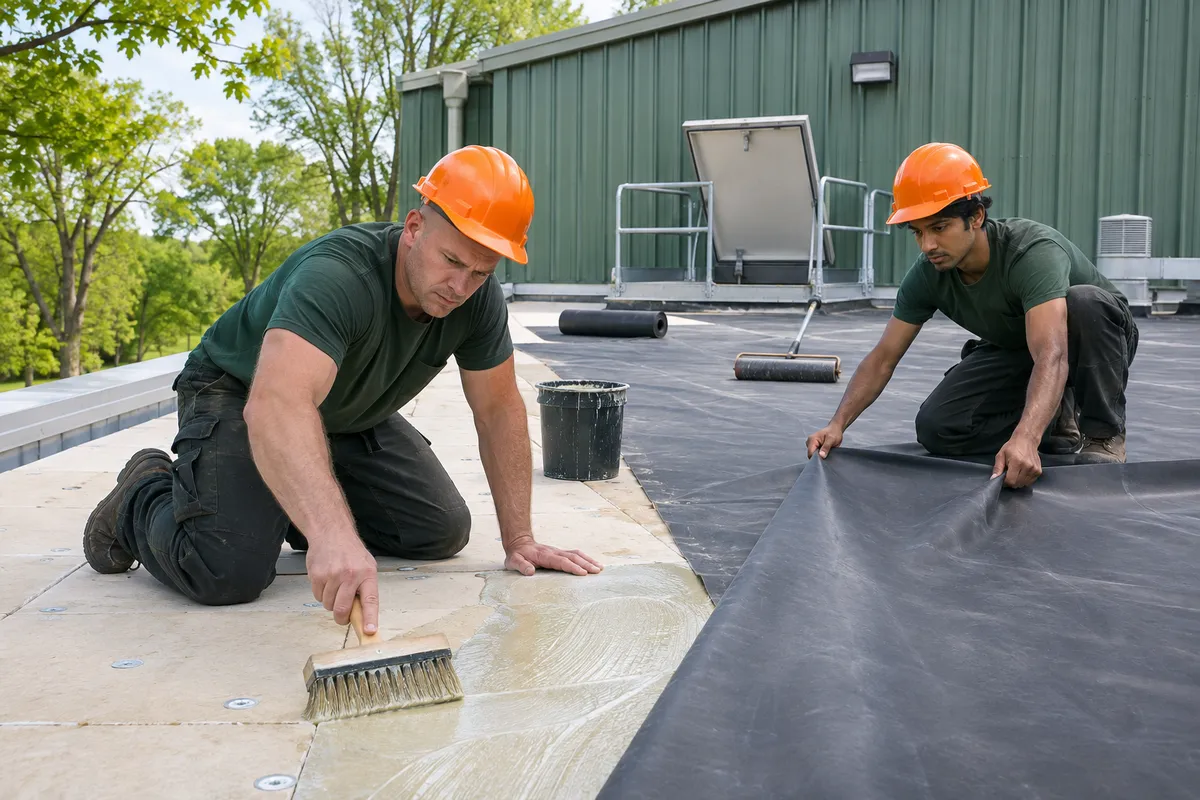
Rubber membrane suits older low-slope shops with long runs of wall flashing and roofs that move with the seasons.
EPDM Roofing details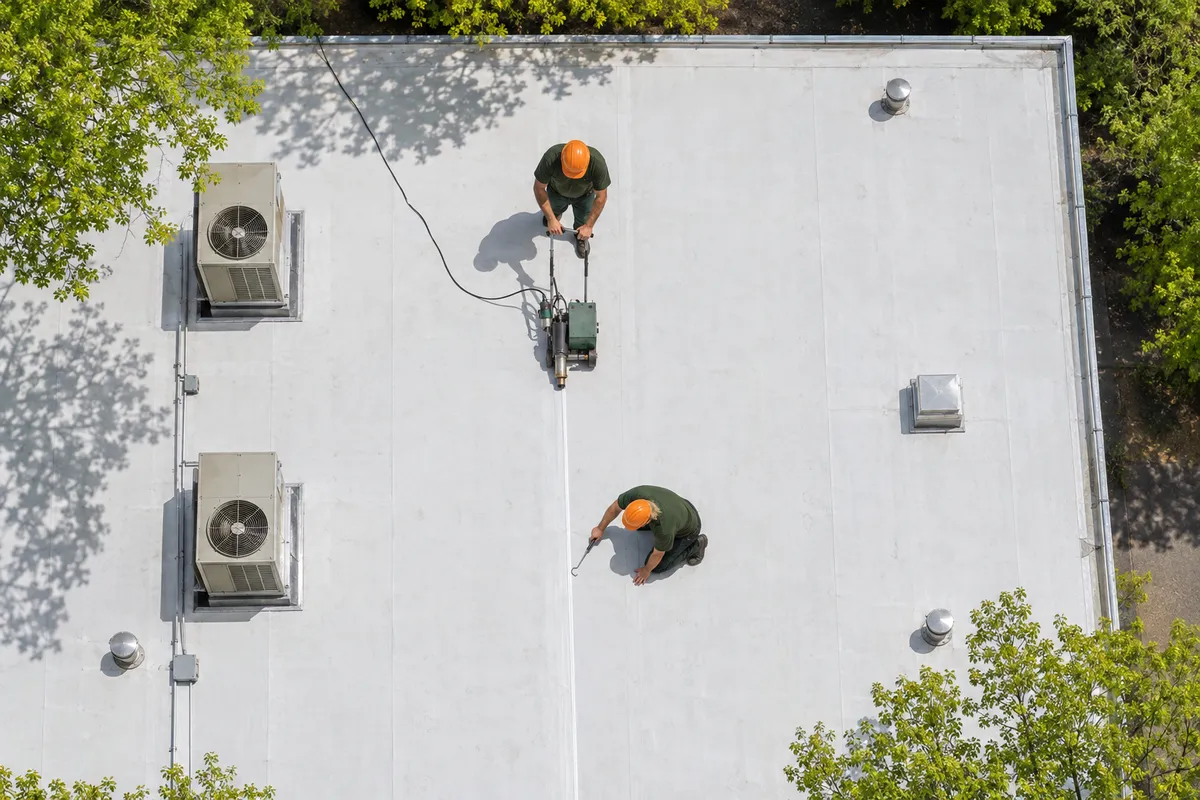
Welded white membrane holds seams tight, reflects heat off production floors, and takes clean welded patches if damaged later.
TPO Roofing details
Steel shop buildings take new metal panels and trim, with fresh fasteners and closures at the ridge and eaves.
Commercial Metal Roofing detailsCall and tell us where the newest leak is. We check it and the patches around it.
Send the address and any repair records. We review them before pricing.
Get A Free EstimateRoofs with long histories follow this order before any replacement.
We walk the roof, locate old patches, and check seams, flashings, and drains across the field.
Invoices, photos, and maintenance notes show how often and where the roof has failed.
Core cuts near old repairs show whether water has spread into the insulation.
You get a roof repair price and a replacement price side by side, with the findings behind each.
Once the work is done, a fresh roof repair log begins with photos and notes, so future decisions start from facts.
Does your plant sit in a neighboring town? We work in each one below; for anywhere else, call us or send us a message.
What plant and shop owners in Stafford ask when they are weighing more patching against a full replacement.
There is no set number. When leaks keep starting near old patches, or repairs come every season, core cuts usually show water spreading under the roof, and replacement starts to cost less.
More roofing questionsInvoices, photos, and maintenance notes showing where and when the roof leaked. They point us to the problem areas and show how fast the roof is failing.
Water that got in at the first leak spread through the insulation, so it shows up again a few feet away.
Yes. We phase the work around shifts and equipment, and each section is closed before the crew leaves.
Patching is cheaper per visit, but frequent patches plus water damage inside add up. We compare the cost of a few more years of repairs with a replacement price.
Yes, when damage is limited to one area and the rest of the roof is dry and sound. The new section is tied into the old roof with flashing.
Yes. Each repair is noted with photos and its location, which helps the next decision on the roof.
Repair invoices, past inspection notes, photos, and any warranty papers from the installer. Together they show how the roof has been treated and where it has failed before.
Send the building address and any repair records, or call about the newest leak.