New Leaks In March
Inside The Building
Leaks start during the first thaw in spots that stayed dry all fall.
On The Roof
Ice held water against a seam or flashing until the lap opened.
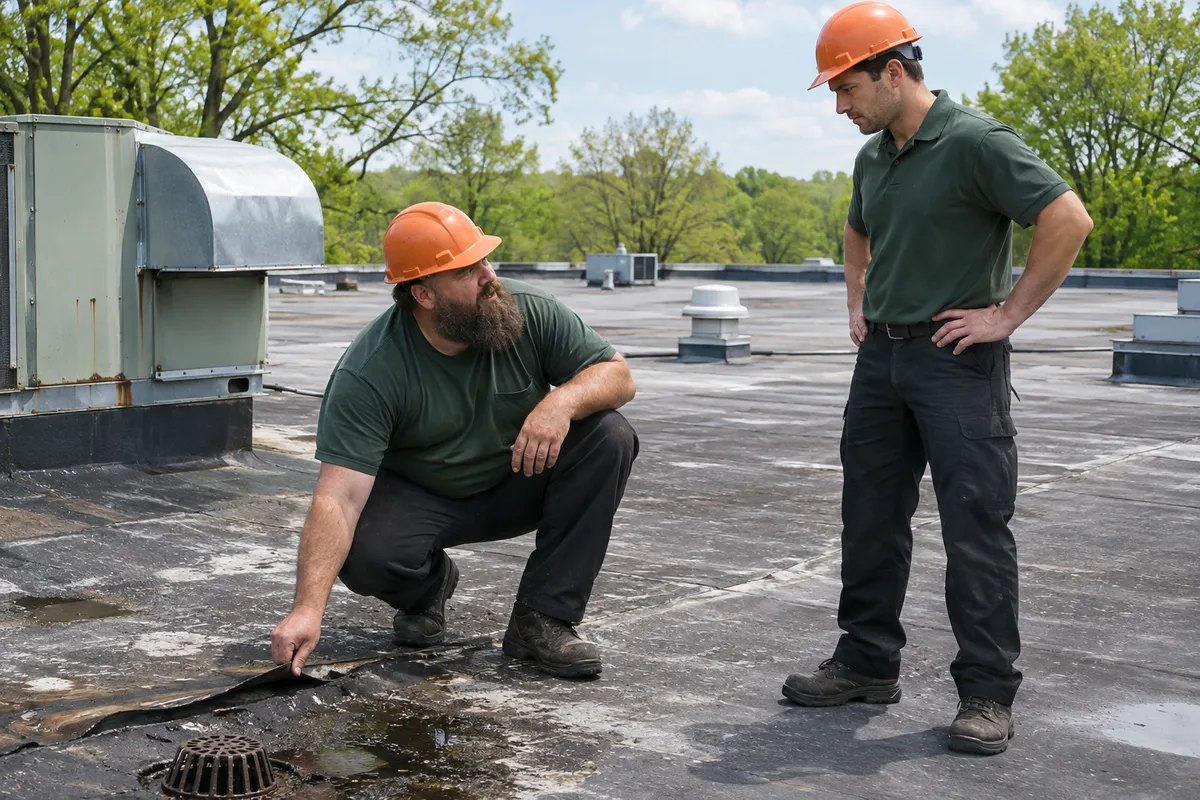
As an Ellington commercial roofing contractor, we inspect, repair, and replace roofs on farm supply, shop, and light industrial buildings after hard winters and storms.
Ellington commercial roofing calls pick up in spring, after snow loads, ice at the drains, and freeze-thaw cycles have worked on roofs all winter. Seams lift, flashings crack, and drains clog with debris. Wind off the open fields also works at edge metal on farm supply buildings.
A spring roof walk catches that damage while it is still small. We check seams, edges, and drains, repair what can be repaired, and tell you plainly when a roof is past patching. That way you can plan the bigger spend instead of reacting to the next leak.
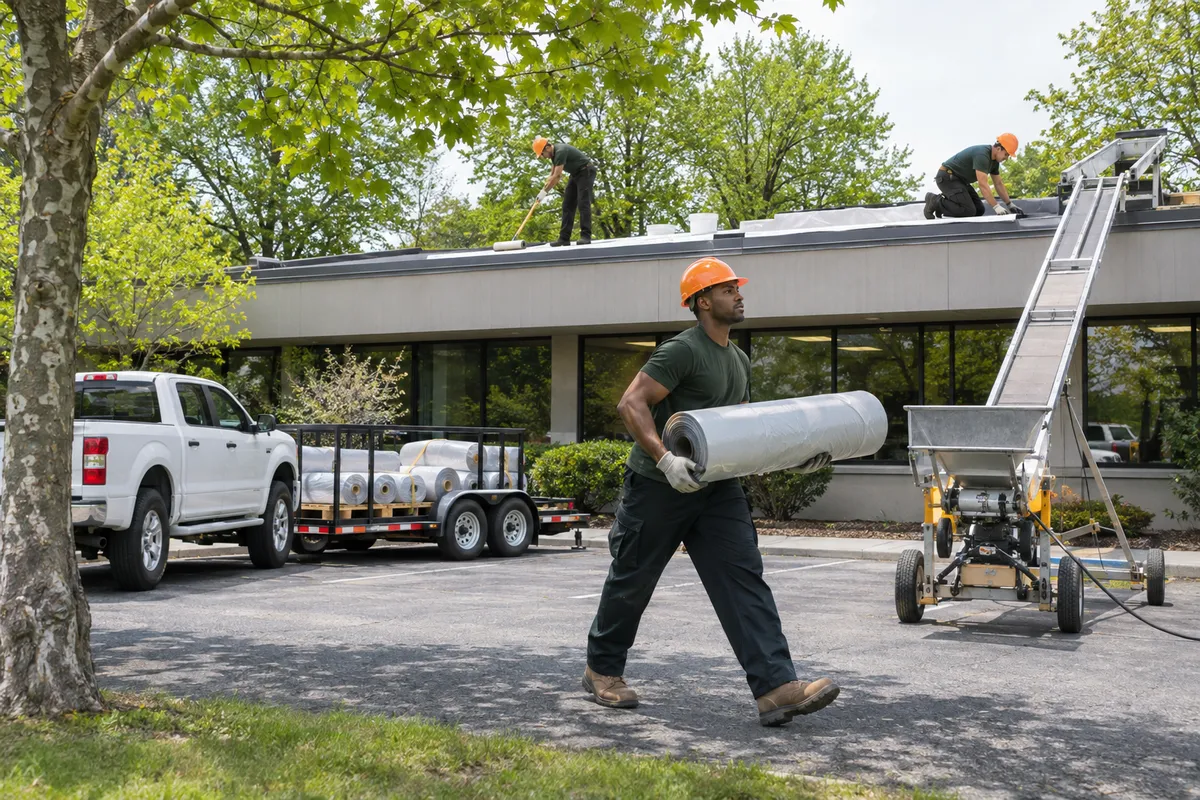
Winter leaves the same marks on most roofs. Here is what shows inside and what caused it.
Leaks start during the first thaw in spots that stayed dry all fall.
Ice held water against a seam or flashing until the lap opened.
Ceiling stains show along a wall near a downspout after snowmelt.
Leaves and ice blocked the drain or scupper, so meltwater backed up under the flashing.
A rattle or flapping noise starts on windy days after a storm.
Edge metal or a panel has come loose, and the membrane behind it can lift next.
A stain grows a little each week through spring with no steady drip.
Meltwater from winter soaked the insulation under a lifted seam and is slowly working outward.
Catching winter and storm damage early keeps small repairs from becoming a replacement.
Lifted laps are cleaned and rewelded or taped before spring storms find them and push water into the insulation.
Debris is cleared and loose drain parts are reset, so the next snowmelt runs off the roof instead of pooling.
Loose edge metal and trim are refastened before high wind can peel back the membrane behind them.
When seams are failing across the roof, we say so and price the replacement alongside the repair, so you can compare.
Roofs here take one of these systems when repair is no longer enough.
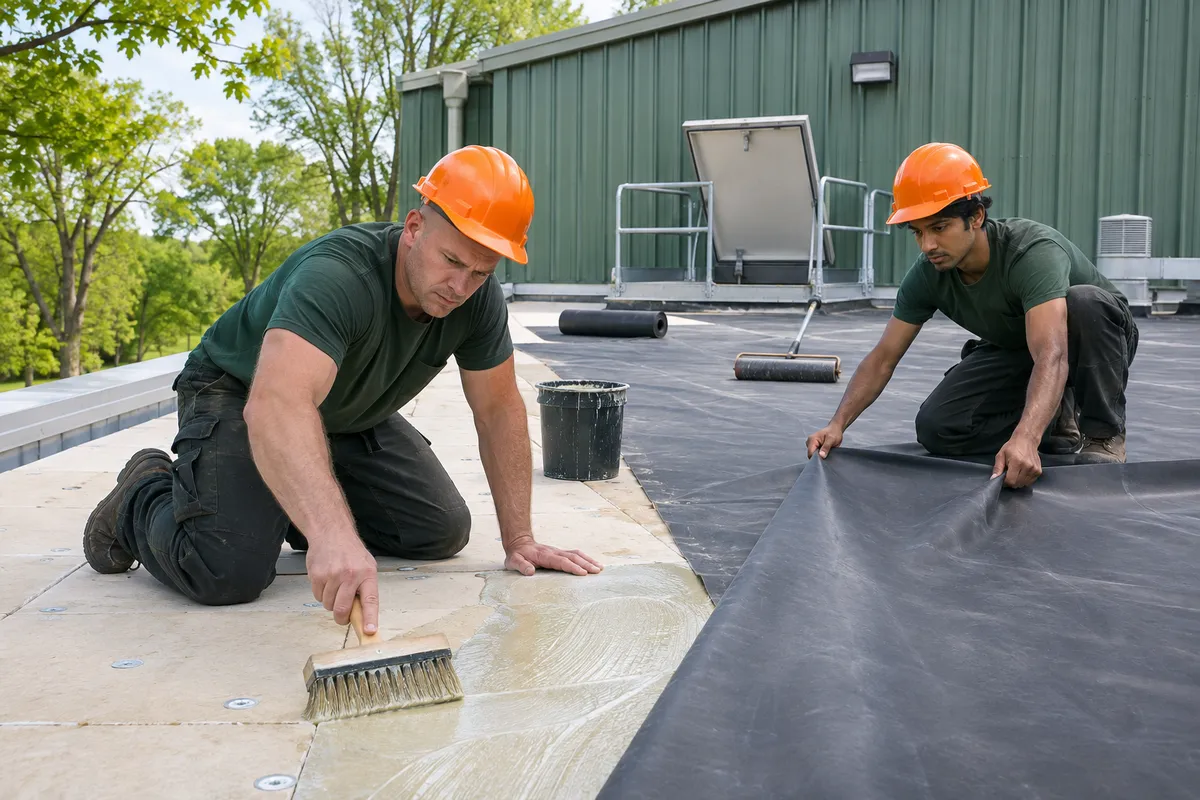
Rubber membrane stays flexible in the cold, which suits roofs that see hard freeze-thaw seasons and take snow loads every winter.
EPDM Roofing details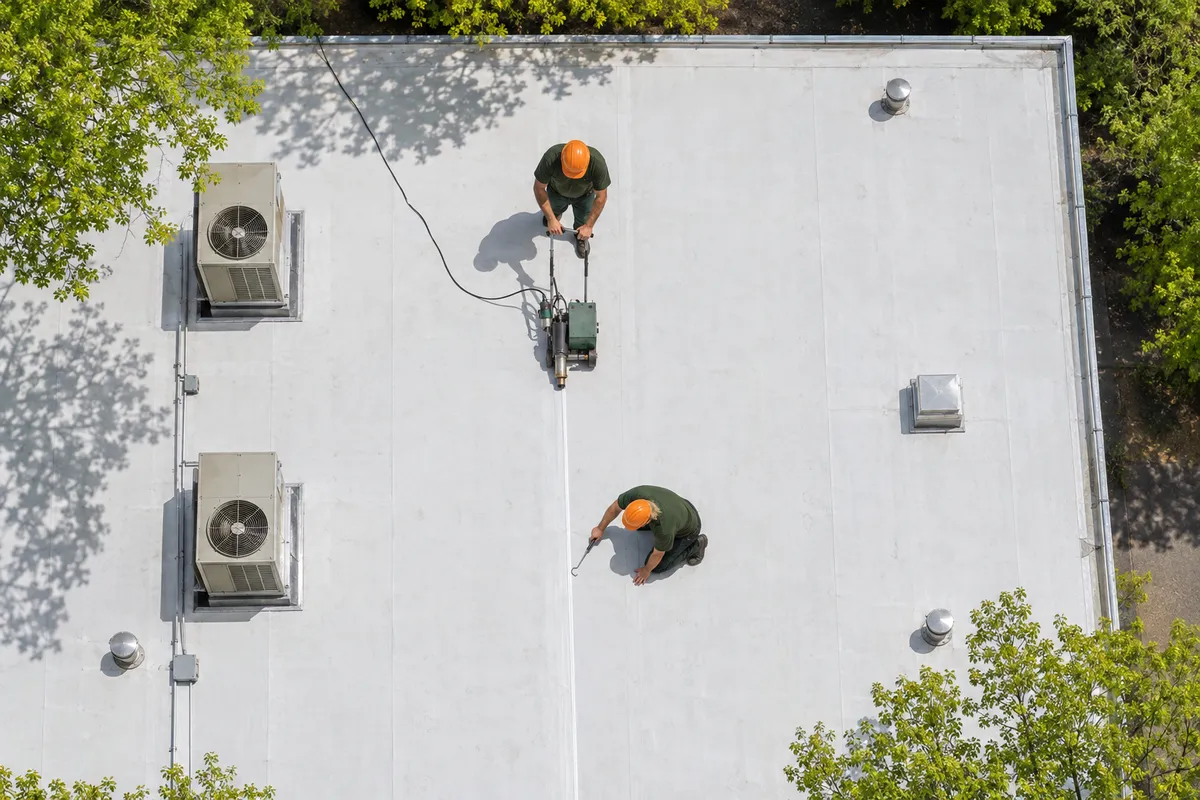
Welded white membrane holds its seams through ice and snow, and its welded flashings suit shops with rooftop units on the roof.
TPO Roofing details
Metal panels shed snow from sloped roofs on storage and farm supply buildings, and new fasteners end the drips over stored goods.
Commercial Metal Roofing details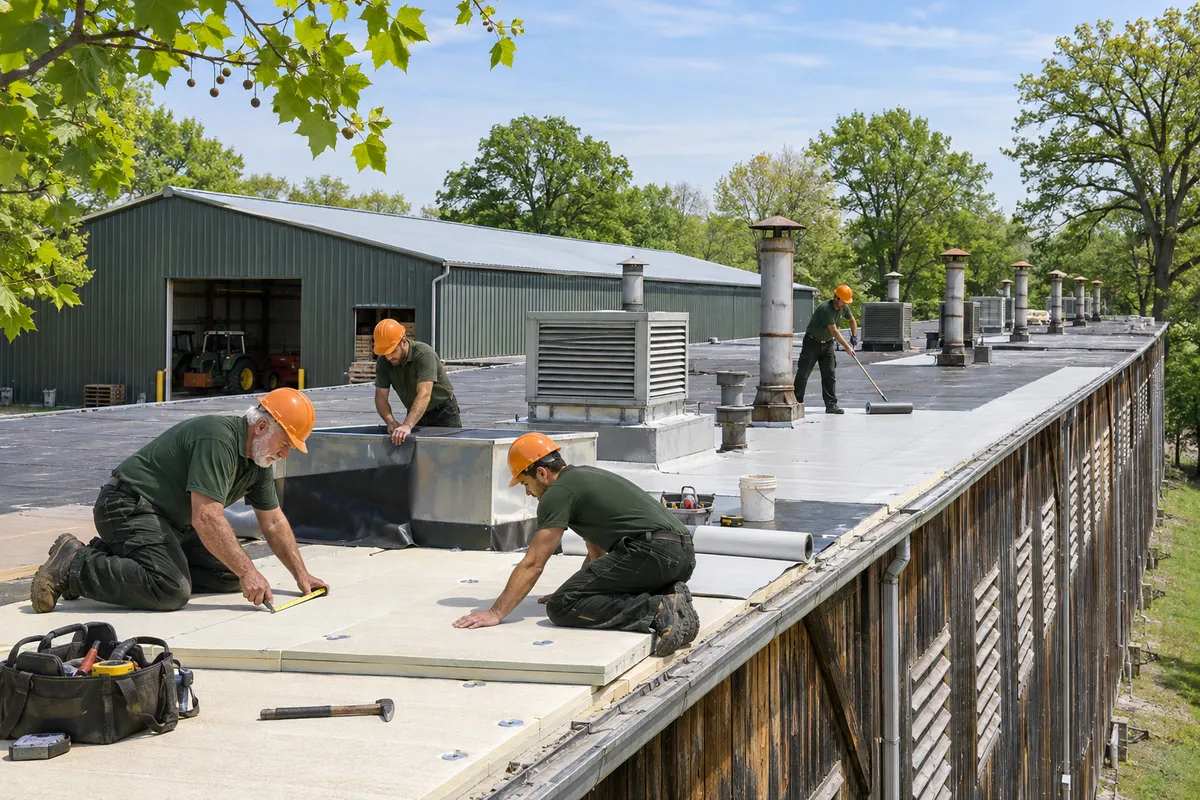
Light industrial buildings with fans and units get roofs flashed around every unit, with walkway pads on service paths.
Industrial Roofing detailsCall and tell us where the water showed up after the melt. Seams and drains near it get checked first.
Send the address and we schedule a roof walk to catch winter damage early.
Get A Free EstimateAfter-winter work starts with a close look at every seam, edge, and drain.
We walk the roof, check seams, flashings, edges, and drains, and probe welded laps for openings left by ice.
Roof findings are split into repairs to do now and signs that point to replacement, with prices for both.
Lifted seams, cracked flashings, and loose edges are fixed, and drains are cleared and reset.
You get a record of the repairs and what to watch, so the roof can be checked again before snow.
A fall roof walk catches any new damage and clears drains before the first snowfall.
Does your building sit just beyond Ellington? We roof in these towns as well; for anywhere else, call us or send us a message.
What Ellington owners ask about winter and storm damage.
Yes. Spring is when ice damage shows up as lifted seams, cracked flashings, and clogged drains. Catching them early keeps them small.
More roofing questionsOften it can. Loose edges, lifted seams, and torn flashings are repairable when the rest of the membrane is in good shape and the insulation is dry.
Water gets into small openings at seams and flashings, freezes, and expands, which pries them wider each cycle until they leak.
When seams are failing across the roof or core cuts find wet insulation over large areas, repairs chase leaks and replacement is the better spend.
Seams, flashings, edges, and drains are checked for winter damage, and core cuts are taken where water has shown inside. You get a written list of repairs.
Look for sagging areas, new ponding, or doors and windows that stick on the top floor. We check the deck and framing from inside and out.
Yes. Leaves and debris in drains turn into ice dams in winter, so a fall cleaning keeps meltwater moving off the roof.
Small seam and flashing repairs can be made in cold weather with the right materials. Large membrane installs and adhesive work go best in milder months, when bonding is more reliable.
Send the building address for a spring roof walk, or call about a leak that started after the thaw.