
Open Seam At A Corner
Inside The Building
A drip starts near an outside corner of the building after a hard rain.
On The Roof
A welded lap at the corner patch never fully fused, or it has peeled back over time.
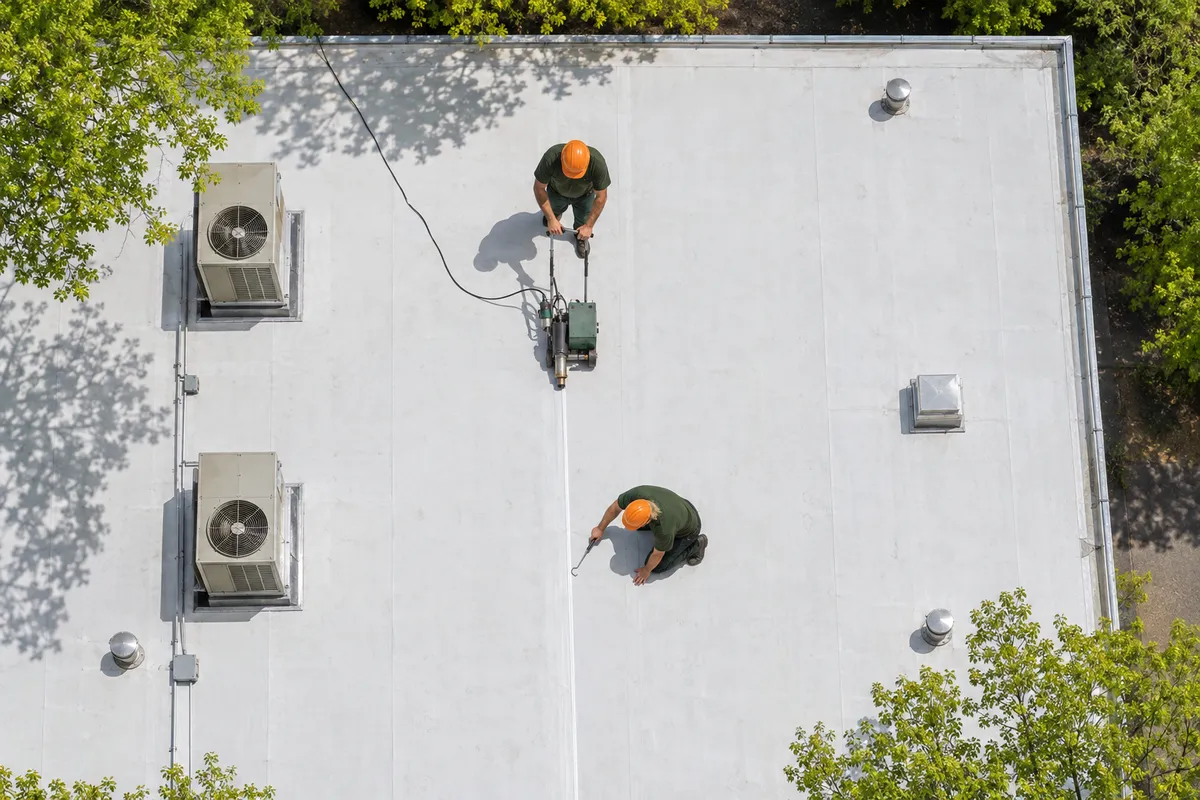
As an Enfield TPO roofing contractor, we install and replace white TPO membrane roofs with hot-air welded seams on warehouses, cold storage buildings, and offices.
Enfield TPO roofing suits most low-slope commercial roofs, but the deck, the equipment, and the building's use decide it. Here is how TPO compares with two other systems we install.
Most TPO trouble starts at the seams and details. Here is what shows inside and what we find on the roof.
A drip starts near an outside corner of the building after a hard rain.
A welded lap at the corner patch never fully fused, or it has peeled back over time.
Water marks spread on ceiling tiles under a rooftop unit after storms.
The curb flashing wrap has a cold weld or a cut where it folds around a corner.
Small new stains appear right after a contractor worked on the roof.
Dropped tools or loose screws have punched small holes through the membrane.
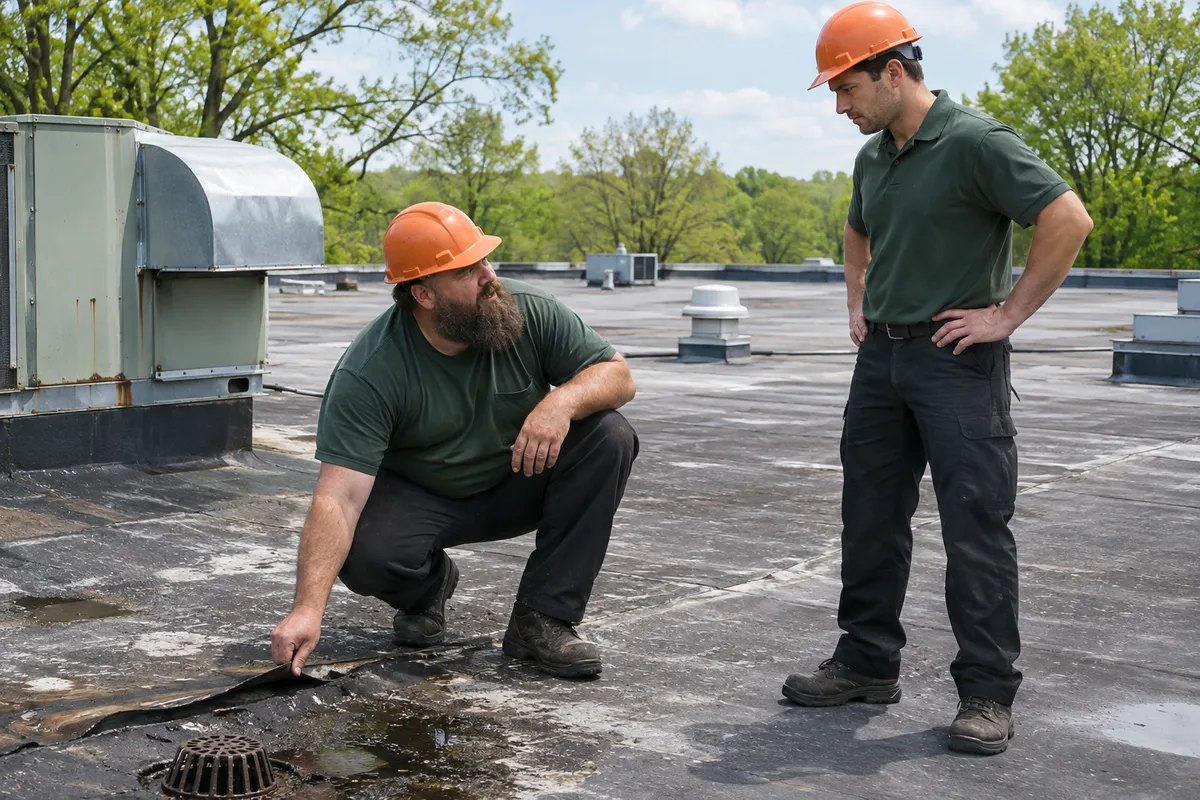
Leaks close to roof drains come back every spring.
Standing water has left dirt rings on the membrane and loosened the clamping ring at the drain.
When TPO is the wrong fit, one of these systems usually covers the roof.
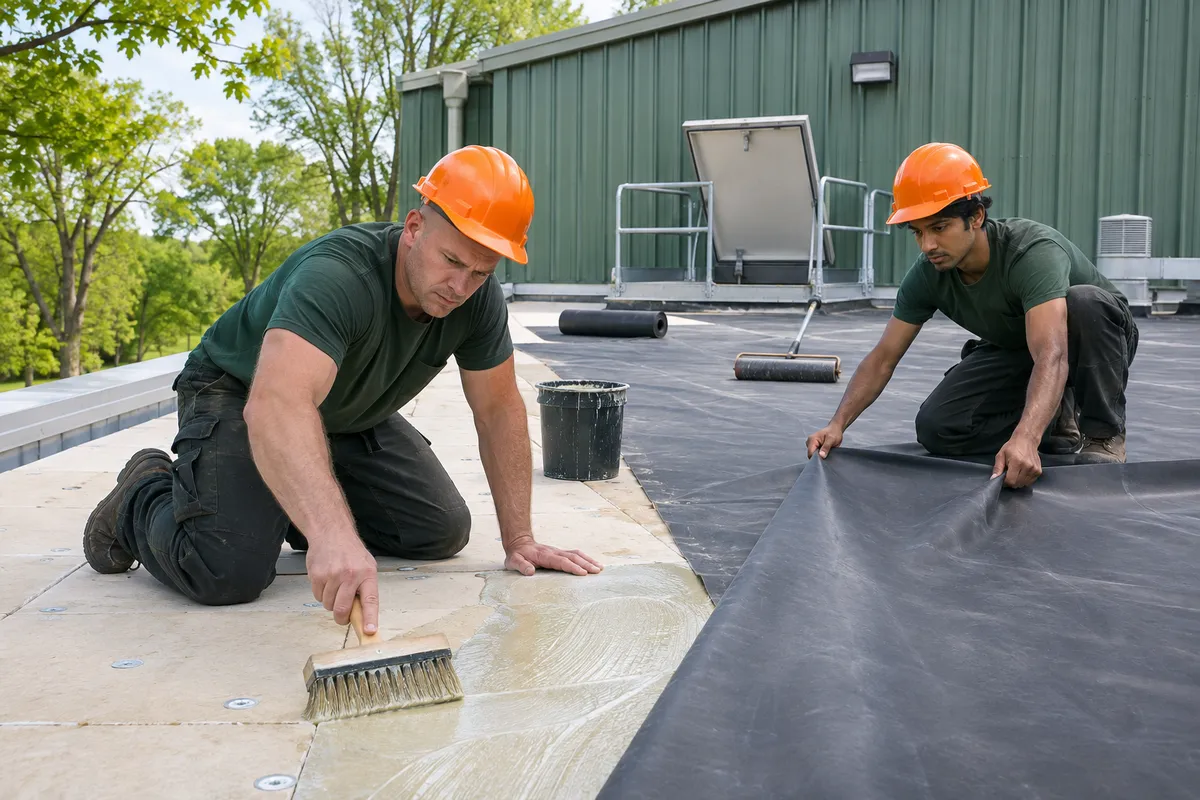
Black rubber sheets suit older low-slope roofs and additions where long wall flashings need to flex.
EPDM Roofing in Enfield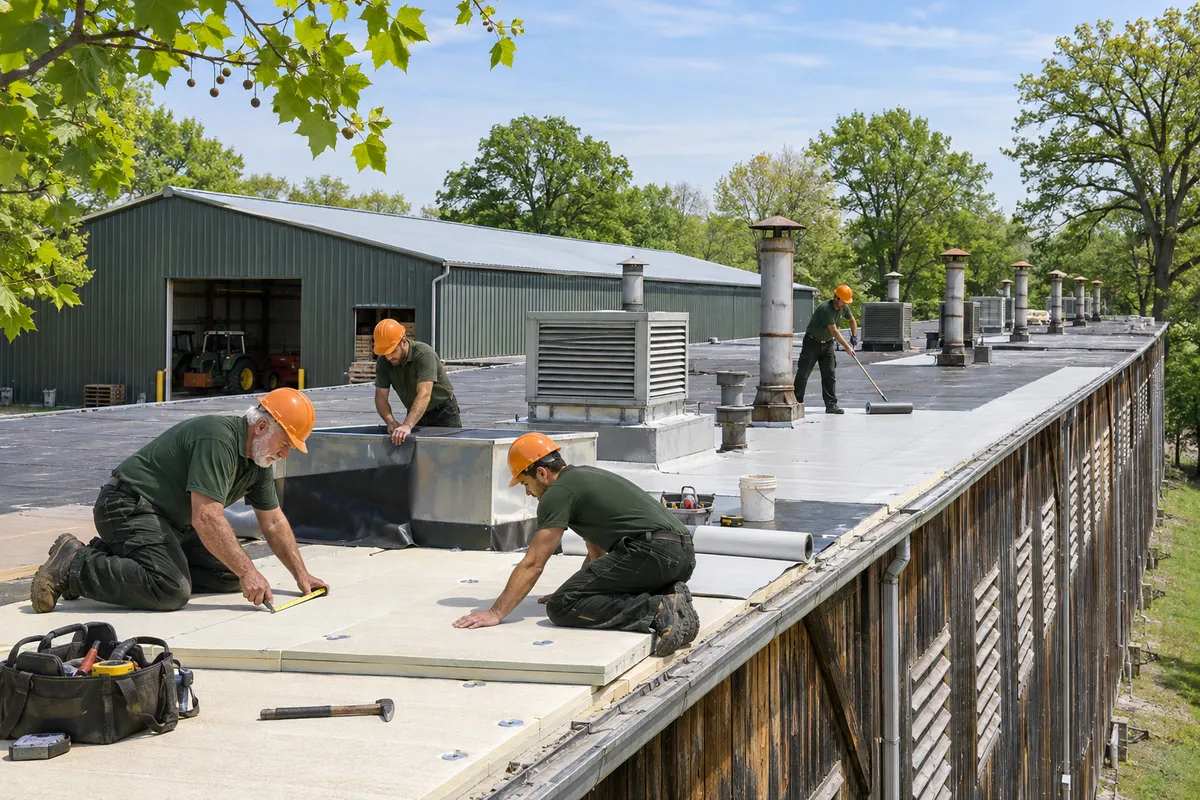
Plants and distribution centers get membrane roofs laid out around fans, ducts, and process exhaust.
Industrial Roofing in Enfield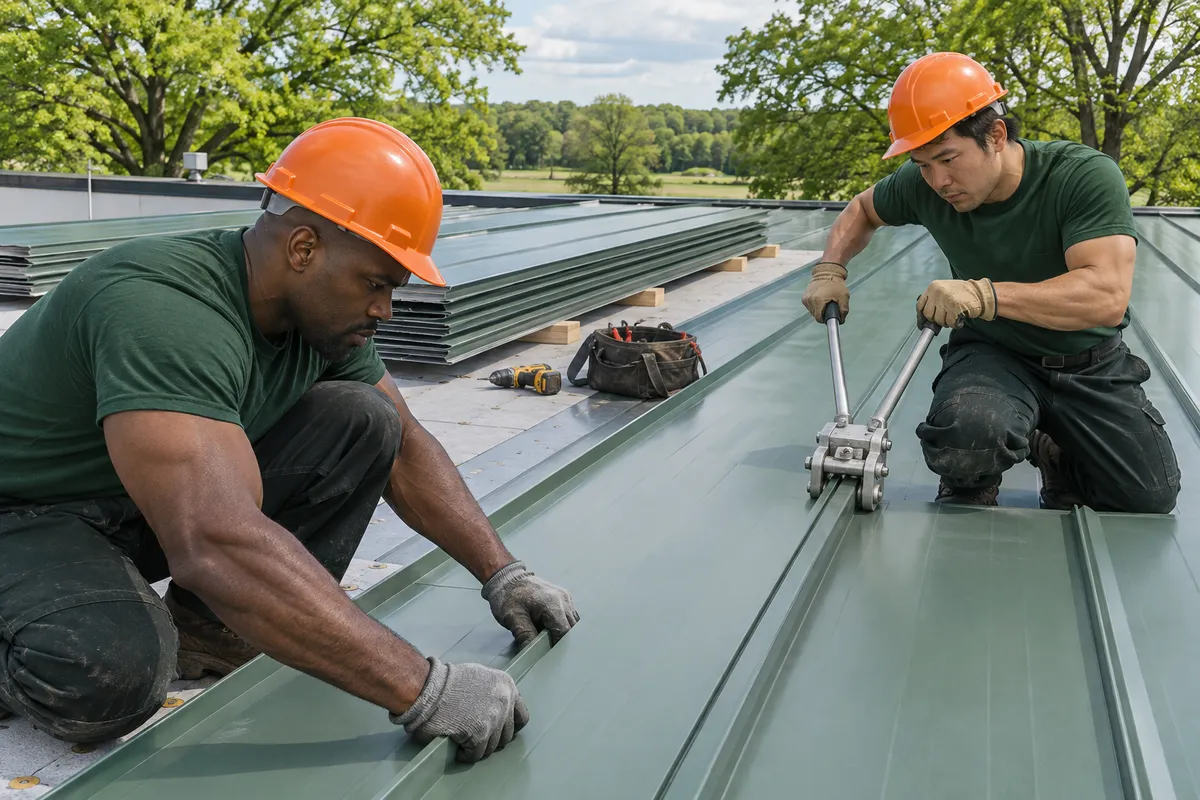
Shops and storage buildings with a real slope take standing seam or exposed fastener panels.
Commercial Metal Roofing in EnfieldCall and say where the water shows inside. We probe the seams and curb flashings above it.
Send the address and roof size. We take core cuts before pricing a new TPO roof.
Get A Free EstimateA new TPO roof changes how the building handles sun, rain, and service traffic.
Hot-air welds fuse each lap, so the field and the flashings act as one piece of membrane instead of glued layers.
The white surface reflects sunlight, which limits heat building up in the roof over warehouses and cold storage rooms.
TPO flashing at units, pipes, and walls is welded to the field sheet, closing the gaps where most leaks start.
Small cuts and punctures are fixed by cleaning the membrane and welding a new piece of TPO over the damage.
TPO jobs follow this order, with every seam checked before a section closes.
We walk the roof, take core cuts, and check the deck, insulation, drains, and every curb before choosing a fastened or fully adhered TPO system.
Old roofing comes off or a cover board goes over a dry roof, deck damage is repaired, and new insulation is fastened down.
Sheets are rolled out, laps are hot-air welded at a tested temperature and speed, and every seam is probed for gaps.
Curbs, walls, drains, and pipes get welded flashing, edge metal goes on, and each section is closed before the crew leaves.
You walk the finished roof with us, see the probed seams and new flashings, and keep a record of the system and its details.
Cold storage and refrigerated warehouses ask more of a roof. The space is cold inside and the roof is hot in summer, so insulation and vapor control matter as much as the membrane.
We look at insulation thickness, vapor control, and the refrigeration equipment before recommending TPO. Its white surface limits summer heat at the roof, and units come off and go back on in an order set with your refrigeration contractor.
Straight answers on TPO from the owners and managers who ask us most.
TPO is a single-ply roofing membrane, usually white, rolled out in wide sheets and joined with hot-air welded seams. It covers low-slope roofs and is fastened or fully adhered over insulation, depending on the deck and wind exposure.
More roofing questionsIts seams and flashings rely on careful welding, and dropped tools or foot traffic can puncture it. Snow and ice add stress at drains and edges, so those details get extra membrane. None of that rules TPO out; it shapes how we install it.
TPO has welded seams and a white surface, while EPDM is black rubber with taped seams that flexes in cold weather. The deck, insulation, equipment, and the roof already in place usually decide it, and we explain the choice after the roof walk.
A probe is run along the edge of every welded lap to find spots that did not fuse. Test welds at the start of each day confirm the welder settings for that day's weather.
Yes, when there is one dry, attached roof underneath. A cover board goes over it and the TPO is fastened or adhered on top. Wet or stacked roofs come off first.
Common thicknesses are 45, 60, and 80 mil. Thicker sheets resist punctures better on roofs with heavy foot traffic, and we match the thickness to how the roof is used.
Send the property address for a roof walk and core cuts, or call about a seam or curb that is leaking now.